
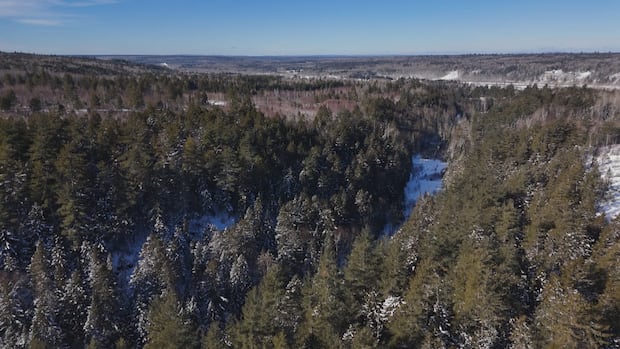
J.D. Irving Inc. approached a number of municipalities last fall, asking them to support its request to be able to log 32,000 hectares of protected areas on its Crown timber licence in exchange for conserving forest near those communities.
At least eight municipalities signed a letter asking that Natural Resources Minister John Herron “give equal weight to the social and economic interests of local governments when seeking to balance the interests of multiple stakeholders across New Brunswick.”
Doaktown, Grand Lake, Fundy Albert, Fundy Shores, Dieppe, Eastern Charlotte, Sussex, and Valley Waters have all signed the letter.
Riverview council will vote Feb. 9 on whether to add its name to the letter. At least nine municipalities were approached by JDI.
Conservation groups, including the Conservation Council of New Brunswick, said the proposal is extremely concerning.
Roberta Clowater of the Canadian Parks and Wilderness Society questioned why protected areas would be treated as “a wood bank for industry.”
 Roberta Clowater of the New Brunswick chapter of the Canadian Parks and Wilderness Society says allowing forestry companies access to conservation land runs contrary to the purpose of protecting land in the first place. (Maria Jose Burgos/CBC)
“It’s quite a concerning idea in the sense that the protected areas were never meant or established for clear cutting,” said Clowater, the executive director the group’s New Brunswick chapter. “The idea behind them is to conserve the kind of habitats that are needed for wildlife or needed to protect water or other features on the landscape.
“It goes against the very idea of the conservation lands to begin with.”
Province asked for conservation plans
The proposal is in response to the government’s promise to increase conservation lands from 10 to 15 per cent of the province’s landmass. That would mean protecting an additional 360,000 hectares, which the province hopes to source from a mixture of Crown and private land.
The Department of Natural Resources received presentations from all four Crown timber licence-holders in October about their plans to meet the 15 per cent target.
J.D. Irving’s proposal is to conserve areas near communities in the working forest in the southeast and Fundy regions of the province in exchange for being able to harvest areas of protected old forest in the area between Doaktown and Chipman.
According to a presentation made to several municipalities, the proposal would mean a net 46,000-hectare increase to protected lands. It would see 38 per cent of its Crown licence protected, up from 33 per cent.
The percentage of old forest conserved would go up slightly from 20 per cent to 21 per cent.
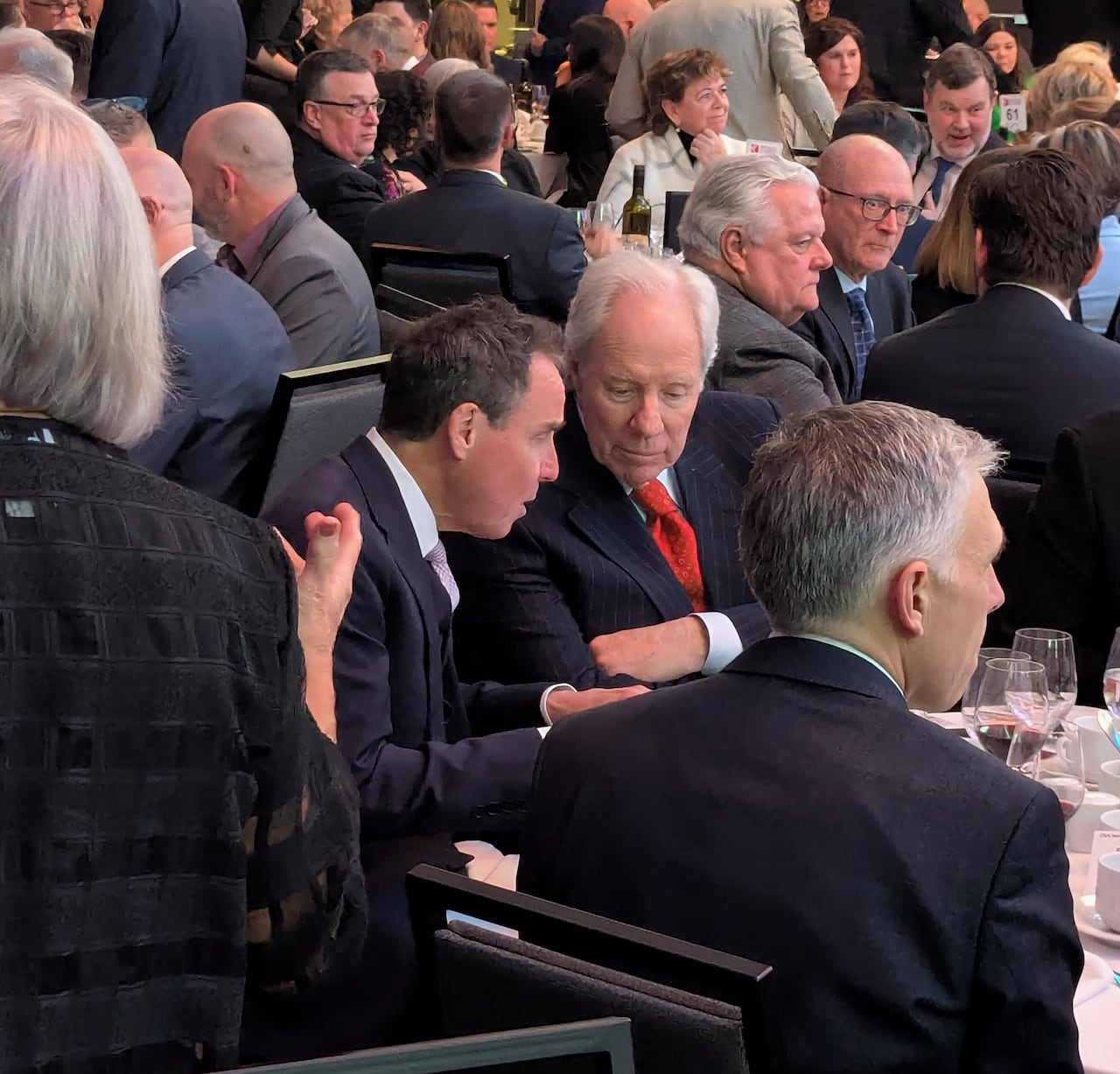 New Brunswick Natural Resources minister John Herron and J.D. Irving co-CEO Jim Irving sitting together during the 2026 State of the Province address on January 29, 2026. (Silas Brown/CBC)
Herron said another licence-holder made a similar request to make swaps to gain access to conservation lands on their licence, but he wouldn’t say which one.
The four private companies that manage timber licences on Crown land are J.D. Irving, Twin Rivers, the AV Group and Fornebu.
When asked to share the presentations made by the licence-holders, Herron said they weren’t necessarily confidential, but he wouldn’t feel comfortable releasing them since they were made at his request.
The goal, Herron said, is to protect as much land as possible, while balancing the needs of industry and desires of municipalities that may have been missing from the previous strategy.
WATCH | How J.D. Irving wants to meet provincial conservation goals: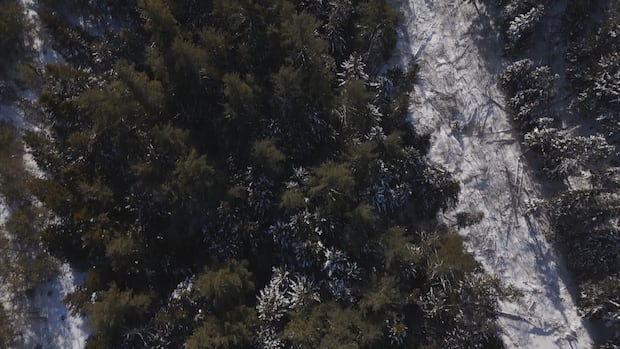
J.D. Irving conservation pitch includes logging old forest
A forestry giant’s proposal to meet New Brunswick’s 15 per cent conservation goal includes protecting Crown land near inhabited areas in exchange for access to conserved forest near its existing operations.
That could mean decisions that aren’t the “most optimal choice from preserving land from a conservation perspective” as dictated by the province’s 2022 Nature Legacy initiative, which saw the amount of protected lands jump to 10 per cent.
“What I have heard is that we did not consult communities to the degree that communities may have wanted to be consulted on the last time round,” Herron said of the strategy released by the previous government.
That could mean some “ecologically valuable lands” near municipalities will be traded for protected lands “that would be closer to existing mills in the province, which would make that part of the wood supply more cost competitive.”
JDI wants more emphasis on economy
In an Oct. 27 presentation to Riverview council, Andrew Willett, J.D. Irving’s director of sustainability and Indigenous relations, made the case that the province’s 2023 Forest Strategy tipped too far toward ecological conservation.
“There was a lot of emphasis on old forests and biodiversity,” Willett said of the strategy.
“We would argue that there wasn’t enough emphasis on economics, and there was almost no emphasis on social goals for conservation.”
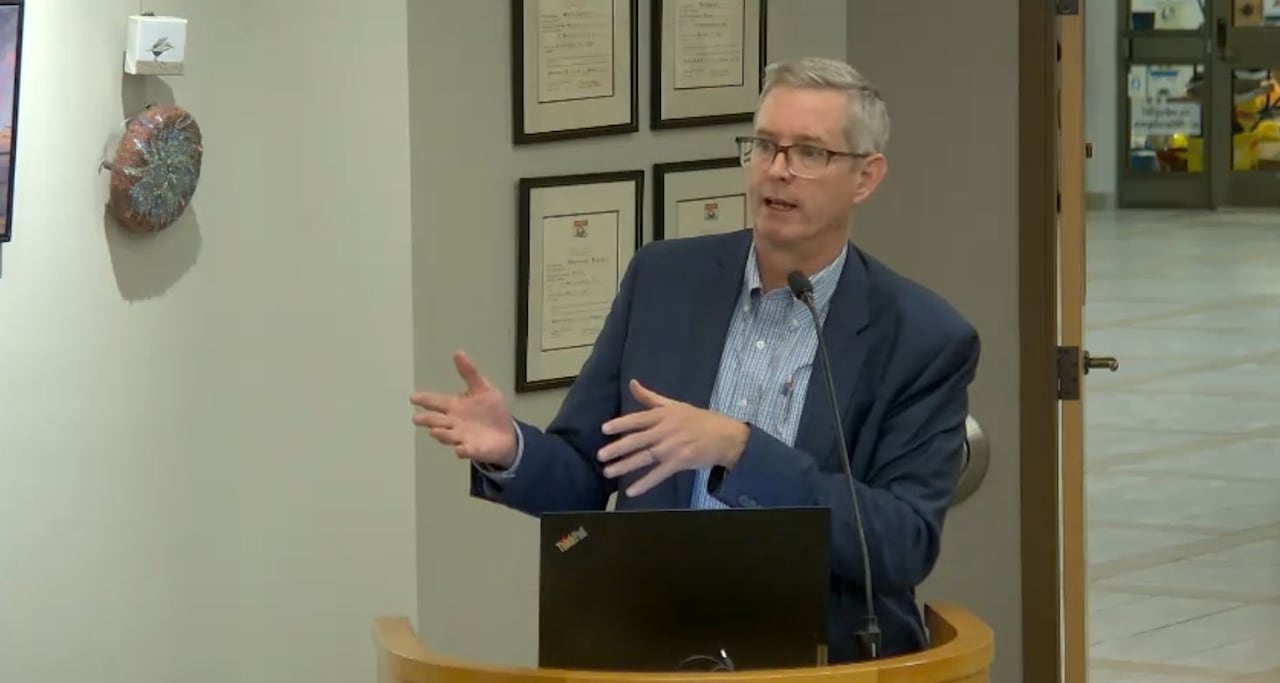 Andrew Willet, J.D. Irving’s director of sustainability and Indigenous relations, presented the company’s proposal to Riverview council in October. (Town of Riverview)
To restore that balance, the company wants permission to log conservation lands and in exchange will protect areas with tourism or social value that are closer to inhabited areas.
That would include land near the Fundy Parkway.
It would also include Crown land in the Turtle Creek area, where a reservoir supplies water to Moncton, Riverview and Dieppe.
In an interview, Willett acknowledged that existing regulations protecting watercourses are sufficient to protect the watershed but said people are often uncomfortable with forestry activity in that area.
“We’ve heard from local communities that it would be just better if we weren’t there at all, and so that’s our proposal, is we’ll just put all of the working forestland in the Turtle Creek Reservoir into conservation,” he said.
“This is not necessarily a science issue. It’s more of a values issue.”
Willett said it was difficult to speak to the condition of the forest the company has pinpointed for conservation, but he said the net amount of what’s considered old forest being conserved would rise slightly under the Irving proposal.
“It’s not like it’s all been harvested or it’s all been planted. Our proposal actually protects more old forests.”
“I think that’s important. That’s an objective of the province to have old forest protected.”
The swap would also give J.D. Irving access to large trees closer to its mill operations that require them, helping to cut down on transportation costs.
Stakeholders fear loss of habitat
According to Clowater, conservation doesn’t have to be a one-or-other exercise. She said that J.D. Irving can still choose to protect the Turtle Creek watershed and make up for the loss in timber by buying from private woodlot owners.
Clowater said the idea of the swaps worries her, since the old forest conserved by the province is necessary for biodiversity, to protect watersheds and prevent flooding.
“We don’t just have them because some non-governmental organizations want them,” she said.
“There’s actually a rationale behind creating them and the idea for protected areas is always being that they not be areas where any industrial development is happening and that includes forestry.”
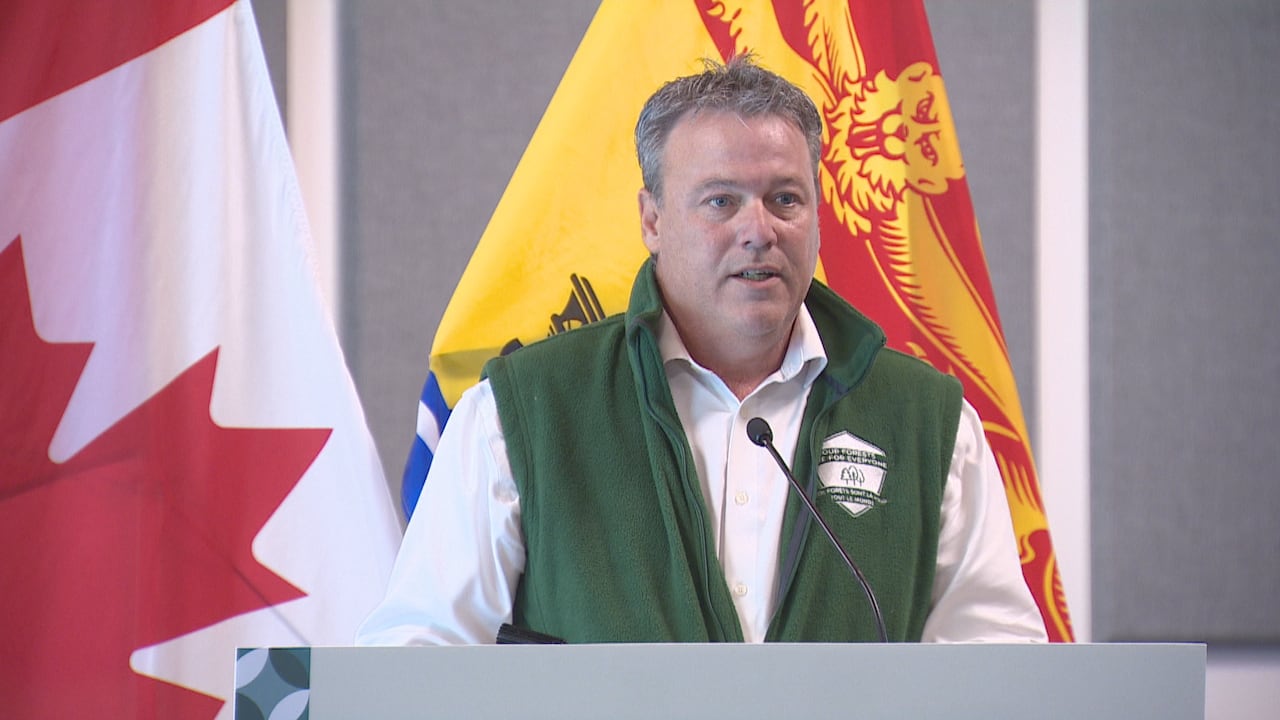 Mike Holland, when he was natural resources minister in the former government, released a long-term management strategy for New Brunswick’s Crown forests in August 2023. (Pat Richard/CBC)
The 2023 Forest Strategy was touted by former natural resources minister Mike Holland as a way to maintain public wood supply for licensees, while lessening the footprint of forestry operations on Crown land.
Conservation advocates were critical of the amount of clear-cutting and herbicide spraying included in the strategy and Mi’kmaw chiefs said it was created without adequate First Nations consultation.
According to Holland, a key piece of the plan was that mixed stands would no longer be converted into monoculture plantations, with intensive harvesting and silviculture limited to about 20 per cent of Crown forests.
“There will be no more mixed-stands converted to single-species softwood,” Holland said when the strategy launched in 2023.
Green Leader David Coon was one of the critics of the strategy in 2023, worrying that it would continue to see the health of Crown forests degrade with the remaining pockets of Acadian Forest cut and converted into monoculture softwood plantations.
That’s a fear he sees being realized in the current effort of some licence-holders to get access to the lands that were supposed to be protected in the 2023 strategy.
“Those protected areas were just established,” he said.
“We have relatively little forest left where nature’s balance is still intact and relatively little forest that is ecologically not degraded.”