
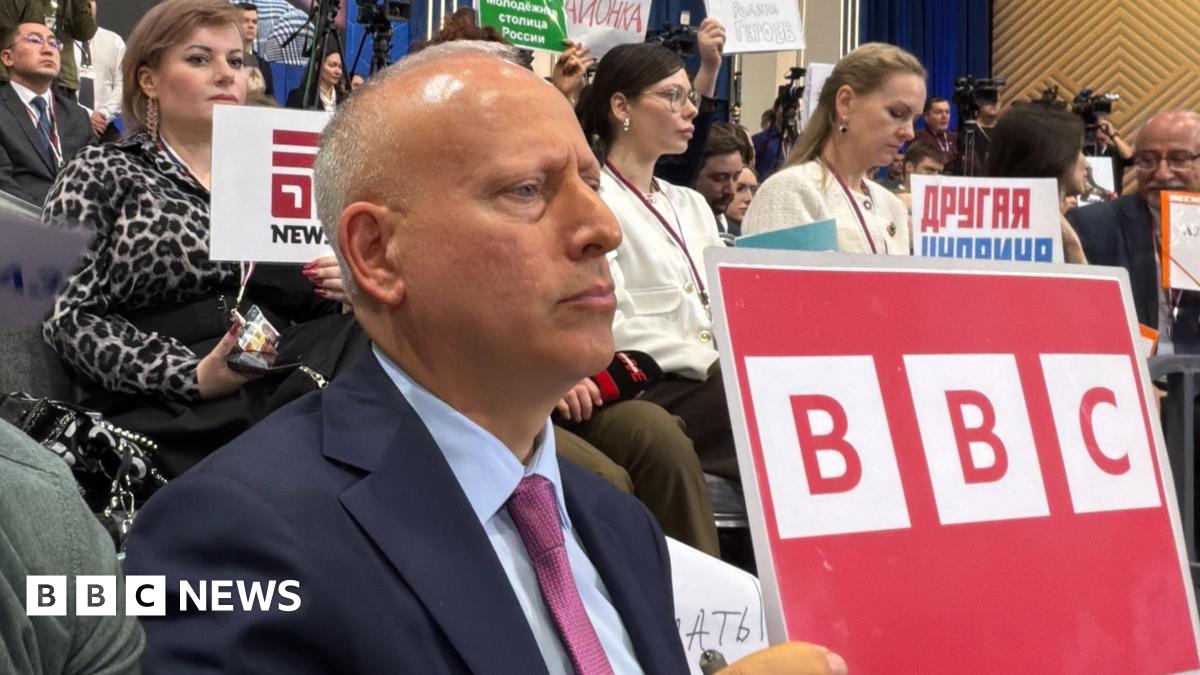
I have spent more than thirty years living and working in Moscow. As a young man I fell in love with the language, literature and music of Russia. At university in Leeds, I ran a choir that performed Russian folk classics. For one concert I wrote a song in Russian about a snowman who put on so many clothes that he melted.
Like that snowman, the Russia I knew seemed to melt away in February 2022. With its full-scale invasion of Ukraine, the world’s largest country had embarked on the darkest of paths. President Putin’s “special military operation” would become the deadliest war in Europe since World War Two.
Looking back, this hadn’t come out of nowhere: Russia had annexed Crimea from Ukraine back in 2014; it had already been accused of funding, fuelling and orchestrating an armed uprising in eastern Ukraine. Relations with the West were becoming increasingly strained.
Still, the full-scale invasion was a watershed moment.
In the days that followed, repressive new laws were adopted here to silence dissent and punish criticism of the authorities. BBC platforms were blocked. Suddenly reporting from Russia felt like walking a tightrope over a legal minefield. The challenge: to report accurately and honestly about what was happening without falling off the highwire.
In 2023 the arrest of a Wall Street Journal reporter showed that a foreign passport was no “keep out of jail” card. Evan Gershkovich, a US citizen, was convicted on espionage charges. He would spend sixteen months behind bars. He, his employer and the US authorities denounced the case as a sham.