
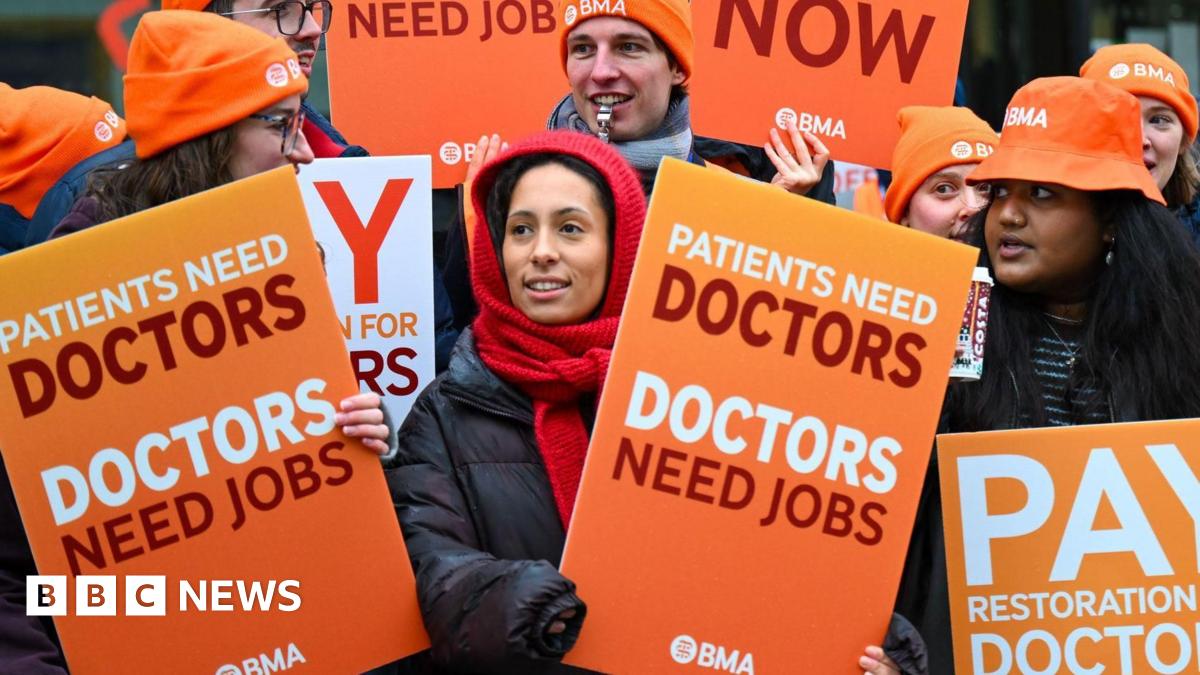
Dr Fletcher added: “And without thousands more training posts, the bottlenecks in medical training are going to continue to rob brilliant young doctors of their careers. Doctors have today clearly said that is not acceptable.”
He said strikes were not inevitable, adding that the government had shown “an improved approach in tone” in recent weeks.
“A deal is there to be done: a new jobs package and an offer raising pay fairly over several years can be worked out through good will on both sides, in the interests of patients, staff and the whole NHS,” Dr Fletcher said.
Resident doctors have received pay rises totalling nearly 30% in the past three years, but the BMA argues that still leaves their pay a fifth lower than it was in 2008, once inflation is taken into account.
The union has also argued there is a jobs shortage at a crucial part of their medical training.
Resident doctors – who used to be called junior doctors and make up about nearly half of all doctors in the NHS – move into speciality training places after year two. Last year there were more than 30,000 applicants for 10,000 jobs at this stage, although some will have been doctors from abroad.
A Department for Health and Social Care spokesperson said: “The government has been in intensive and constructive discussions with the BMA since the start of the new year to try and bring an end to the damaging cycle of strikes and avoid further unnecessary disruption for patients and NHS staff.
“We hope that these talks result in an agreement that works for everyone, so that there is not any more strike action by resident doctors in 2026.”
Last month the BMA in Scotland called off a strike by resident doctors after ministers there tabled a new offer, which the union is putting to members.