
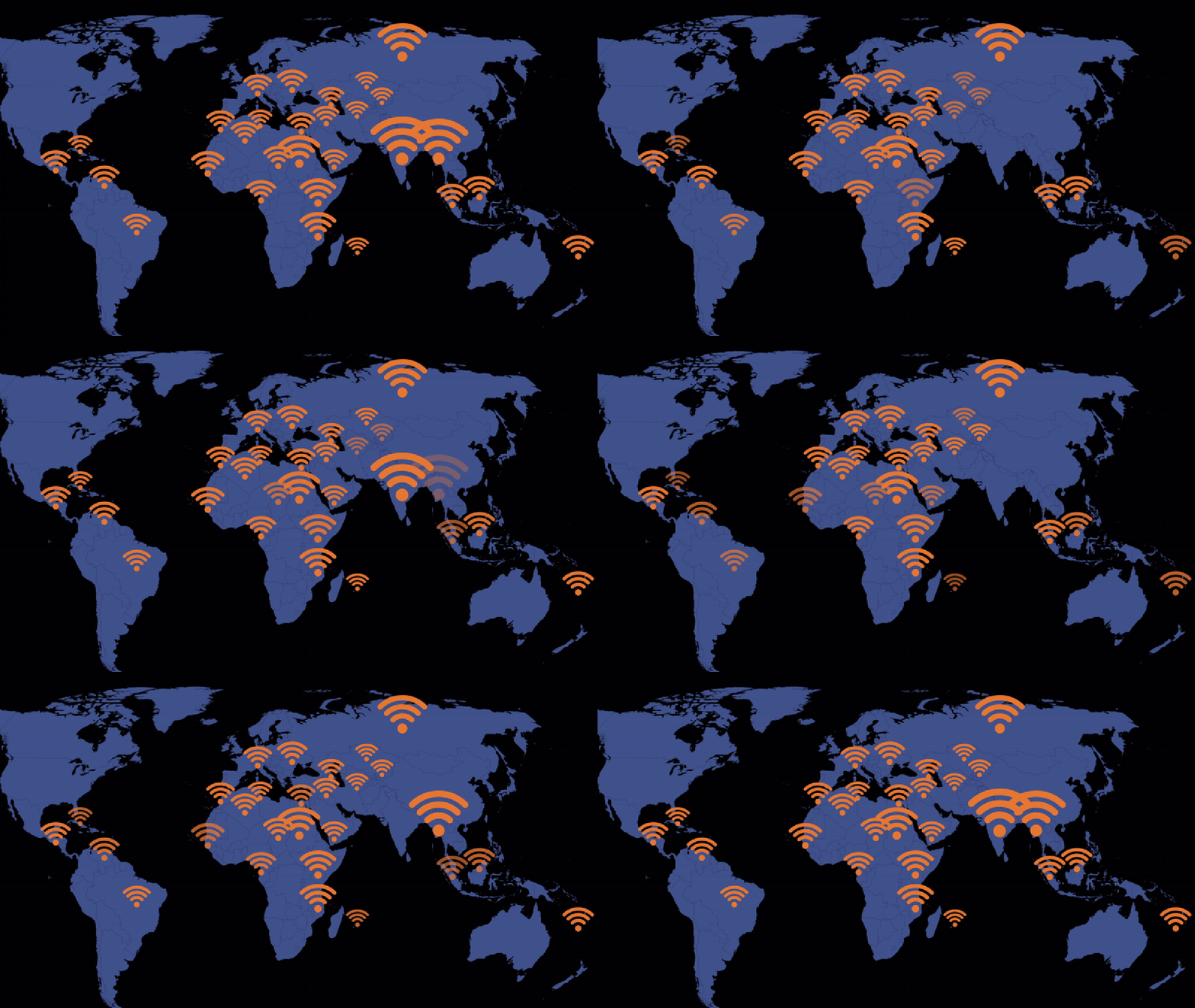
Alp Toker could do little but watch as Myanmar descended “from ordinary life into absolute chaos” in early 2021. On February 1, a military coup had overthrown the government — activists were protesting in the streets each night. Toker, who was tracking the country’s internet traffic from London, watched his instruments flatline for 72 consecutive days as the junta turned off the internet nightly at 7pm.
“It’s that chilling moment when you’re mid-conversation and the voice on the other end of the line drops,” he said. “The internet is that last shred of hope because, in the darkness of a blackout, anything can happen and nobody will know.”
Toker, who founded the web monitoring organisation NetBlocks, has spent much of the last month trying to reach desperate Iranians. The death toll of a violent crackdown on protestors is believed to be about 6,000, though some human rights groups put the figure closer to 20,000. In the digital darkness, it is unlikely that anyone really knows what damage the regime has wrought.
Command and control
In an interconnected world, who holds the keys to the internet is essential to civil rights and public order. How that control is exercised is of growing importance in democracies as much as it is in authoritarian states. The latter have long understood the value of information control and are increasingly resorting to partial or total internet blackouts.
There were almost 300 shutdowns in 54 countries in 2024, according to AccessNow, an internet freedom campaign group. Some governments acted under the guise of “countering disinformation” or “preventing exam cheating” — others gave no reason or denied the blackouts existed. Toker counts 17 significant national blackouts that lasted for at least a week since 2019, most in Africa or the Middle East.
The first nationwide shutdown was in Egypt in 2011, when President Mubarak attempted to quell the Arab Spring uprising. His was a blunt instrument — Mubarak ordered providers such as Vodafone to close the door to the rest of the world by disabling routers. This turned off the domain name system — the “phonebook” of the internet — and withdrew their networks from the border gateway protocol — which moves traffic from one part of the internet to the other — so foreign internet routers were no longer given the IP addresses of Egyptian devices.
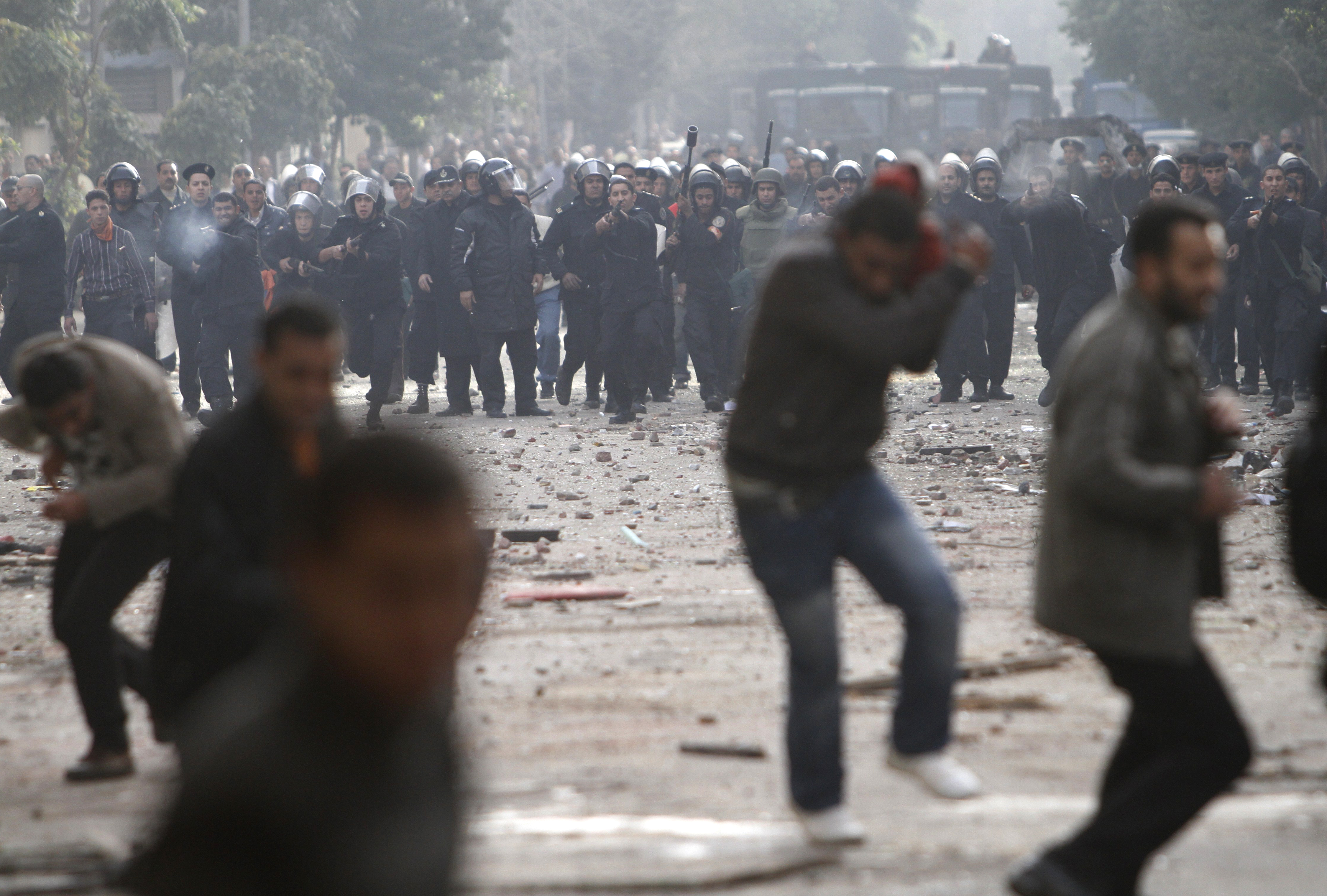
Egyptian protesters clash with riot police in Cairo in 2011
MOHAMMED ABED/AFP
This in effect erased Egypt from the global “map” of the internet. Users could not be found by incoming traffic and could not send out information. It worked, but was a highly expensive “nuclear option”, according to Doug Madory, the director of internet analysis at the web monitor Kentik, since the blackout suspended all online economic activity. The five-day shutdown had a direct economic cost of $90 million, the Organisation for Economic Co-operation and Development estimated.
The digital iron curtain
The most recent significant internet shutdown, this time in Iran, shows how far things have evolved. On the afternoon of January 8, the regime turned off connectivity in the western city of Kermanshah after angry young Iranians took to the streets, NetBlocks found. When protests continued to swell nationwide in the early evening, they plunged the entire country of 90 million people into digital darkness. About 99 per cent of web traffic was blocked near instantaneously, as were mobile connectivity and phone calls.
Unlike in Egypt, Iran remained connected to the global internet, but a firewall blocked most access. Packets of data, which provide the websites, messages and media a user sees when they go online, were still received from abroad but quickly dropped, like a postman throwing away a parcel before it reaches its intended address.
To do this Tehran probably altered the transport protocol, which is “like taking away the information pipes”, says Alberto Dainotti, a professor of computer science at the Georgia Institute of Technology in Atlanta. Officials then “whitelisted” approved users and websites — Ali Khamenei’s entourage and supportive media channels, for example — to bring in a trickle of state-sanctioned information.
Even Starlink terminals, about 50,000 of which are thought to have been smuggled into Iran on “camels, donkeys, trucks” through “every border of Iran”, have been partially blocked, said Gregg Roman, executive director of the Middle East Forum. The Iranian authorities are believed to have started using military-grade systems to jam terminals by overwhelming them with high frequency radio waves and GPS spoofers to confuse receivers about their location. Foreign support is widely suspected: Moscow’s Krasukha-4 electronic warfare systems — enormous trucks mounted with satellite dishes — have been spotted in Iran.
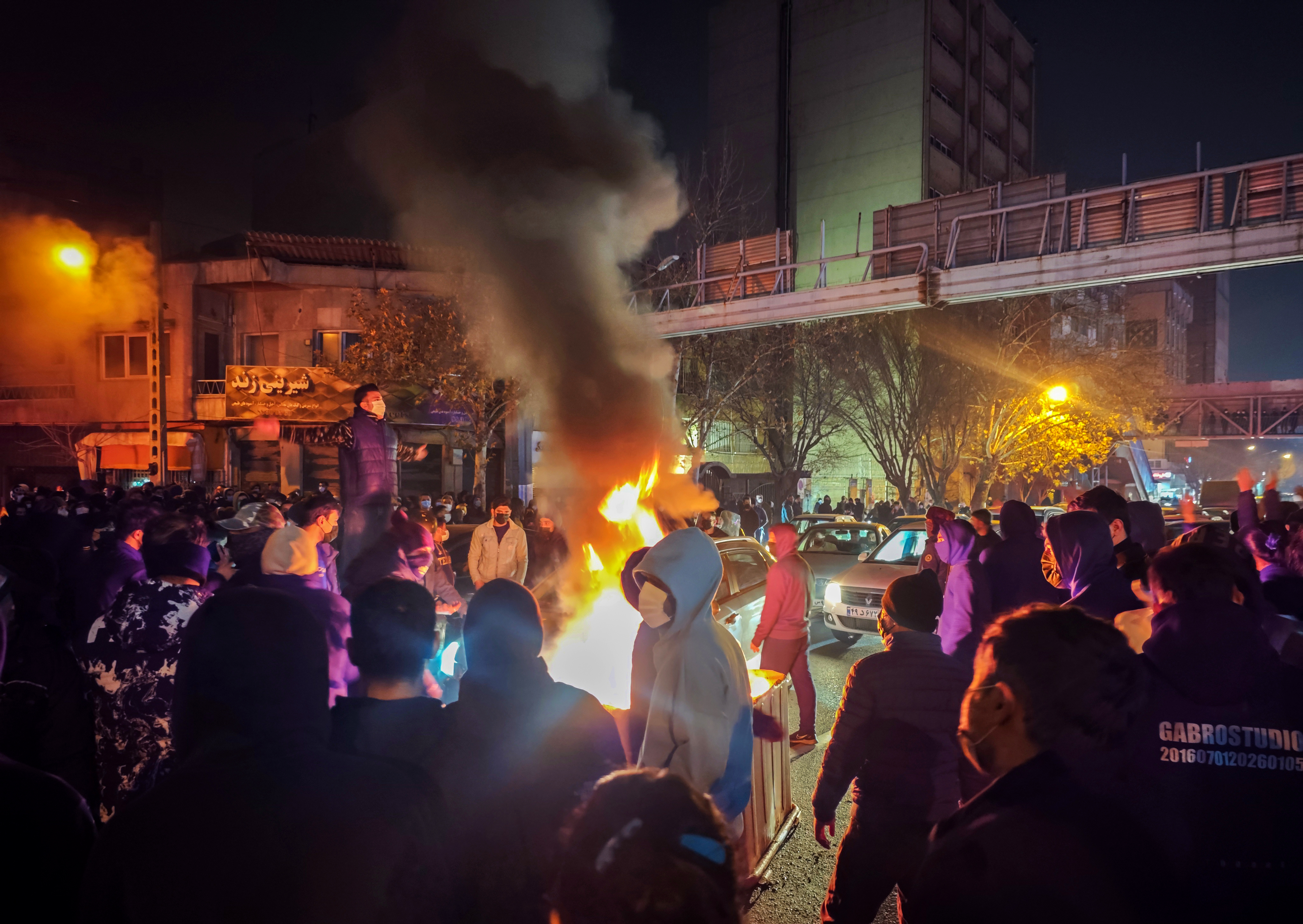
Protesters in Tehran on January 8, the day the blackout began
GETTY IMAGES
But the reason the shutdown has lasted this long — it is into its 24th day, though heavily filtered connectivity intermittently returned on Tuesday — is thanks in part to a self-contained shadow intranet that Tehran has been developing since at least 2006 at an estimated cost of $6 billion. Nicknamed the “halal internet”, the National Information Network (NIN) allows Tehran to retain a skeleton domestic service to run important infrastructure such as banks and healthcare, even while international access is blocked.
Iran’s economy cannot survive on the NIN forever, according to Madory, but it does alleviate the worst of the damage — shutdowns in 2019, 2022 and last year were made significantly easier and cheaper by the centralised infrastructure. Petrol stations, ride-sharing apps, local government websites and bank transfers have operated sporadically during the blackout, according to reports. “The government has been working to build this infrastructure for years,” said Dainotti. “It’s more advanced than most other autocracies.”
The few government-approved services cleared to operate are closely monitored for signs of dissent. “This is the next evolution of the digital iron curtain,” said Roman. “It’s an incredibly effective tool of suppression.”
Could there be a blackout in Britain?
Probably not. Most Iranian connectivity goes through the chokehold of a single border gateway operated by the state-controlled Telecommunication Infrastructure Company. In the UK, by contrast, about 64 subsea cables bring internet access through privately owned landing stations around the country. Successive governments encouraged this mesh-like network to increase competition and avoid dependence on just a handful of providers. Having numerous points of international access and independent domestic networks is common in western, democratic countries.
Under the Communications Act 2003, the science and technology secretary can, however, order an internet suspension or restriction if there are “reasonable grounds for believing that it is necessary” to protect national security or public safety. To do so would mean notifying Ofcom, which would in turn direct service providers to take down specified “networks, services and facilities” until further notice. The government also has broad and largely untested legal rights to co-opt infrastructure during a national emergency under the Civil Contingencies Act 2004.
The UK’s diffuse network infrastructure would make a total blackout “extremely difficult” even if private providers immediately co-operated, according to Toker. Even shutting down the internet exchanges — through which the majority of British traffic passes — would not disconnect all broadband users, since some networks connect to foreign routing systems. “There are multiple redundancies and no central point of control,” he said. “They could take out probably around 50 per cent of connectivity within 24 hours, but getting the long tail would be a lot harder.”
Nonetheless, Tehran’s planning is emblematic of a global trend towards internet sovereignty, often in government hands. “Censorship is learned across borders,” Amanda Meng, a senior research scientist at the Internet Outage Detection and Analysis group, said.
Venezuela has experimented with its own national internet, while Cambodia and Myanmar — which led the world in blackouts in 2024 — are investing in advanced censorship infrastructure. Myanmar has not instituted a prolonged national blackout since 2021, but is still No 1 for localised cuts. Russia, too, is expanding a domestic network known as Runet. “It’s this idea that you can wall off your information space and guard against any kind of subversive external influence,” Nicholas Carl, the assistant director of the Critical Threats think tank, said.
Democratic countries too are becoming concerned about over-reliance on international providers for one of their most critical pieces of national infrastructure. Europe’s economy is beholden to a handful of enormous American companies, mainly Microsoft, Amazon and Google, which provide about three quarters of the continent’s cloud-based services. Artificial intelligence and data analysis are similarly dominated by US developers. British business, hospitals and transport networks could, in theory, be brought to their knees if the White House demanded a sudden withdrawal of service: an effective Damoclean sword.
Slow decline of the world wide web
Even ostensible allies are starting to take their dependency seriously. “Some of the ideas that were initially thought of as crazy, like the ‘kill switch’ to force American tech firms to suspend services in Europe, are now looking a lot more plausible than they did a few years ago,” Zach Meyers, the director of research at CERRE, a regulation think tank, said.
Chinese resilience to the 2024 Crowdstrike outage — when a faulty cybersecurity update crashed more than eight million Microsoft Windows-based computers — also helped to persuade western leaders that their interdependence was a vulnerability. Later that year, the EU appointed its first tech sovereignty chief; members of the European parliament are campaigning for a European cloud infrastructure which would require data to be stored in domestic facilities outside the reach of Washington. “Digital sovereignty services” are also a growing market: in December, BT launched an entirely UK-based package to reassure customers concerned about “growing geopolitical instability”.
Becoming too dependant on domestic services would come with its own risks. With a centralised, domestic system, parliament could use national security provisions or pass new laws to suspend or limit internet access. Britain seems a long way from this absolute digital censorship, but David Cameron openly mused about shutting down social media platforms and text messaging during the London riots in 2011. The 2024 Southport riots were fanned by similar online misinformation. “It’s not as distant as it might seem,” warned Toker.
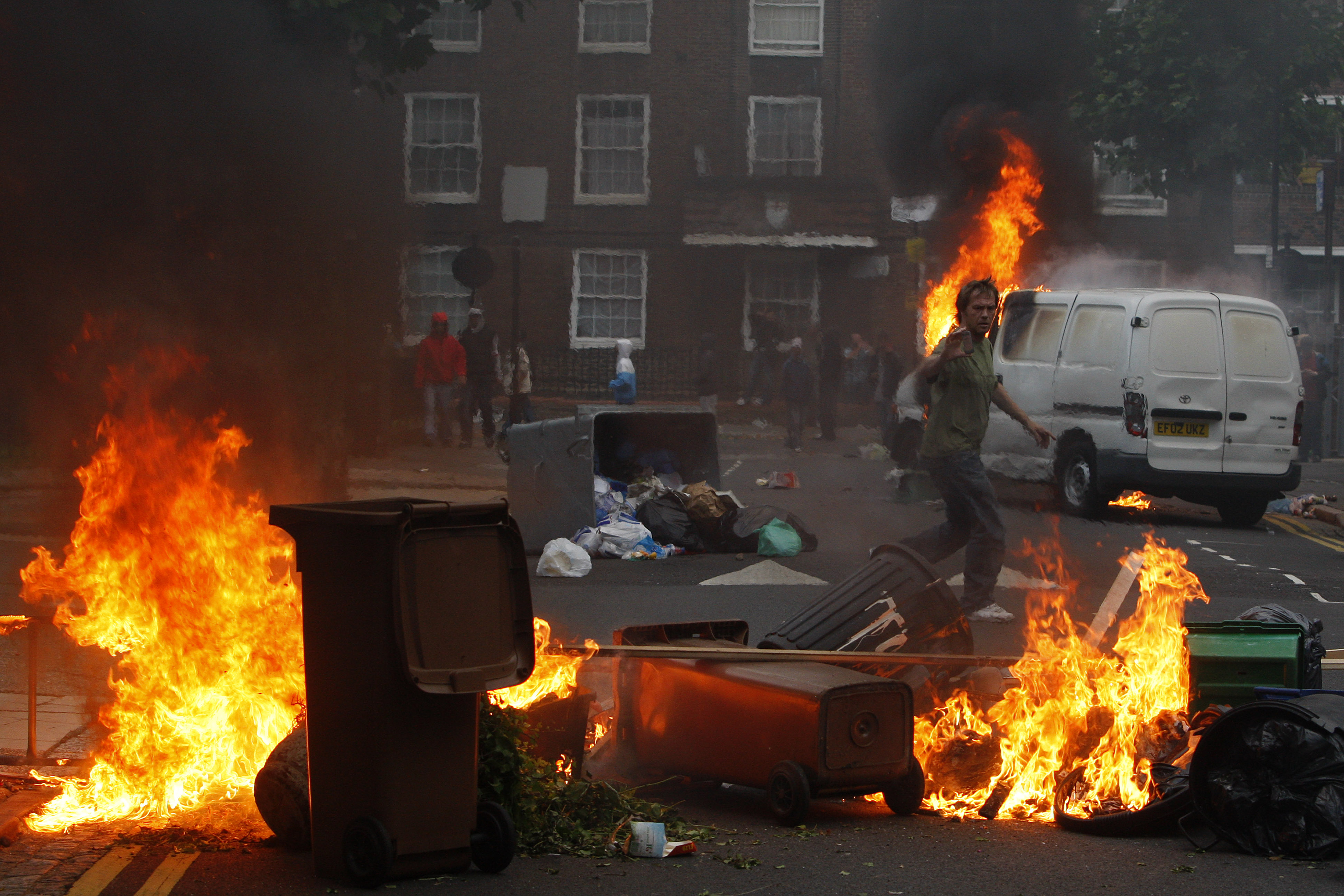
Barricades constructed by rioters in Hackney during the 2011 London riots
DAN ISTITENE/GETTY IMAGES
Internet balkanisation has been a long time coming — evident from the exclusion of Huawei from British telecoms in 2020, for example — but has been sped up by President Trump’s assertive foreign policy, according to Scott Malcomson, the author of Splinternet. “The difference Trump has made is that he’s eroded what trust there was in the US government to not be completely self-serving in leveraging [the fact] that American companies are so dominant.
“I don’t think the world wide web is dead — not quite,” Malcomson said. “It shouldn’t be a council of despair for middle powers but they do have to recognise their sovereignty is compromised.”
How to escape this bind? Reshoring, at least of some critical vulnerabilities. “We’ve moved into an era where extraterritorial sanctions are more and more on the cards,” Meyers said. “Countries are saying, ‘We want to be in a position where, if the US imposes sanctions, we have backup choices available’.” GB Internet may not be so very far away.