

Listen to this article
Estimated 5 minutes
The audio version of this article is generated by AI-based technology. Mispronunciations can occur. We are working with our partners to continually review and improve the results.
As the Detroit Three automakers have made fewer cars in Canada over the past decade, Japanese car makers have kept their Canadian footprint consistent, according to a new report.
The findings by the Trillium Network for Advanced Manufacturing, a non-profit think-tank at Western University that analyzes manufacturing in Ontario, show a decline in the overall number of cars made in Canada compared to a decade ago. In 2016, 2.3 million cars were assembled in the country; by 2025, that figure fell to 1.2 million.
The drop is largely due to lower production from U.S.-based automakers Ford, Stellantis and General Motors — also known as the Detroit Three — according to the report.
Those three companies made 56 per cent of the cars produced in Canada in 2016, falling to 23 per cent in 2025, the report says. In that same time frame, the proportion of cars made in Canada by Japanese companies Honda and Toyota rose from 44 per cent to 77 per cent. (The five companies largely make up Canada’s vehicle manufacturing industry.)
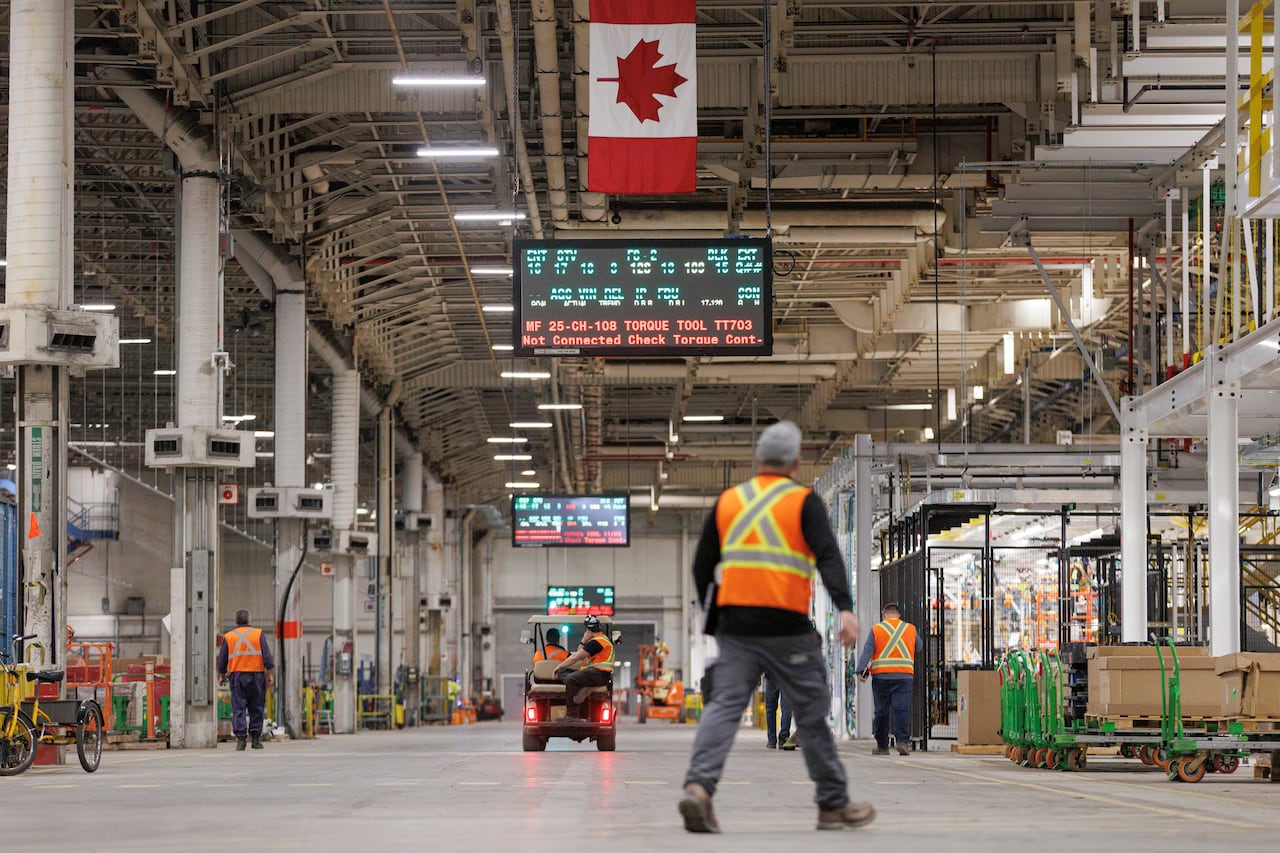 Workers assemble the components of a BrightDrop delivery van at General Motors’ CAMI EV plant in Ingersoll, Ont., in November 2022. (Evan Mitsui/CBC)
And when it comes to employment in assembly plants, the Trillium Network says Japanese carmakers are also outpacing the Detroit Three — jobs with the U.S.-based automakers accounted for 60 per cent of all such employment in Canada in 2015, falling to 38 per cent in 2024. Jobs with the Japanese companies accounted for just over 60 per cent of auto assembly employment as of 2024, the report found.
Brendan Sweeney, Trillium Network’s managing director, says the changes over the past decade show how the U.S. and Japanese companies have set different priorities for conducting business in Canada.
“There’s just this general long-term move away from Canada from U.S.-based automakers,” Sweeney said. Some Japanese makes assembled in Canada, like the Honda Civic and Toyota’s Rav 4, are also hugely popular in North America, which Sweeney says could contribute to Japan’s sustained production in part.
In 2025, GM announced it would be ending production of its BrightDrop electric delivery vans at a plant in Ingersoll, Ont. It also cut a shift at its Oshawa, Ont., plant starting last week, expected to result in job losses for 1,200 auto workers throughout the supply chain.
WATCH | GM Canada president explains ending electric van production in Ingersoll, Ont.: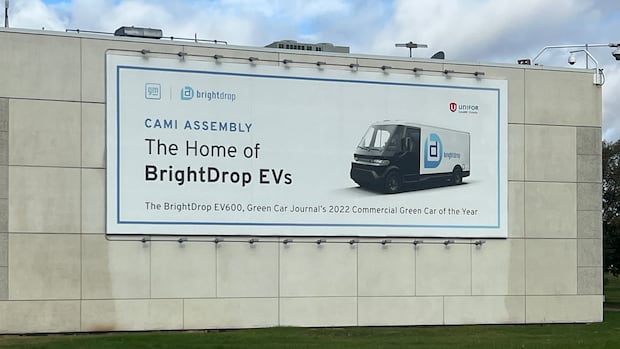
GM Canada president explains decision to end electric van production in Ingersoll, Ont.
Hear CBC London’s full interview with Kristian Aquilina, president and managing director of GM Canada, about plans to end the BrightDrop electric van production at its CAMI plant in Ingersoll, Ont. Aquilina took questions about the decision, its implications for local workers, and what this change means for auto production in the province.
Meanwhile, a Stellantis plant in Brampton and a Ford plant in Oakville have been shut down since 2024 to be retooled for other vehicles. That retooling has since been paused at the Brampton plant, though it’s continuing as planned at the latter facility. Stellantis also initially cut a shift at its Windsor, Ont., plant last year before announcing it would reintroduce a third shift at the facility in anticipation of increased demand for the vehicles made there.
Industry struggling before tariffs
U.S. President Donald Trump’s tariffs have hit the auto industry hard — Canadian-made vehicles are tariffed at 25 per cent, with some exemptions for their U.S. components.
But Sweeney says U.S.-based automakers were already decreasing their production here, making the trade war just the latest hurdle for the industry.
“It’s the season and the episode; it’s the book and the chapter,” Sweeney said. “This has been 25 years in the making.”
But Brian Kingston, president and CEO of the Canadian Vehicle Manufacturers’ Association, says the report doesn’t show the whole picture. He says it’s focused too much on vehicle production and the Detroit Three’s contributions to research and development, as well as auto parts production.
“The footprint [of the Detroit Three] is far larger than what is presented in this report,” Kingston said. He says hiring at battery manufacturing plants and at Stellantis’s Windsor assembly plant, plus Ford’s commitment to retooling its Oakville facility, are signs of dedication to Canada by the U.S.-based automakers.
“The auto industry is like riding a roller coaster [with] constant ups and downs, but we’ve seen continued progress and investment from the [Detroit Three] into Canada.”
 Workers leave during a shift change at Stellantis’s assembly plant in Windsor, Ont., in April 2025. (Jeff Kowalsky/AFP/Getty Images)
Still, as the federal government is expected to release its automotive strategy some time this month, Sweeney of the Trillium Network said he hopes it includes rewarding auto companies that have shown a commitment to working in Canada.
“Let’s show some commitment back to them,” Sweeney said.
Flavio Volpe, president of the Automotive Parts Manufacturers’ Association, agrees that this would be a good idea. He says incentives should be extended to all companies willing to invest in and produce cars in Canada.
“The president of the United States is using a stick. So let’s find at least a carrot here and put it into the mix.”
WATCH | Auto manufacturing in Canada is sputtering: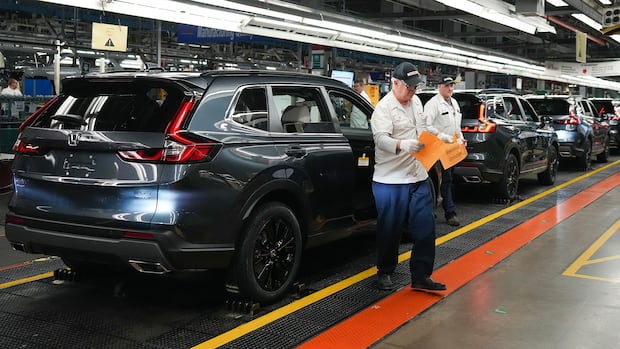
Fewer vehicles being made in Canada — but Japanese automakers increase production
A new report paints a dismal picture of Canada’s declining auto industry, with annual vehicle production down to nearly half what it was 10 years ago. But unlike their U.S. counterparts, Japanese automakers have maintained and even increased production in Canada.