From the moment the AMR26 broke cover, everyone has been asking what Adrian Newey and the team have been cooking. Formula One’s pre-eminent designer puts down his self-propelling pencil to discuss a busy 10 months for Aston Martin Aramco, the philosophy behind our 2026 F1 car, and why Team Principal is just a title.
Give the people what they want.
When the AMR26 departed Birmingham Airport for Girona aboard a 54-year-old Antonov on 28 January, flight CVK7020 was the second-most tracked flight in the world.
Aston Martin Aramco mechanics worked through the night at Circuit de Barcelona-Catalunya to prepare the car for its track debut, and when it finally broke cover in the final hour of the penultimate day of the Barcelona Shakedown, it caught everyone’s attention.
The question on everyone’s lips since: “What has Adrian Newey been cooking?”
In our latest UNDERCUT interview, we asked him.
Adrian, the AMR26 has finally broken cover – and it’s got everyone talking. How did you determine what design philosophy to take?
“We took a really close look at the regulations and what we believe we want to achieve from a flow field perspective to suit them, and from there started to evolve a geometry that attempts to create the flow fields that we want. It’s very much a holistic approach…
“…but, in truth, with a completely new set of regulations, nobody is ever sure what the right philosophy is.”
Even you? The sport’s greatest designer?
“[Laughs.] Even me. We certainly aren’t sure what the best interpretation of the regulations is and therefore the best philosophy to follow.
“Because of our compressed timescale, we decided on a particular direction and that’s the one we’ve pursued. Whether that proves to be the right one or not, only time will tell. But you have to choose your path and get on with it.”
So is it an aggressive interpretation of the rules?
“I never look at any of my designs as aggressive. I just get on with things and pursue what we feel is the right direction.
“The direction we’ve taken could certainly be interpreted as aggressive. It’s got quite a few features that haven’t necessarily been done before. Does that make it aggressive? Possibly. Possibly not.”
What areas of the car are you most satisfied with?
“That is a question I’m often asked. I honestly don’t have a favourite, ‘Look at that bit, Mum,’ part of the car. To me, the design of a car is about the holistic package. There’s no one individual part that’s likely to make the difference. It’s how all those parts come together. It’s how they talk to each other to create a car that works in harmony with the driver and performs aerodynamically, mechanically, and in terms of vehicle dynamics.”
So the standout is there is no standout?
“Yes.” [The faintest grin tries to break out on Adrian’s face.]
Can you break the design approach down a bit more?
“It starts with the overall packaging of the car: where is the car carried over the wheelbase, where are the main masses carried. Then it’s worked through to the front and rear suspension – the front and rear
suspension both have their own very important part to play in that manipulation of the flow field. You’ve got the front wing and the nose shape, which are somewhat different this year. You keep moving through to the sidepods, and the treatment around the rear of the car, which is certainly different to what we’ve done previously.
“Now, whether other people come up with a similar solution to ours, we don’t know and we won’t until we start seeing other people’s cars. We’ve just tried to pursue what we think is the correct direction for us. Other
people might have pursued other directions. It’s part of the excitement of new regulations, seeing what everybody comes up with.”
When you say the treatment around the rear of the car is different to what we’ve done previously, you’re talking about how tightly packaged it is – a trait of many Newey-designed F1 cars?
“Yes. The car is tightly packaged. Much more tightly packaged than I believe has been attempted at Aston Martin Aramco before. [Adrian can’t hide the grin this time.]
“This has required a very close working relationship with the mechanical designers to achieve the aerodynamic shapes we wanted. But I have to say that all the mechanical designers here have really embraced that philosophy. It hasn’t made their life easy, quite the opposite, but they’ve really risen to the challenge.”
I never look at any of my designs as aggressive. I just pursue what we feel is the right direction. The AMR26 has quite a few features that haven’t necessarily been done before.
Is the scale of that challenge and the direction you’ve taken with the design of the car the reason why the AMR26 only ran on the final two days of the Barcelona Shakedown?
“2026 is probably the first time in the history of F1 that the power unit regulations and chassis regulations have changed at the same time. It’s a completely new set of rules, which is a big challenge for all the teams, but perhaps more so for us.
“The AMR Technology Campus is still evolving, the CoreWeave Wind Tunnel wasn’t on song until April, and I only joined the team last March, so we’ve started from behind, in truth. It’s been a very compressed timescale and an extremely busy 10 months.
“The reality is that we didn’t get a model of the ’26 car into the wind tunnel until mid-April, whereas most, if not all of our rivals would have had a model in the wind tunnel from the moment the 2026 aero testing ban ended at the beginning of January last year. That put us on the back foot by about four months, which has meant a very, very compressed research and design cycle. The car only came together at the last minute, which is why we were fighting to make it to the Barcelona Shakedown.”
Were you nervous?
“Whenever a car is about hit the track for the first time, it’s always a nervous moment.
“The team put in a huge amount of work to get the car ready. There’s more to come – and lots to learn – but those first couple of days at the track have been important to start building an understanding of how the car behaves and complete those all-important first systems checks before pre-season testing in Bahrain.”
Will the car be competitive straight out of the box come the season opener in Melbourne?
“We’ve attempted to build something that we hope will have quite a lot of development potential.
“What you want to try to avoid is a car that comes out quite optimised within its window but lacks a lot of development potential. We’ve tried to do the opposite, which is why we’ve really focused on the fundamentals, put our effort into those, knowing that some of the appendages – wings, bodywork, things that can be changed in season – will hopefully have development potential.”
You’re famous for your ability to interpret driver feedback and turn it into developments or lap-time.
Will that be easier or harder with this generation of cars?
“The previous generation of ground effect cars from 2022 to 2025 became quite difficult to drive. The Aston Martin, unfortunately, was one particular example of that.
“With this new formula, we’re trying to make a car that Lance and Fernando can consistently extract a good level of performance from.”
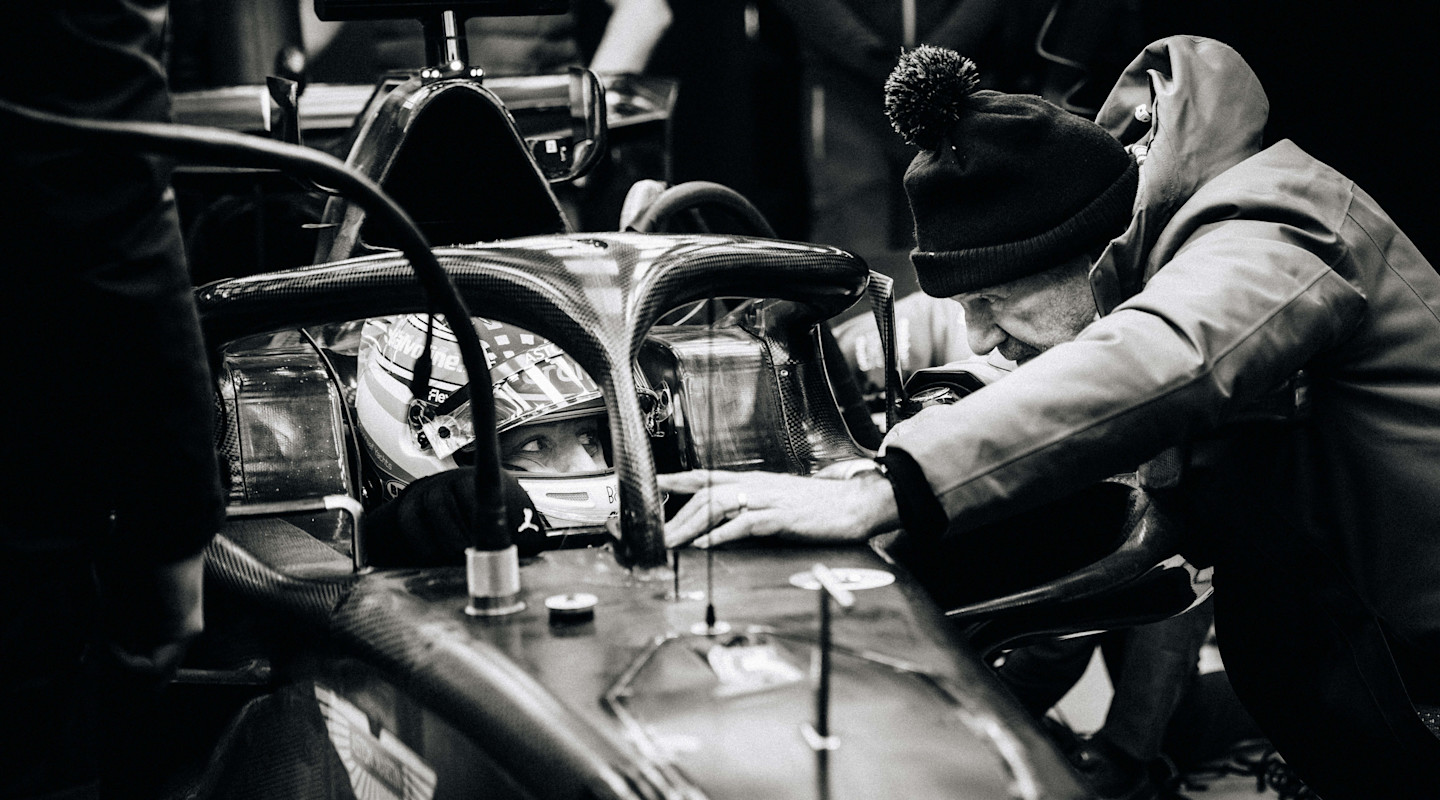
This is your first car as a Team Principal. Does that change your mindset?
“I became a Team Principal towards the end of last year. In many ways, to me, it’s simply a title. The role within the team is to try to provide a direction, an ethos, a culture, that we all work by. I try to lead by example, where possible. But really, it’s about developing everybody; we’re trying to develop at all levels so that we’re working well together, which then means we’ll get the best out of each other.”
And is that working?
“I’ll tell you later. [Laughs.] Ask me that question again at the end of the year.”
On the subject of working well together, this is a huge year for some of our partners. Arguably, none more so than our Title Partner, Aramco.
“One of the key aspects of this year’s regulations is the new power units, and with that comes the move to using fully sustainable fuel for the first time in Formula One. Aramco are absolutely pivotal for us here because of how they develop fuel, as are Valvoline, which is developing the oil, to suit the work Honda is doing and are a big part of a very complicated, but very important, equation.
“Without having a technical partner and fuel supplier with Aramco’s expertise, Honda’s development of the power unit would be restricted and that, in turn, would restrict us. The work Aramco are doing is going to stand us in very good stead.”
Aramco are absolutely all-in on this project, aren’t they?
“Becoming a technical supplier of ours has been a big change for Aramco.”
How so?
“They’ve had to reorganise. They’ve had to expand their facilities in certain areas to suit what is a very specific challenge: developing a fuel for a Formula One team. They are already experienced in this area as supplier low-carbon fuels to other formulas, such as F2, F3 and F1 ACADEMY, but of course, Formula One being what it is, we want to take their knowledge and expertise much further. They are developing very specific fuels to suit the Honda engine and our needs.”
Does the same apply to Valvoline in terms of the lubricants they’re developing for us?
“It’s a similar story with the engine oil. Efficiency is one of the big drives of this new formula and is a real source of performance, efficiency from the fuel, and also the lubricants.”
They’ve been involved in motorsport for more than a hundred years. It’s a cool brand to be working with, right?
“They’re a legendary supplier within motorsport and have a long history of excellent products. The chance to work with them exclusively on this new formula is really satisfying.”
Are they hooking you up with a few bottles of oil for your cars at home?
“[Laughs.] Not yet!”
The design of a car is about the holistic package. There’s no one individual part that’s likely to make the difference. It’s how all those parts come together.
You touched on the topic of sustainable fuel a moment ago. What’s your take on it as an energy solution and the role F1 can play in accelerating its development and wider application?
“Sustainable fuel is a huge energy solution for the future in terms of achieving carbon neutrality. It’s really exciting that Formula One is embracing that, and it’s a real opportunity for Aramco to leverage their global footprint of world-leading R&D centres and showcase its technology and innovation in this space.”
So are sustainable fuels the answer?
“At the moment, synthetic fuels are still significantly more expensive than fossil-based fuels. That will change with time; production techniques will get better and better. It’s a hugely growing area that can help us achieve the carbon neutrality that we all believe, of course, is absolutely vital for the future ecology of the Earth.”
Not a fan of electric cars then?
“Everyone talks about electric cars and so forth, but the reality is there is no singular technology that will be the solution. It won’t just be electric. It won’t just be synthetic. Hydrogen may be involved. Biodegradable
fuels will be involved. Synthetic will be a very important part of the solution, as will all the others.”
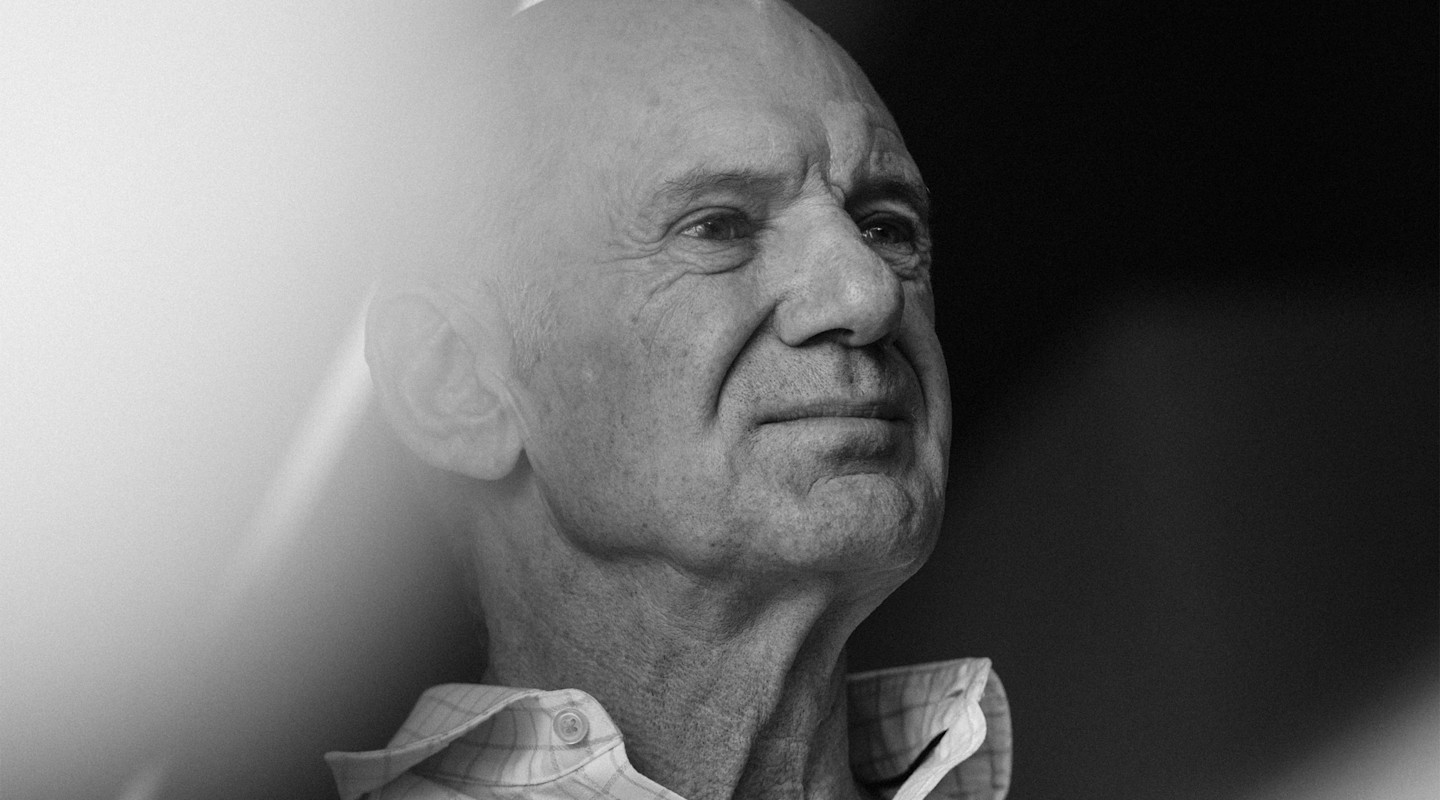
You mentioned that work on the AMR26 in the team’s new wind tunnel, now dubbed the CoreWeave Wind Tunnel, really only got going in April. You’ve seen a few wind tunnels in your time. How good actually is it?
“The CoreWeave Wind Tunnel is absolutely state-of-the-art. I would say it’s probably the best wind tunnel in the world for Formula One application. It’s very sophisticated, built entirely to our specification, with CoreWeave expertise woven into that. It’s set to be a game-changer for us.
“Aerodynamics is the biggest single performance differentiator in Formula One. Our principal research tool for that is the wind tunnel. It’s absolutely invaluable, and we are now reaping the rewards from it.”
This isn’t just a badge on a wind tunnel, is it? How is CoreWeave’s tech used in it?
“Part of it is helping us with the operation of the tunnel. Part of it is helping with measurement, for instance, PIV (Particle Image Velocimetry), which is a way of visualising airflow by seeding particles in the air and then putting a laser across it to measure flow properties. It requires a very complicated post-analysis. Having CoreWeave’s compute power and cutting-edge AI software woven into the tunnel enhances our ability to analyse that flow, manipulate it and then match it to other tools such as CFD.”
The car that races in Melbourne is going to be very different to the one people saw at the Barcelona Shakedown.
AI seems to come up in almost every conversation these days. What’s your take on it? Machine learning and AI have been used in Formula One for a while now.
“Machine learning has been around for a long time. It’s been superseded, if you like, as a buzzword by AI – everyone knows what AI is now. In truth, the AI that most people are using day to day is mainly just internet search-based and it’s pattern recognition.”
Do you use ChatGPT?
“[Laughs.] What we are using machine learning, or AI, for is much more specific tasks and therefore how we use that AI is incredibly tailored. We’re typically not using anything off the internet because we are too specialised for that, but there are instances of using pattern recognition to help with relatively simple tasks and even race strategy through simulation and game theory.”
So what are these ‘specific tasks’ the team is using AI for? And in what ways is AI going to be used in the future?
“There are more advanced applications… which I’d rather not talk about at the moment.
“The thing about things like compute power, data processing, artificial intelligence, is it’s all advancing so rapidly. What’s new now will be pretty much out of date in 12 months. It’s obviously incredibly exciting for
us, and it’s up to us to work with our partners to keep up with that because the opportunities it creates are absolutely immense. It’s almost as if we have to keep reopening our minds to what’s available, not on a daily basis, but certainly on a six-month basis, to take the most advantage as things evolve.”
You get the feeling that might be a broader theme for this season: keeping minds open to what’s available to take the most advantage as things evolve.
“Very much so. The AMR26 that races in Melbourne is going to be very different to the one people saw at the Barcelona Shakedown, and the AMR26 that we finish the season with in Abu Dhabi is going to be very different to the one that we start the season with.
“It’s very important to keep an open mind.”
Watch closelyBy designBy design
For your eyes only
AMR Technology Campus tours
Step inside our state-of-the-art home and go behind the velvet curtain with I / AM.