
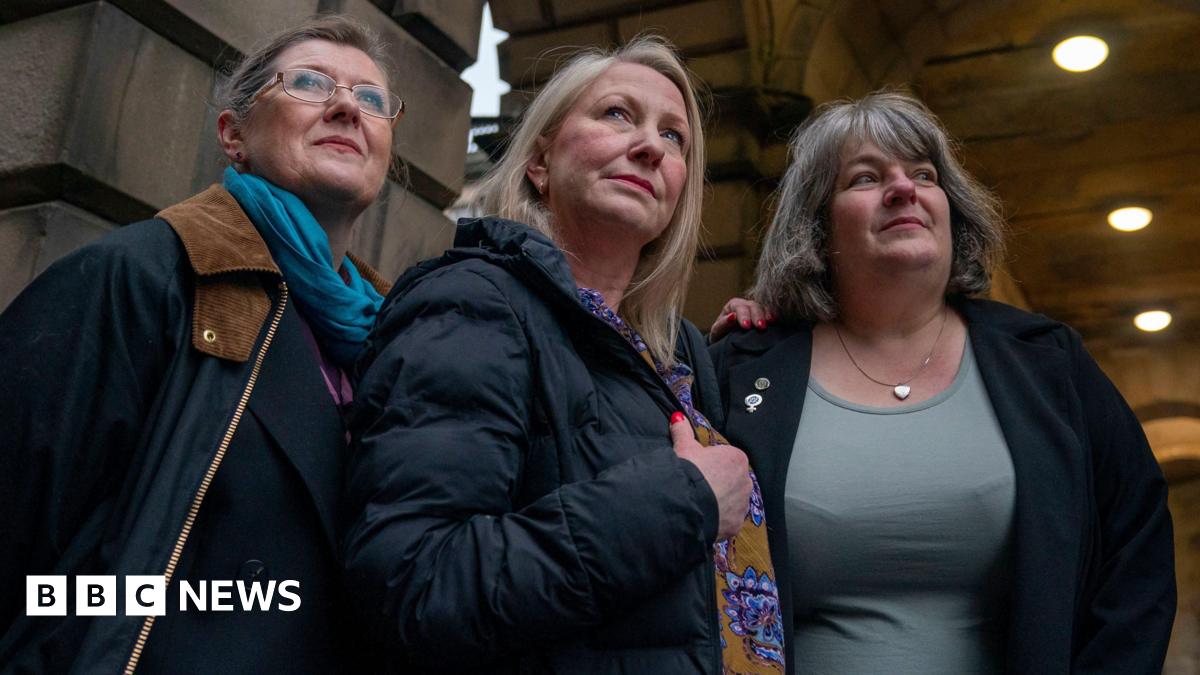
For Women Scotland contend that this guidance is not compatible with the Supreme Court ruling in 2025 which said sex should be defined in terms of biology in the Equality Act, the UK’s main anti-discrimination law.
The group’s written argument, external quotes the ruling as saying that “a person is either a woman or a man…provisions that refer to protection for women necessarily exclude men”.
The Scottish government meanwhile argues that the Equality Act was designed to give people a basis on which to make a claim of discrimination.
Its written arguments, external state that the Act “does not mandate sex segregation”, and “does not absolutely prohibit deviation from any norm”.
First Minister John Swinney had previously seemed keen to extricate his administration from the bitter dispute around gender, having abandoned the Nicola Sturgeon-era efforts to reform the gender recognition process.
With an election a few months away, O’Neill is not the only one who has questioned why the government would volunteer to wade back into such a divisive topic.
Last month, the first minister departed from his usual position of not commenting on live court proceedings to tell MSPs that there was a point of legal principle behind this case.
He said the government accepts the Supreme Court ruling, and is endeavoring to bring its systems into line with it.
But there is still not a central set of guidance from the UK watchdog, the Equalities and Human Rights Commission, because the UK government is still to sign off on it.
Thus the Scottish government has had to make its own assessment of the existing guidance – and it is that assessment which it is defending, both in court and in parliament.