
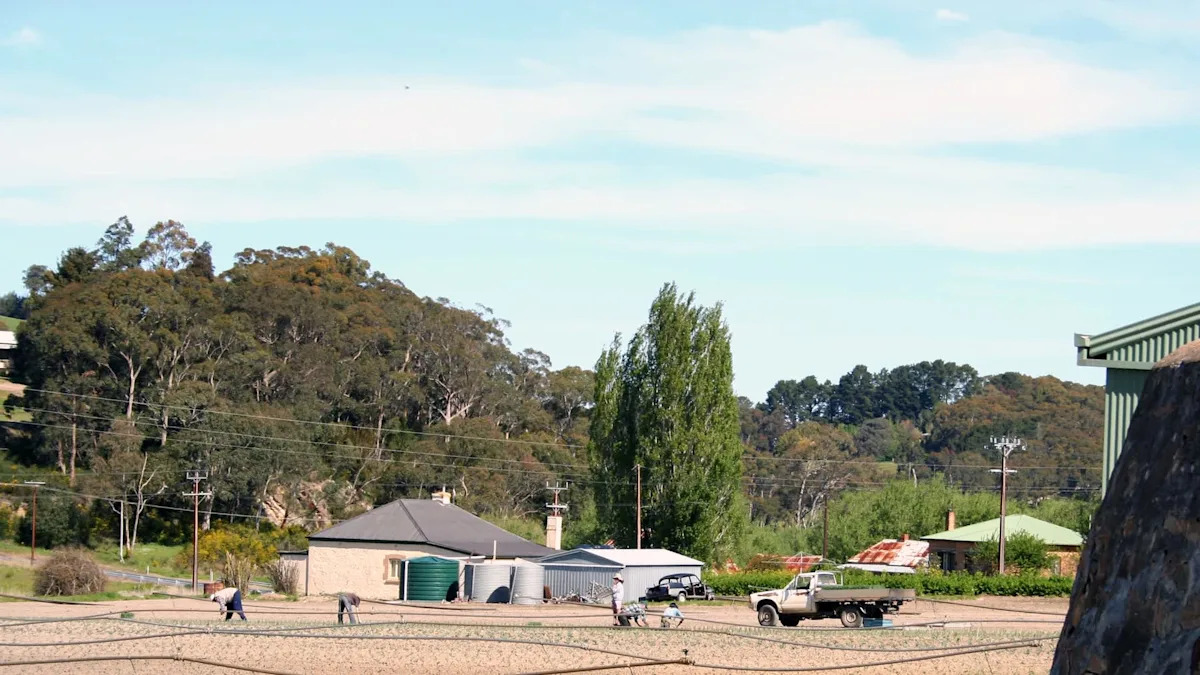
While much of the Northern Hemisphere was frozen solid, the rural Australian town of Ouyen might have shattered regional heat records, The Guardian reported.
What’s happening?
Ouyen, in the southeastern state of Victoria, is part of a larger agricultural region
The Australian Broadcasting Corporation has described Ouyen as a “farming town,” one that has long struggled with increasingly dry conditions.
Earlier this month, Australian officials issued several heatwave alerts for the ensuing weeks. They’ve warned of temperatures in the mid-40s Celsius, or as high as 117 F.
On Jan. 27, temperatures in Ouyen approached 49 C (120.2 F).
According to The Guardian, however, Australia’s Bureau of Meteorology believed temperatures at Ouyen’s Post Office could have risen further. It potentially broke Victoria’s record for the highest recorded temperature.
As the outlet noted, the sweltering, dangerous heat was not confined to one day. Temperatures had remained above 40 C (104 F) for the preceding five days, with four ultra-hot days to follow.
Extreme heat is unpleasant and dangerous, but Ouyen’s farmers had bigger worries: it hadn’t rained for weeks when the heat wave hit.
Fourth-generation farmer Deane Munro grows wheat, barley, and other crops on a 25,000-acre family farm. He fretted to The Guardian about crop yield uncertainty.
“We’re at 12-inch rainfall. We don’t have to miss out on any more than one or two rains and we can’t grow a crop, so we are very worried about that. We’re never going to be on the wetter side here, it’s always going to the dry side,” Munro admitted.
Why is Australia’s heatwave concerning?
Munro told The Guardian that while he wasn’t knowledgeable about rising temperatures, he was “absolutely” fearful about their impact.
The outlet indicated that “Australia’s average temperatures were up 1.23 C (2.2 F) in 2025 alone,” which also was the fourth-hottest year on record.
Extreme heat is a form of extreme weather, characterized by its severity, unusual nature, and impact, according to the World Meteorological Organization. Floods, wildfires, droughts, hurricanes, and heat waves have always occurred, but extreme weather is relatively new.
Human activities like burning fossil fuels, excessive land clearing, and consumption has raised temperatures. These actions, in turn, increase atmospheric evaporation and supercharge weather.
In addition to being more destructive and deadlier, extreme weather has wrought havoc on agriculture worldwide. In the U.S., some crop yields fell 50% in 2025, and broader losses are costing the North American farming industry billions.
Farmers in many regions endured chaotic growing conditions and unpredictable yields, jeopardizing local food supplies.
Reduced crop yields persisted as grocery prices rose worldwide, threatening to push costs even higher.
What’s being done about it?
According to Australia’s ABC, firefighters in Victoria braced for “difficult conditions.” Ambulance Victoria advised locals to limit time spent outdoors and alcohol intake.
More broadly, staying informed on critical climate issues like extreme weather is more important than ever.
Get TCD’s free newsletters for easy tips to save more, waste less, and make smarter choices — and earn up to $5,000 toward clean upgrades in TCD’s exclusive Rewards Club.