

Listen to this article
Estimated 5 minutes
The audio version of this article is generated by AI-based technology. Mispronunciations can occur. We are working with our partners to continually review and improve the results.
Saskatoon’s downtown office vacancy rate climbed last year to one of the highest in Canada, defying a national trend and reversing direction from the year before.
Vacant office space downtown jumped to 19.4 per cent in the last quarter of 2025, up from 16.4 per cent in the same quarter the year earlier. That ended a general downward trend since downtown vacancy peaked at 24.2 per cent in 2021, the second year of the COVID-19 pandemic.
Saskatoon’s downtown vacancy rate during the fourth quarter of last year ranked behind only Calgary (27.4 per cent) among major cities in Western Canada, although Edmonton was close behind at 19.1 per cent. Saskatoon also bucked the general trend toward a decline in downtown vacancy with the national rate dropping to 15.5 per cent.
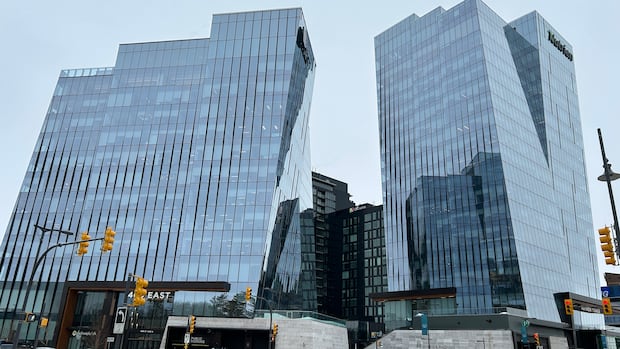
Tom Deibert, a vice-president with Colliers in Saskatoon, said part of the issue dogging downtown Saskatoon continues to be the addition of 450,000 square feet of new office space in the towers at River Landing, the second of which opened in 2021.
“To plunk 450,000 (square feet) in a year, it’s a success story that it was filled up as quickly as it could, but what it left in its wake is 650,000 (sq. ft.) of B and even A class space,” Deibert said in an interview.
“It’s just going to take years yet, another two, three, four years to get down to that five, seven per cent vacancy in the downtown market, presuming we go back to decent leasing.”
Companies have moved from older buildings downtown to the newer space at the River Landing complex, which features the province’s tallest building in Nutrien Tower.
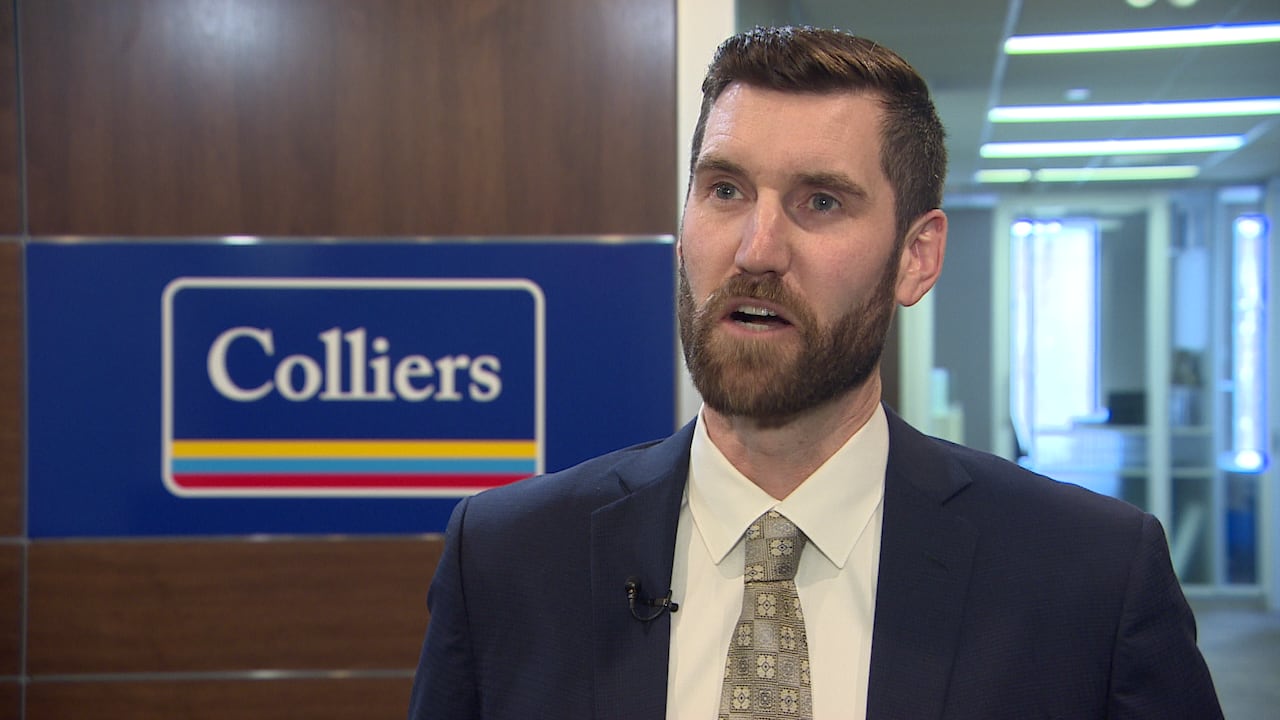 Tom Deibert, a vice-president with Colliers in Saskatoon, says the addition of office space in the newer towers at River Landing continues to affect vacancy rates in the city. (Chanss Lagaden/CBC)
At the end of last year, Saskatoon had 649,252 square feet of vacant space downtown — the equivalent of more than seven CFL football fields — compared to 233,176 sq. ft. of vacant office space outside the downtown.
Saskatoon’s suburban office space remained stagnant from the last quarter of 2024 (6.4 per cent) to the same period last year (6.5 per cent). But, overall, Saskatoon’s total office vacancy shot up to 12.7 per cent last year from 11.3 per cent at the end of 2024.
That remains below the national rate of 13.5 per cent, but nearly identical to the 12.5 per cent in Regina. Yet that’s where the similarity to Saskatchewan’s capital ends.
WATCH | Office vacancy rate spikes in downtown Saskatoon, defying national trend: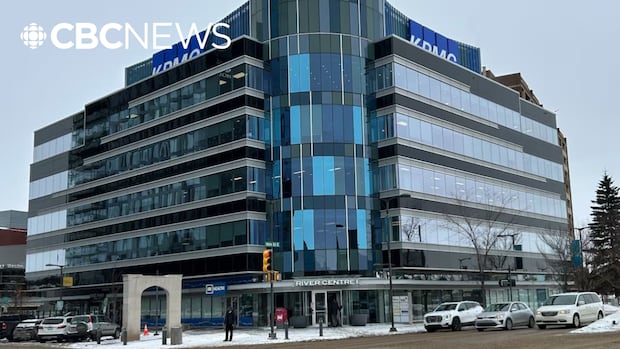
Office vacancy rate spikes in downtown Saskatoon, defying national trend
Saskatoon’s downtown office vacancy rate climbed to 19.4 per cent in the last quarter of 2025, up from 16.4 per cent in the same quarter a year earlier. The city also bucked the general trend toward a decline in downtown vacancy with the national rate dropping to 15.5 per cent.Tale of two cities
Regina’s downtown office vacancy dropped to 12.5 per cent last year from 15 per cent at the same time in 2024, while its suburban office vacancy soared to 10.1 per cent from 7.6 per cent.
While nearly three-quarters of Regina’s office space is located downtown, Saskatoon is split fairly evenly with slightly more than half of its office space located outside downtown. Saskatoon also boasts 1.4 million sq. ft. more office space than Regina.
Saskatoon’s downtown office vacancy rate dropped to 1.5 per cent in 2012, but had increased tenfold to 15 per cent by 2015.
Deibert said issues that continue to dog office vacancy in Saskatoon include a stagnant industrial vacancy rate (three per cent) with little new space added and a gradual transition from hybrid work practices.
Most of the vacant space downtown needs considerable work to make it acceptable for use as an office, Deibert said. But he sees reason for hope, too.
“Downtown still has its, I don’t know if you want to call it stigmas, but its challenges that occupiers are dealing with,” Deibert said. “I think there’s a light at the end of the tunnel. I think people have seen improvements, marked improvements.”
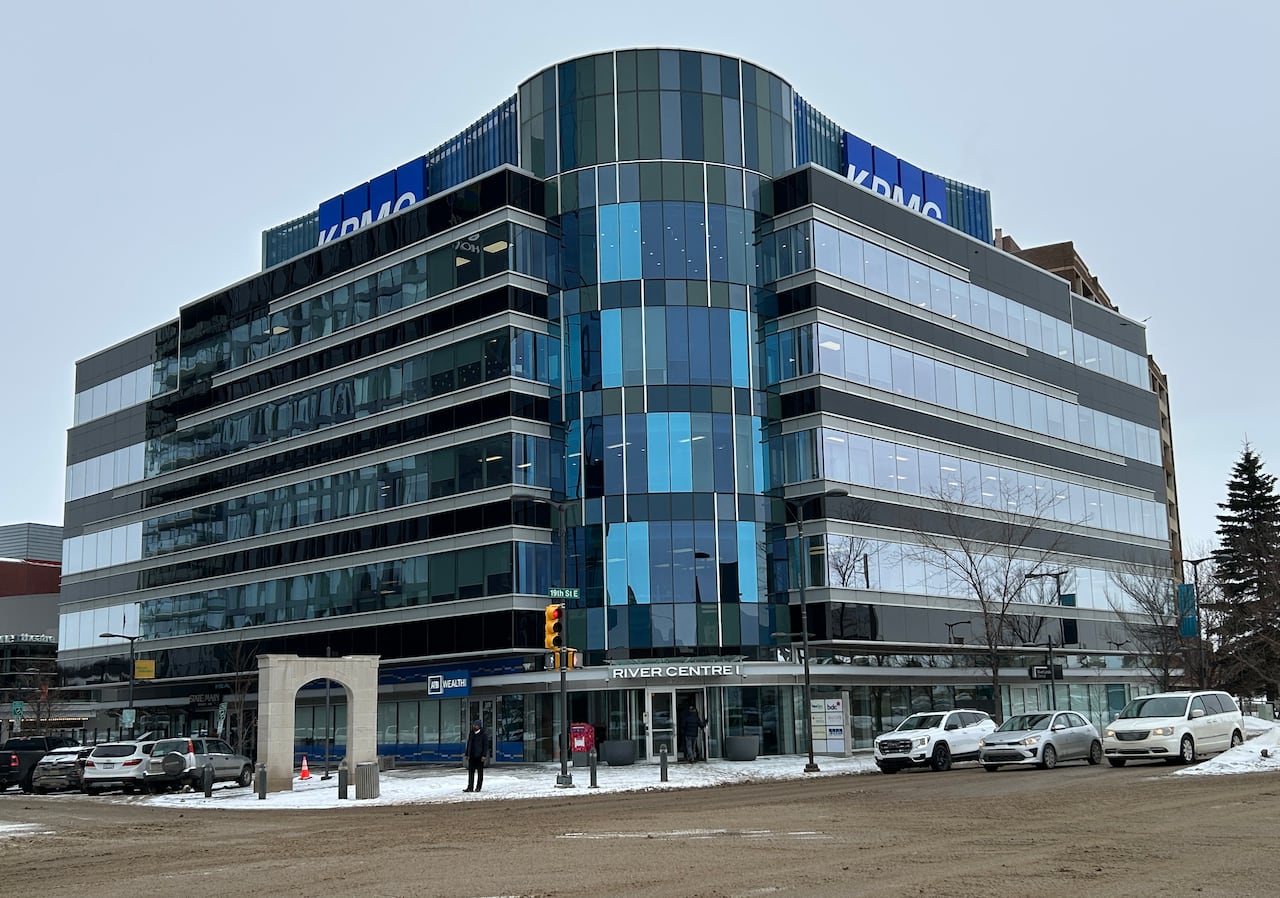 The River Centre building at the corner of Second Avenue and 19th Street in downtown Saskatoon sold in 2025 for $29.1 million. (Phil Tank/CBC)Arena district a ‘bright light’
The conversation about the Downtown Event and Entertainment District, which has been going on for 10 years, is helping convince some to locate in the core, Deibert said.
“[It] is a conversation and a bright light that helps occupiers make kind of generational decisions,” he said.
Shawna Nelson, executive director of Downtown Saskatoon, the business improvement district, said office buildings continue to sell downtown. That includes the six-storey River Centre, at the southwest corner of Second Avenue and 19th Street, which sold for $29.1 million last year.
 Shawna Nelson, the executive director of Downtown Saskatoon, says the retail sector downtown is thriving, but the food and beverage sector is struggling. (Chanss Lagaden/CBC)
But older buildings are also selling and some could be converted from office space to residential, Nelson said.
“I think right now there’s an opportunity to get some really good deals downtown and really flip this around into a good news story,” she said.
Nelson said the retail sector downtown is thriving, while the food and beverage sector is struggling.
“It would be great to see, again, more of our offices full, so they’re coming down and having lunch and then maybe staying afterwards for dinner,” she said.