
The House passed a spending package to end a short-term partial government shutdown and fund most federal agencies through the end of the fiscal year.
The spending deal, which includes a two-week continuing resolution for the Department of Homeland Security, was passed by the Senate last Friday.
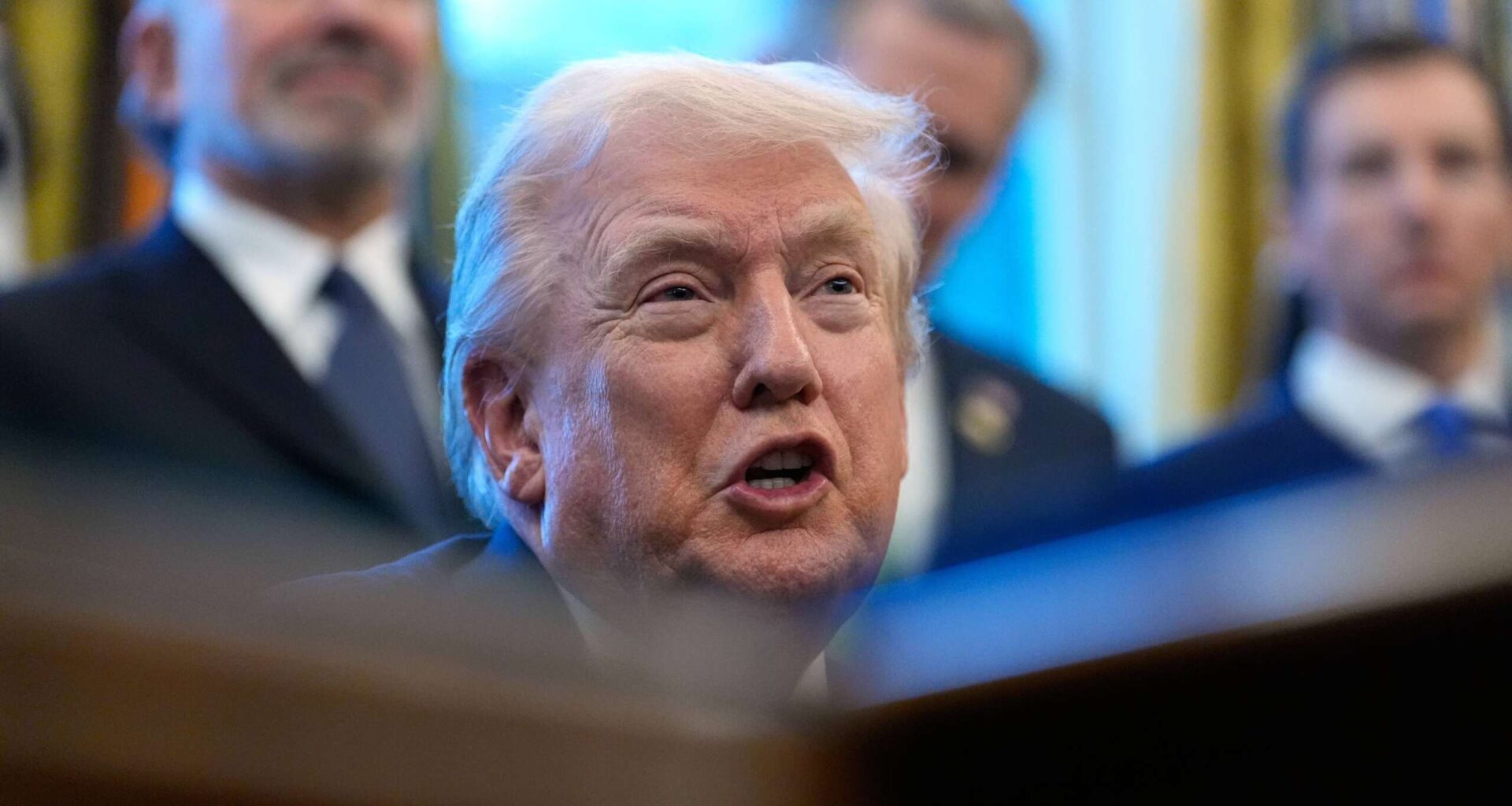
President Donald Trump signed the spending package into law on Tuesday afternoon.
The stopgap spending for DHS gives lawmakers more time to negotiate over guardrails on the Trump administration’s immigration enforcement operations, following the deaths of two individuals in recent weeks.
]]>
The spending package includes language guaranteeing back pay to federal employees who were briefly furloughed during the partial shutdown.
The Office of Personnel Management recently updated its shutdown guidance to remove references to the guarantee of back pay for furloughed federal employees once the funding lapse ends.
OPM’s guidance stated that “Congress will determine via legislation whether furloughed employees receive pay for furlough periods.”
After Trump signed the spending plan into law, OPM directed furloughed employees to return to work.
“Agencies should provide direction to their employees on resumption of operations and reporting expectations,” the guidance states.
OPM’s guidance also states that furloughed and excepted federal employees will receive back pay.
Congress has now passed comprehensive spending bills that cover a majority of the federal government.
]]>
The House advanced the spending deal by a slim margin. All House Democrats rejected a procedural vote to bring the spending package to a final floor vote, and House Republican leadership pressed several of their members to advance the bill. The final House vote was 217-214.
Ahead of Tuesday’s votes, House Republicans warned that another extended government shutdown would have no impact on federal immigration operations. About 80% of the FY 2026 spending bill for DHS covers other non-immigration priorities, including funding for the Federal Emergency Management Agency and the Transportation Security Administration.
In a press conference ahead of votes, House Speaker Mike Johnson (R-La.) said that Congress has funded Immigration and Customs Enforcement operations “for a few years now” through the One Big, Beautiful Bill Act that passed last summer.
The budget reconciliation bill gave DHS $165 billion to spend over the next decade. Much of the funding goes toward border security and immigration enforcement. The One Big, Beautiful Bill Act set aside billions of dollars for ICE and Customs and Border Protection to hire thousands of frontline personnel and offer bonuses to recruits.
“What they’ll be shutting down is FEMA operations, as we’re cleaning up from the winter storms. They’ll be shutting down TSA, which is obviously necessary to keep the country moving through our airports,” Johnson said. “So many important functions in the Department of Homeland Security is what will be adversely affected by these partisan games.”
House Appropriations Committee Chairman Tom Cole (R-Okla.) urged his colleagues to get this spending package “across the finish line.”
“The American people deserve stability, and they expect results. These bills deliver both,” Cole said on the House floor.
Democrats are calling for new restrictions on the Trump administration’s immigration enforcement surge after Border Patrol agents on Jan. 24 fatally shot Alex Pretti, an intensive care unit nurse working at the Minneapolis VA Medical Center. Pretti’s death took place two weeks after an ICE officer fatally shot another Renee Good.
The guardrails Democrats are pursuing include an end to sweeping patrols by immigration officials and a prohibition on ICE personnel entering people’s homes without a judicial warrant. Democrats are also seeking body cameras and a ban on federal immigration officials covering their faces.
]]>
House Appropriations Committee Ranking Member Rosa DeLauro (D-Conn.) said the two-week stopgap funding bill for DHS allows lawmakers to press for “real accountability for the abuses we have seen.”
If the House did not approve the spending deal and extended the partial government shutdown, DeLauro warned that “workers across broad swaths of the federal government would be furloughed.”
“Public services would be scaled back, paychecks would be missed,” she said.
The spending package trims overall discretionary spending levels, but rejects the Trump administration’s calls for major spending cuts at most agencies.
In one notable exception, lawmakers agreed to rescind $11.6 billion in multi-year modernization funds for the IRS. The IRS agency initially got $80 billion under the Inflation Reduction Act to rebuild its depleted workforce and modernize some of the oldest legacy IT systems in the federal government.
Accounting for the latest funding cuts, the agency’s total amount of modernization funding has shrunk to $26 billion. These funds are available to spend through 2031. The Treasury Inspector General for Tax Administration found the IRS spent nearly $14 billion of its Inflation Reduction Act funds, as of March 2025.
If you would like to contact this reporter about recent changes in the federal government, please email jheckman@federalnewsnetwork.com, or reach out on Signal at jheckman.29
Copyright
© 2026 Federal News Network. All rights reserved. This website is not intended for users located within the European Economic Area.