
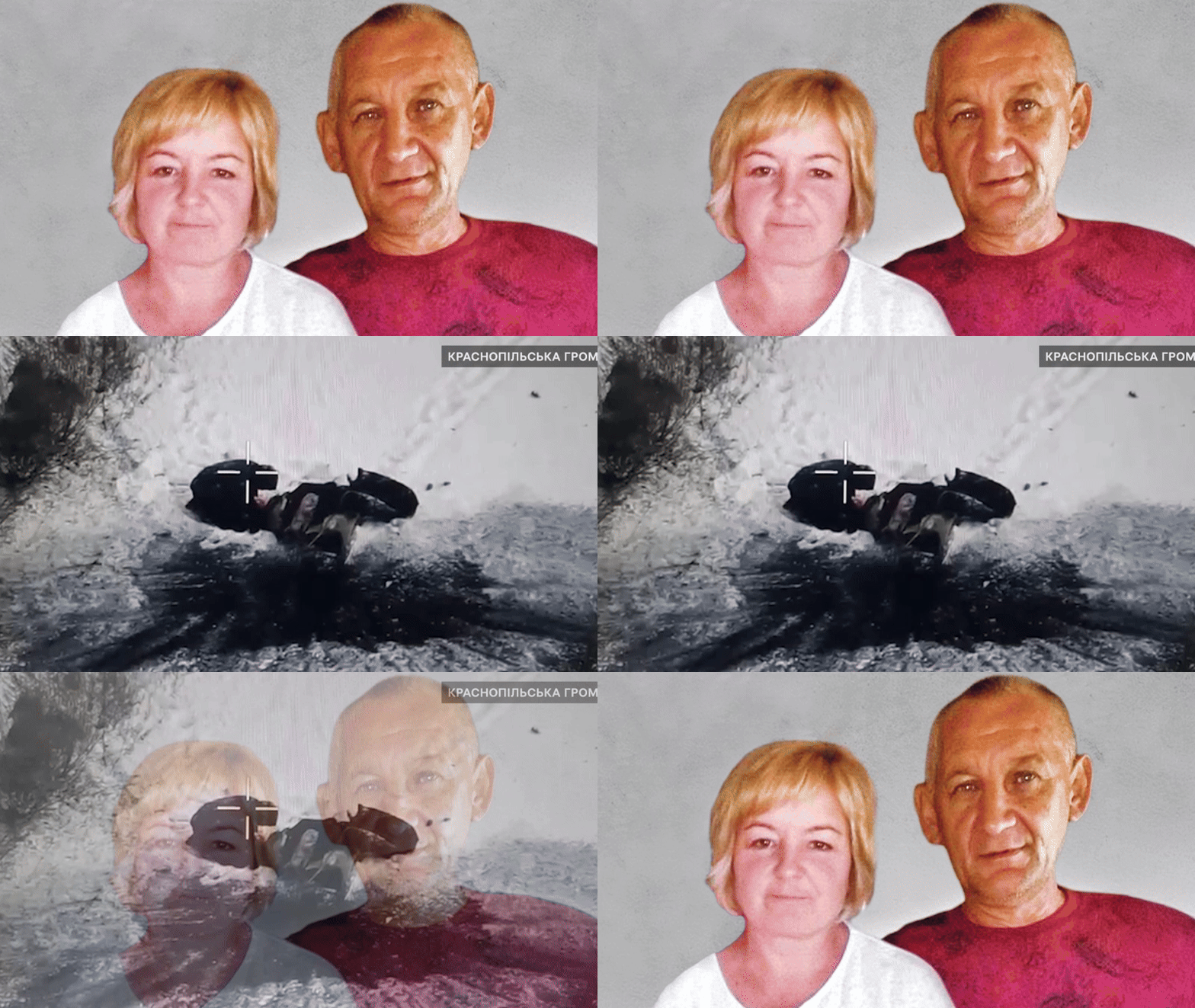
A married couple lie dead in the snow outside Hrabovske. It has been seven days since drones killed them. One at a time. There was no particular rush.
First the Russians killed Valentyna Klochkov, 52, flying an FPV kamikaze drone into her lap as she sat upright on a sledge, already wounded. Her husband had been pulling her along the frozen lane leading west from their village in an effort to escape the advance. The blast tore her apart. Her husband Valerii, 54, knelt beside her body. He never left her side.
Footage from a drone shows Valerii Klochkov wounded and weeping. Then another Russian drone arrived and killed him too. They had been teenage sweethearts, and were married for 33 years. Now their bodies lie frozen in the snow outside Hrabovske, un-recovered and irretrievable in the cruellest winter of Ukraine’s war.
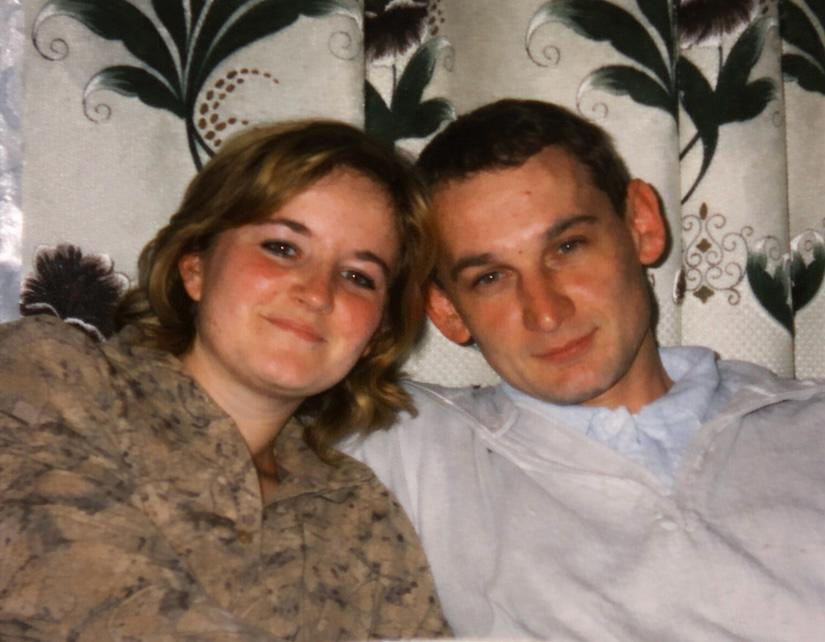
Valerii and Valentyna Klochkov many years ago
TIMES PHOTOGRAPHER JACK HILL
The last days of the Klochkovs are a stark reminder of how normal Ukrainians live, love and die at the hands of their country’s invaders. “They were kind and gentle people, who lived a simple life together and loved one another very much,” said Oksana Zyma, 53, Valentyna’s sister. “The thought of my sister lying scattered in the snow, unrecovered, is unbearable.”
The story of their deaths began on December 19 last year, when a force of Russian troops from the 34th Guards Motor Rifle Brigade infiltrated the area around Hrabovske, in the Sumy region, and captured it with barely a shot fired.
Abutting the Ukrainian border with Russia, Hrabovkse had a population of more than 400 before the full-scale invasion. Some residents fled in 2022, when Russian tanks passed briefly through the village during the early stage of the war.
Most later heeded a call by local authorities to evacuate the village as the war intensified. But several dozen chose to remain in their homes, the Klochkovs among them. She worked in the village shop; he was a tractor mechanic. “Their choice to stay was simple,” Zyma explained. “They were Ukrainians, living in their own home, on their own land, in their own country. They did not want to leave it for somewhere else.”
Video of Valerii Klochkov hunched over his wife’s body was captured by a Ukrainian drone sent to locate the couple
As soon as the Russians captured the village they rounded up as many inhabitants as they could find, corralling 52 people into the village church and deporting them to Russia a day later. The incident caused outrage in Ukraine, where the issue of the hundreds of thousands of adults forcibly abducted to Russia, along with at least 20,000 children, is already the source of fury.
President Zelensky condemned the Hrabovske abductions, while Ukraine’s foreign minister, Andrii Sybiha, likened the Hrabovske incursion to a terrorist hostage raid. “Russian invaders have stolen five dozen civilian people, mostly elderly women, from a tiny Ukrainian village, Hrabovske” Sybiha said. “With such medieval raids, Putin’s Russia shows it is no different from terrorist groups like Isis, Boko Haram or Hamas. We demand our civilian hostages to be returned home.”
Two Russian propaganda videos released in early January added to the furore. In one, a group of about 30 captured civilians from Hrabovske, looking dazed and scared, were filmed inside Russia where they made statements denouncing the Ukrainian authorities.
In another, one of the 13 Ukrainian soldiers captured during the Russian raid, hands bound and kneeling, “congratulated” Russian troops on their victory and sang the Russian national anthem.
Yet not every civilian in Hrabovske had been seized. A small number, the Klochkovs among them, had hidden from the Russian troops in their cellars, hoping to escape when the chance presented itself. Meanwhile, the couple’s family were out of their minds with worry. Zyma showed me the unseen texts she had written to her missing sister.
“How are you, are you alive there?” she had written on December 19, as news of the village’s capture became public. Her texts grew more frantic as the days progressed. “Message me when you can” and “let me know you are alive” she wrote repeatedly.
There was never a response. The missing couple’s phones had likely run out of charge. Then on January 21, Valentyna Klochkov’s birthday, her sister texted simply “Happy Birthday”. It was never read.
In a telling admission, one repeated regularly by Ukrainians this winter, Zyma told me that she had begun to take tranquillisers to cope with the stress. “I take sedatives to help me with the anxiety,” she said, “but I don’t take stronger tablets. I want to feel this pain. I don’t want to go through it as a vegetable.”
On January 27, likely driven out from their hiding place by hunger and the plunging winter temperatures, the Klochkovs seized their moment to escape. Bundled up in thick clothing, they emerged from their cellar and set out from the western edge of the village.
They had barely left the village when the first Russian FPV exploded beside them, wounding Valentyna. Valerii found a sledge in a nearby outhouse, put his wife upon it, and pulled her westwards through the snow behind him.
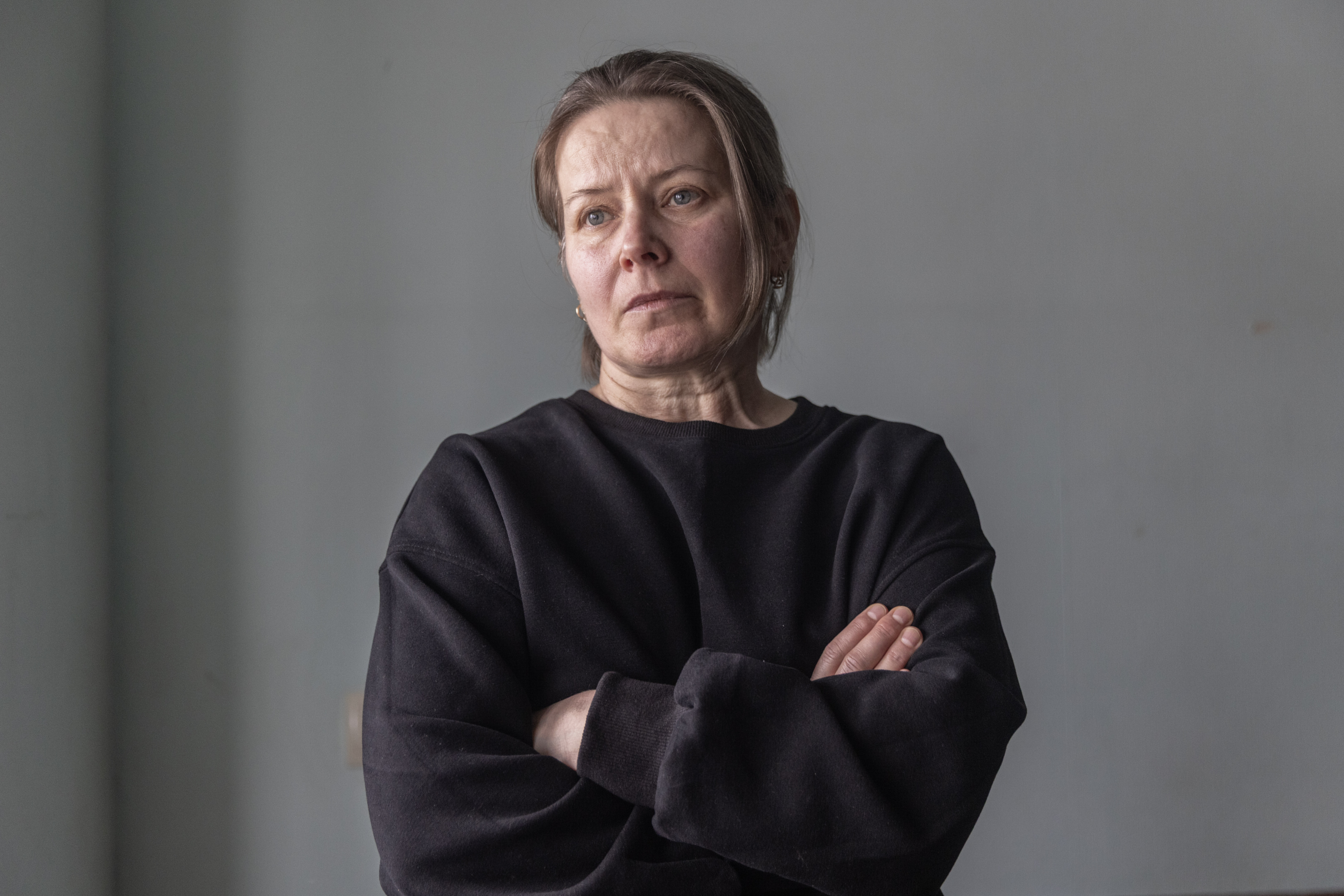
Oksana Zyma
TIMES PHOTOGRAPHER JACK HILL
Three other small groups of hidden civilians had managed to escape from Hrabovske over the previous weeks, crossing through the snow-bound emptiness of no man’s land to reach a safe rendezvous with Ukrainian units beyond.
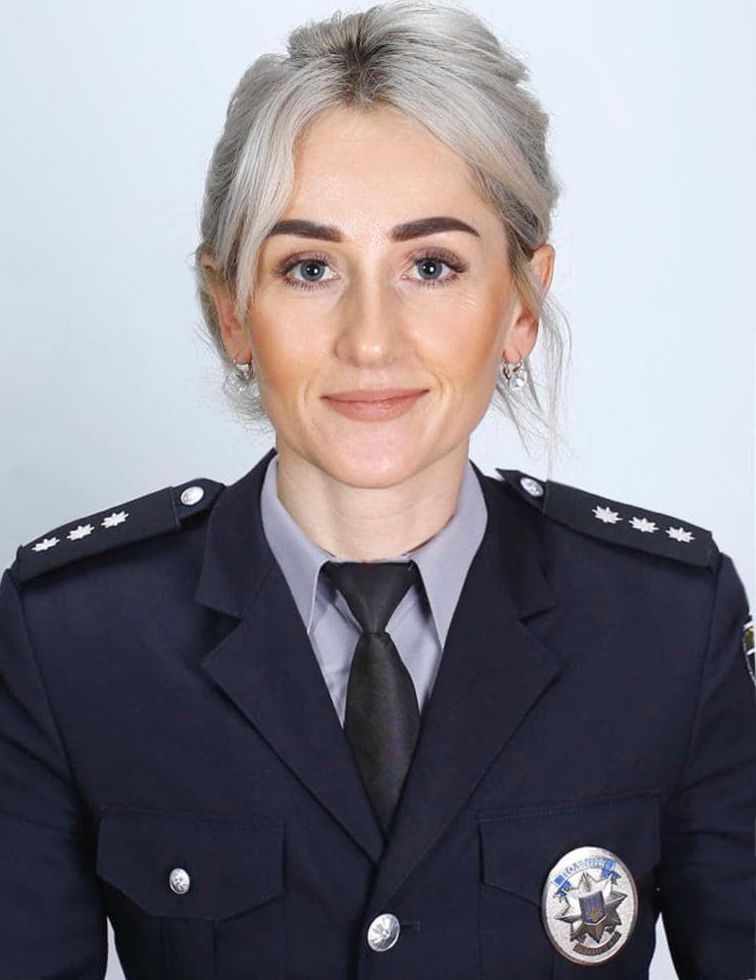
As the Klochkovs’ slow escape unfolded, their movement was picked up by a Ukrainian soldier. At about 11am Olena Stavytska, a police officer with the White Angels — a specialist police rescue unit — received a call saying that two civilians, clearly identifiable as non-combatants, had been seen trying to cross no man’s land towards Ukrainian lines.
In turn, Stavytska phoned a Ukrainian brigade and asked them to send a drone up to find the couple and drop them a communications device, either a phone or walkie-talkie, so that they could be guided to safety.
The drone quickly located the Klochkovs and made the drop. Once communication was established, a rescue plan was initiated and Ukrainian soldiers and White Angels personnel began moving towards a designated rendezvous point to meet the couple and whisk them to safety.
Stavytska told The Times: “We quickly began to organise a covering group, a group of our guys, so that they could help us go and pick the couple up, because the area is extremely dangerous, and without cover it was impossible to do this.
”Everything is being watched, FPV drones are flying and the area is mined. So in order to carry it out safely, the help of the military was needed. All of this was already planned and organised, and the time and meeting point were determined, where I was supposed to meet them, along with the soldiers.”
Yet the Russians had seen the couple too.
At about 1pm, to the horror of watching Ukrainian drone pilots, as Valerii Klochkov paused to catch his breath a Russian drone rammed into his wife. It tore her apart. Ukrainian drone footage showed Valerii, kneeling, hunched and shaking beside his wife’s body.
Shortly afterwards, another Russian drone targeted him. He was badly wounded, but remained beside his wife. As the light began to fade, a further drone exploded beside him.
Just before dusk a Ukrainian soldier reported that no further movement could be seen. The rescue was aborted.
The escape had failed. The war continues. The winter worsens. Their bodies still lie where they were killed a week ago, as it is too dangerous to reach them. Yet if one message of resistance holds true for the dead couple in the snows west of Hrabovske it is this: right to the last bomb blast, love had endured.