
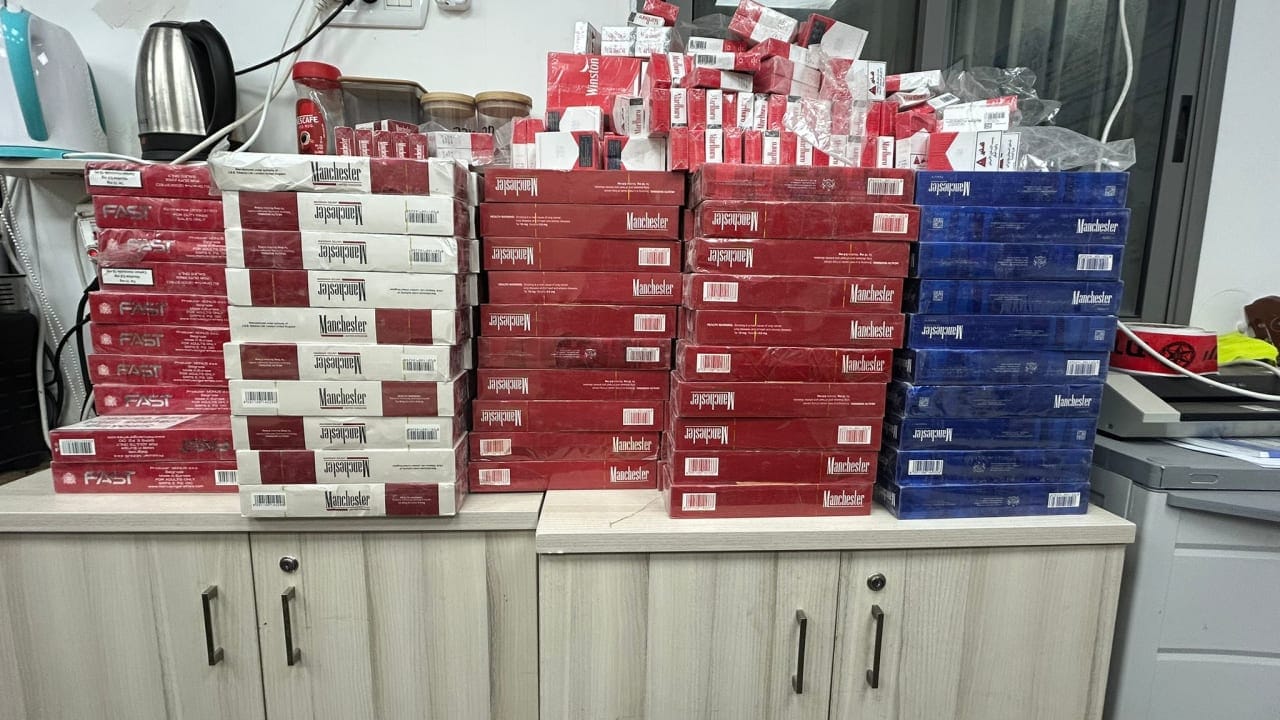
The prosecution on Wednesday filed indictments against 12 Israelis accused of aiding the enemy and accepting bribes as part of a sprawling smuggling operation that prosecutors say transferred millions of shekels’ worth of goods into the Gaza Strip during wartime, generating substantial proceeds and strengthening Hamas’s economic position inside the enclave.
According to the indictments, the suspects were involved in the clandestine transport of goods both while fighting was ongoing and after the ceasefire that brought about the return of all hostages taken on October 7, 2023.
The ceasefire was signed in October, and hostages were returned in tranches, with the final group released in January under an agreement reached on October 9, 2025, a sequence detailed in the charges.
Prosecutors say the operation revolved primarily around the smuggling of tobacco products and cigarettes, but also included other items such as mobile phones, batteries, vehicle parts, communication cables, heating and electrical equipment and additional supplies.
The indictments describe cigarettes as a particularly profitable commodity, alleging that the movement of tobacco into Gaza generated hundreds of millions of shekels for Hamas since the start of the war in a way that prosecutors say aided it financially and in its control over the population.

The smuggling took place against the backdrop of Israel’s system for regulating the entry of goods into Gaza. Before October 7, 2023, goods were transferred into Gaza predominantly through Kerem Shalom, including gas and fuel officially designated for civilian use. Throughout the war, additional crossings were opened at times to allow humanitarian aid to enter the enclave, with Kissufim and Zikim among those later operational in addition to Kerem Shalom. The indictments emphasize that what passes through these crossings remains subject to specific conditions and checks that balance civilian needs and security considerations.
In a joint statement, police and the Shin Bet said the suspects exploited both the ceasefire and the large-scale entry of humanitarian aid into Gaza in order to smuggle goods prohibited from entry into the enclave, taking advantage of what authorities described as the “new reality on the ground” created by the ceasefire arrangements.
The indictments describe a flexible operational chain that prosecutors say included suppliers or mediators, an operator responsible for procuring goods and coordinating logistics, and conductors who physically transported the goods into Gaza and handed them over at prearranged delivery points. Those roles were not rigid, and individuals often switched between or carried out multiple functions in the course of those events.
According to investigators, dozens of individuals were involved in the broader smuggling networks, including Israeli citizens, residents of the West Bank and the Gaza Strip, who authorities said carried out the activity while “turning a blind eye” to its direct contribution to the strengthening of terror organizations in Gaza, first and foremost Hamas.
Prosecutors also allege that the defendants acted for financial gain with awareness that the prohibited goods could reach the hands of Hamas and were certain to aid it in its war against Israel, including by strengthening it economically.
Shin Bet Chief’s brother suspect in Gaza smuggling case
One of the more prominent names mentioned in the charges is Bezalel Zini, identified as a suspect connected to the case. Zini, the brother of the head of the Shin Bet (Israel Security Agency), is not among those indicted. The court and police have stressed that there is no indication that the Shin Bet chief himself is involved in the alleged crimes.
The indictments list nine individuals in one charging document and four in a second. Among the named defendants are Eliran Algarbeli, 38, of Kiryat Gat; Avi Algarbeli, 41, of Kiryat Ata; Imad al-Din Abu Mukh, 55, of Baka al-Gharbiya; Ofer Sankar, 42, of Kiryat Gat; Yosef Yohananov, 39, of Kiryat Gat; Yori Yaakobov, 42, of Kiryat Gat; Meir Levy, 26, of Beitar Ilit; and Oshri Dahan, 39, of Talmei Eliyahu. The second indictment names Yaron Peretz, 52, of Noam; Menachem Abutbul, 39, of Kiryat Gat; Nadav Halfon, 30, of Kiryat Gat; and Atar Eben, 37, of Shaked, along with requests for the forfeiture of proceeds and property connected to the operation.
Police said that among those arrested were Israeli citizens serving as IDF reservists, who were suspected of taking part in the smuggling while on reserve duty.
Prosecutors lay out a detailed timeline of smuggling operations beginning in late August 2025. In a sequence described in the indictments, several of the defendants allegedly transported roughly 26 cartons of cigarettes into Gaza between late August and early September, totaling approximately NIS 3.9 million in payments. In a subsequent run in late September and early October, they allegedly moved about 13 cartons of cigarettes for about NIS 500,000. Later in October, they are accused of smuggling about 30-50 mobile phones alongside tobacco for another NIS 500,000 in payments.
In late October, the indictments describe a larger mixed shipment that combined roughly 40 cartons of cigarettes, about 100 mobile phones, and medical supplies, completed in four rounds on the same day, with proceeds of about NIS 900,000. After that, multiple Kerem Shalom runs are detailed involving cigarette cartons for sums in the hundreds of thousands of shekels.
A December 15, 2025 entry describes a failed run of 15-16 cigarette cartons that prosecutors say did not result in payment because a Gaza-side driver was arrested. On December 19, 2025, the indictments describe an episode in which a truck carrying a large mixed shipment – including cigarette cartons, batteries, solar-system cables, heating stoves, multiple types of mobile phones and additional goods – was stopped by Israeli forces inside Gaza, with defendants alleged to have used military-style clothing and other means of disguising their true purpose.
The investigation was initially placed under a comprehensive gag order on December 20, which was gradually narrowed at the requests of journalists. The two indictments were ultimately filed later, with defendants arrested largely in December and two additional arrests in January.
During a closed-door hearing held Tuesday at the Ashkelon Magistrate’s Court, publication was permitted regarding the existence of three additional suspects – Zini, Amir Halpern, and Aviel Ben David – questioned on security offenses linked to cigarette smuggling into Gaza, whose detention was extended until March 5 after the prosecution submitted a formal declaration of intent to indict.
Law enforcement officials have said the case is one of two significant smuggling probes related to Gaza that are currently underway, handled jointly by Israel Police, the Shin Bet and the Justice Ministry’s Police Investigation Department. In parallel, the IDF has tightened supervision at crossings between Israel and Gaza, with Southern Command and Gaza Division units increasing oversight of movement at key entry points to prevent further smuggling.
In their statement, police and the Shin Bet warned that Hamas and other terror groups have been working, particularly since the start of the ceasefire, to rehabilitate and expand their military and civilian infrastructures, including rebuilding damaged systems, recruiting and training operatives, and restoring logistical and command-and-control capabilities.
They said the smuggling poses a significant security threat by aiding Hamas’s survivability and governance through economic profits, strengthening its military capabilities, and creating potential channels for the smuggling of weapons and advanced technological means, as well as the use of smuggling routes as platforms for offensive activity against Israel and Israeli forces operating in Gaza.