
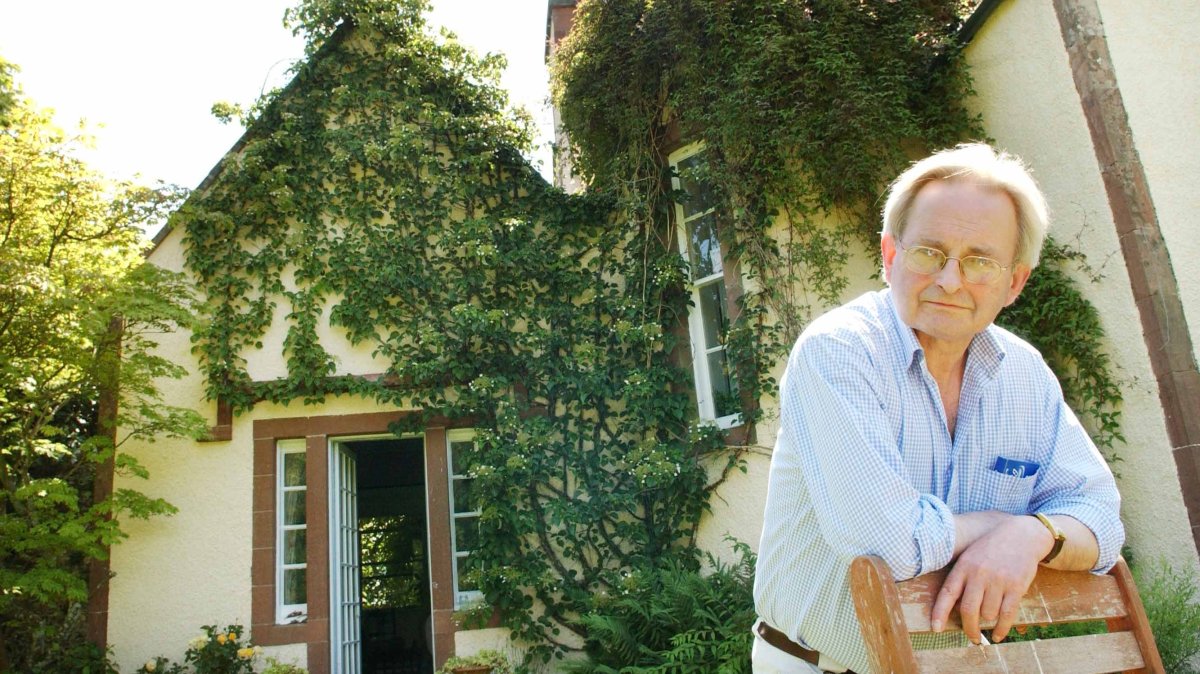
The Scottish literary establishment has rarely warmed to writers whose horizons stretch beyond the homeland.
From the days of Scotland’s so-called literary renaissance in the 1930s, when the poet Hugh MacDiarmid and the novelist Lewis Grassic Gibbon sought to define a Scottish writer by the extent to which they adopted the vocabulary and geography of Scotland, those who stepped outside its borders have tended to be sidelined.
Thus, Allan Massie, perhaps the finest Scottish novelist of the postwar era, whose literary output matched that of his great hero Sir Walter Scott, and whose writing traversed the continent of Europe, never quite won the respect he deserved among his compatriots.
In France he was awarded the prestigious Ordre des Arts et des Lettres; in Italy, his chronicles of the Roman emperors were considered classics of their kind. Widely admired by English critics, he was, however, less favoured north of the border.
That may have been because he brought to his writing a literary quality and a range of reference that was out of step with modern standards. It may also have been because his politics were of a conservative bent in a socialist-leaning country. It may have been because he favoured rugby and cricket over football.
Or perhaps because he smoked French Gitanes or Italian Toscano cigars, and wore a tweed suit.
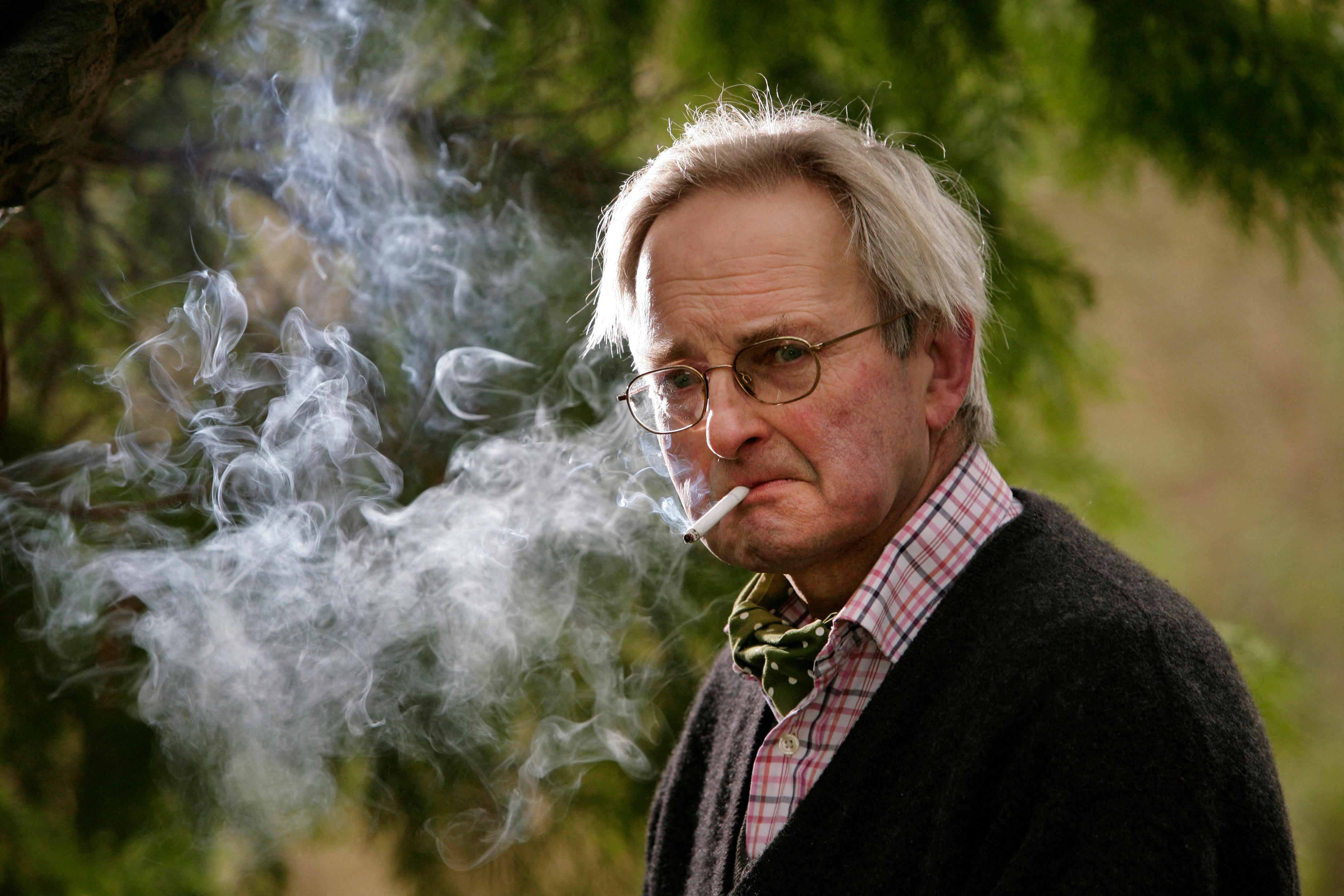
The novelist James Robertson concedes that “Massie chose to write against the trend of contemporary Scottish fiction in terms of literary style or content”. Or, as the writer Robert Harris put it: “He was something very rare, an example of what is nowadays almost a vanished breed — ‘a man of letters’, equally adept at producing an article about politics, an erudite book review, a literary novel or a detective story. He was a novelist in the tradition of Graham Greene and Brian Moore — a gifted creator of characters and stories, but above all a novelist of ideas, preoccupied with issues of history and politics.”
As a teacher himself, and later writer in residence at the University of Edinburgh, Massie helped a generation of young writers to find their feet, including the poet Kathleen Jamie, the detective writer Sir Ian Rankin, and novelists James Meek and Andrew Greig.
Massie encouraged Rankin, who was writing his doctorate on Muriel Spark, an author they both admired, and later introduced him to his first editor, Euan Cameron at The Bodley Head.
“Allan was an important Scottish novelist never quite given his due,” said Rankin. “He also nurtured what talent I had and led me towards a career that has sustained me for 40 years. I am eternally thankful.”
A writer of wide range, possessed of an encyclopaedic knowledge of history and literature, Massie was also a committed rugby fan. With his wife, Alison, he chose to live in the Borders of Scotland rather than his native Aberdeenshire, on the grounds he could watch his local rugby club, Selkirk, and its great fly half John Rutherford.
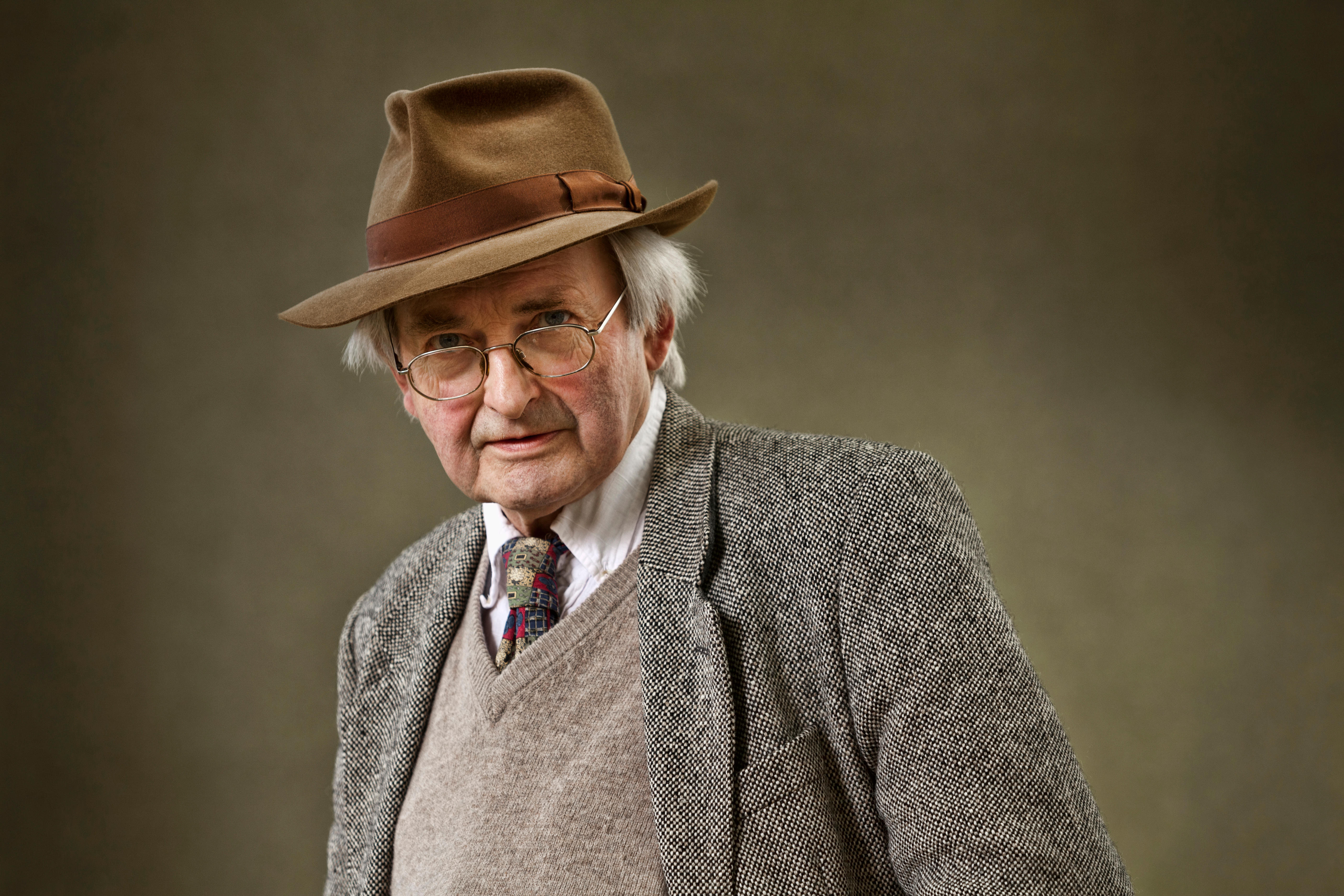
Allan Johnstone Massie CBE, the Scottish journalist, columnist, sports writer and novelist.
GARY DOAK/ALAMY
Writing about the game for The Scotsman, over many years, he won the friendship and admiration of the Scottish coach Gregor Townsend, who recalled: “He had a real rugby eye. He didn’t just go for the big-name players. He loved scrum halves who played at tempo.”
Massie’s greatest hero, however, was the legendary full back Ken Scotland — “the most complete full back I have ever seen … a player who brought a romantic touch to classical, intelligent rugby.”
Allan Johnstone Massie was born in 1938 in Singapore, the second eldest of three children — two boys and a girl — whose father Sandy, a rubber planter, had emigrated from Aberdeenshire, where his family were farmers, and worked his way up through the multinational company Sime Darby.
When war was declared, Sandy sent his wife Eve (née Forbes), then pregnant with their third child, back to Britain with the two elder boys. He himself elected to stay, and joined the Johor volunteers — a local unit — to fight the Japanese.
Known as “Tiger” Massie, he was captured, and spent the war in a prison camp, working on the notorious Japanese railways, where conditions were so grim that at one stage he was not expected to survive. Returning to Britain, he recovered and took up farming.
Sandy would later divorce Eve and go back to Malaya, where he remarried. However, in a twist of fortune that Massie the novelist might have invented, he divorced again, came back to Britain, and asked Eve if she would remarry him — which she did. They lived happily together for another 25 years.
Allan was educated at Drumtochty Castle prep school, a gothic building in Kincardineshire, bought from the King of Norway by Massie’s future parents-in-law Robert and Elizabeth Langlands. There, aged eight, he first encountered their daughter Alison, then just two, whom he would later marry — and her sister Elspeth, who would use the draughty castle, its dripping woods and its feral pupils as the background to her novel O Caledonia.
It would also be the school to which Massie would return to teach history and classics, and form friendships which would last a lifetime. At Glenalmond College he played cricket and rugby and won a scholarship to Trinity College, Cambridge, where he read history, before returning to Drumtochty, teaching history and the classics for 15 years, and renewed his relationship with Alison, by then at Aberdeen University.
Eric Young, who was taught by Massie and remained a close friend, described the school as “a happy place”, and Massie as “a kind and able teacher” who would gather his pupils to listen to music every Sunday. He dressed somewhat eccentrically and never spoke down to his pupils, but was decidedly poor at managing his finances.
The school itself teetered on the edge of insolvency, and finally went under in 1971. Massie moved to Rome, where he taught English, and was joined there by Alison. They married in the city in 1973.
By then, he was contributing stories to such outlets as the London Magazine, whose editor, Alan Ross, was encouraging. “You find yourself every time you find an echo of Hemingway,” he used to say.
Massie also began writing on Italian politics for The Scotsman, a newspaper with which he was to have a long association, both as critic and rugby commentator. By 1975, the couple were back in Edinburgh, bringing up their children — Alex, a columnist for The Times, Louis, an editor for Agence France-Presse in Paris, and Claudia, who develops TV documentaries.
The first of his 20 novels, Change and Decay in All Around I See, an Evelyn Waugh-style comedy, appeared in 1978, closely followed by The Last Peacock, a comedy of manners. But it was his third, The Death of Men, based on the kidnapping and murder of the Italian prime minister, Aldo Moro, that won him critical attention, with Encounter magazine describing him as “perhaps the finest living Scottish author”. The book won a Scottish Arts Council Book Award.
Massie then turned his attention to the lives of Roman statesmen, including Augustus, Tiberius, Mark Antony and Julius Caesar, around whom he constructed imagined autobiographies or biographies in the tradition of Suetonius, winning praise from Gore Vidal, who described him as “a master of the long-ago historical novel”. Alongside them he ventured into the fraught world of Vichy France, where he explored the complex theme of whether it is possible to live a decent life in indecent political circumstances.
A Question of Loyalties won the Saltire Society’s book of the year award, and when The Sins of the Father failed to make it on to the Booker shortlist in 1991, Nicholas Mosley, one of the judges, resigned in protest.
Massie’s novels appealed more perhaps to fellow writers than the public, but one admirer, Gerry Carruthers, Francis Hutcheson professor of Scottish literature at Glasgow University, is convinced of his standing as “a serious historical novelist as profound as anyone in the western world in the genre during the late 20th century”. Carruthers added: “Along with Muriel Spark and William McIlvanney, Allan Massie has been one of three masters of both stylishly written and exhilaratingly suspenseful fiction coming out of Scotland in the 1960s.”
Scottish critics were less enthusiastic, preferring the gritty urban style of writers such as McIlvanney, James Kelman and Irvine Welsh. Because Massie championed the work of Walter Scott as the seminal influence in Scottish literature, and also the man who, more than any other, was the architect of the Scottish identity, he won few favours from left-leaning nationalist writers and critics who did not warm to the unionism favoured by Scott — and Massie.
He campaigned against devolution in 1997, voting No/Yes (No to devolution, Yes to tax-raising powers if it did come about). When the independence referendum came along in 2014, Massie took part in a celebrated debate with his friend and fellow writer McIlvanney, putting the intellectual case for No, while McIlvanney spoke from the heart in favour of Yes. The general view was that Massie had won the argument, but afterwards both shook hands.
Along with his 20 novels came more than a dozen works of non-fiction, biographies, political studies, portraits of Scottish cities and the history of Scotland. Massie loved his country dearly, although he was clear-sighted about its failings. He was appointed CBE in 2013, and, though France was slow to warm to his novels about Vichy, they awarded him the Ordre des Arts et des Lettres in 2007.
By now the Massie family had moved to the Borders, from where he contributed reviews and articles to a wide range of magazines and newspapers, including The Spectator, the Literary Review and the New York Review of Books.
Massie’s life at their house, Thirladean, was one in which animals — dogs, ponies and children — featured strongly if haphazardly. He loved the traditions of the Border Ridings, walks in the countryside, reading to his children, and repairing to his study, up a staircase, and piled high with books and papers and wreathed in cigarette smoke, where he read voraciously. Always approachable, he was a natural supporter of young people and emerging writers.
There were, it is true, some demons in his personal life, and there was a dark period when he resorted to alcohol, travelling up to Edinburgh, where he could be found sleeping off the excesses on friends’ couches or even public benches. But he confronted his addiction with courage and determination, finally defeating it.
“I count that battle as one of his greatest successes,” said his friend Eric Young. He was devastated, however, by the death of his wife Alison in 2022 — theirs had been a long and happy, though occasionally volatile, marriage and her death left a gap that he found hard to fill.
His last battle was with prostate cancer and, though he lost it eventually, he took quiet satisfaction from the fact it was that disease, rather than lung cancer, that took him. He is survived by his three children.
The final verdict on Massie’s writing came from James Robertson, who said: “He sits in the tradition of Scott and Buchan, as a writer who was not afraid to defy fashion and novelty, in order to say what he felt he needed to say. Whether he always succeeded or not, that is a good rule for any serious writer to follow.”
Allan Massie CBE, novelist and literary critic, was born on October 16, 1938. He died of cancer on February 3, 2026, aged 87