
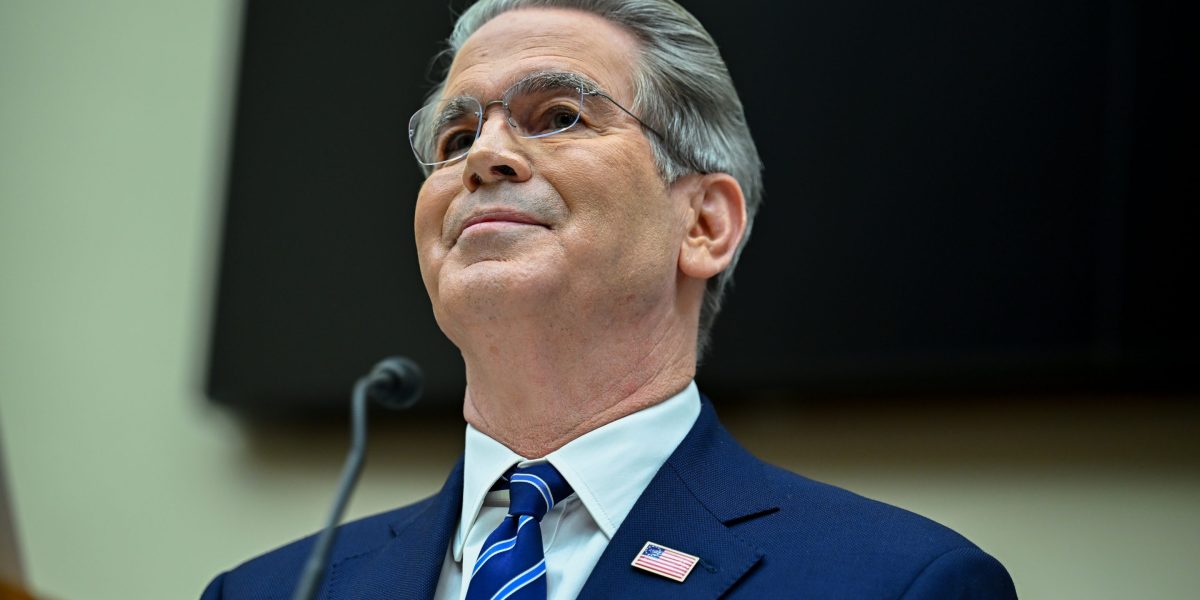
A House Financial Services Committee hearing descended into chaos and personal invective on Tuesday as Treasury Secretary Scott Bessent clashed with ranking member Maxine Waters (D-Calif.) over the economic impact of President Trump’s tariff policies. The heated exchange, ostensibly about inflation and housing costs, culminated in a tense standoff where Waters repeatedly silenced the secretary, telling him, “You don’t get to talk,” and questioning his dignity as he attempted to interrupt her line of questioning.
The confrontation began with Waters pressing Bessent on what she characterized as a convenient evolution in his economic philosophy regarding tariffs. Waters asked the secretary whether he had written a letter to hedge fund investors warning that “tariffs are inflationary.” Bessent offered a terse “no” in response.
Bessent’s denial came despite reporting dating back at least a year, as noted by the Wall Street Journal’s Nick Timiraos on X, that the Treasury secretary wrote that exact sentiment in February 2024. “Tariffs are inflationary and would strengthen the dollar,” Bessent wrote to his hedge fund’s investors. “Hardly a good starting point for a U.S. industrial renaissance … The tariff gun will always be loaded and on the table but rarely discharged.”
Are tariffs an inflationary tax or not?
Undeterred, Waters pointed to a New York Times article citing Bessent’s testimony before a Senate committee the previous summer, in which he allegedly claimed: “There is no inflation; tariffs are not being passed on to consumers,” and dismissed critics as suffering from “tariff derangement syndrome.” Waters sought to clarify the secretary’s current stance, asking plainly whether tariffs drive up costs. Bessent pushed back, citing the San Francisco Federal Reserve and “150 years of data” to argue that “tariffs do not cause inflation.” In this regard, he was relying on historical research showing that tariffs are a relatively small share of GDP and that many large inflation episodes were driven by wars, oil shocks, or monetary policy rather than trade barriers, so the macroeconomic impact often looks small even when particular goods become more expensive.
The line of questioning took a sharper turn when Waters highlighted a contradiction in the administration’s recent messaging. She noted that Bessent had told Fox News in November that the government intended to reduce tariffs on goods like coffee and bananas to “bring the prices down very quickly.”
“Mr. Secretary, why was that announcement even necessary if tariffs aren’t inflationary?” Waters asked, challenging the “Trump logic” that tariffs are paid solely by foreign nations. “A tariff on coffee or bananas shouldn’t raise the price of either for American consumers … But that isn’t reality. It did raise prices across the board.” Waters argued that levying tariffs on goods the U.S. does not produce only serves to “punish the American consumer.”
The tension in the room spiked when the discussion shifted to the housing crisis. Waters accused the Trump administration of exacerbating affordability issues by levying tariffs on critical construction materials like lumber, steel, and appliances. She asserted that these policies would result in “half a million fewer homes built at a time when we need more homes built, not less.”
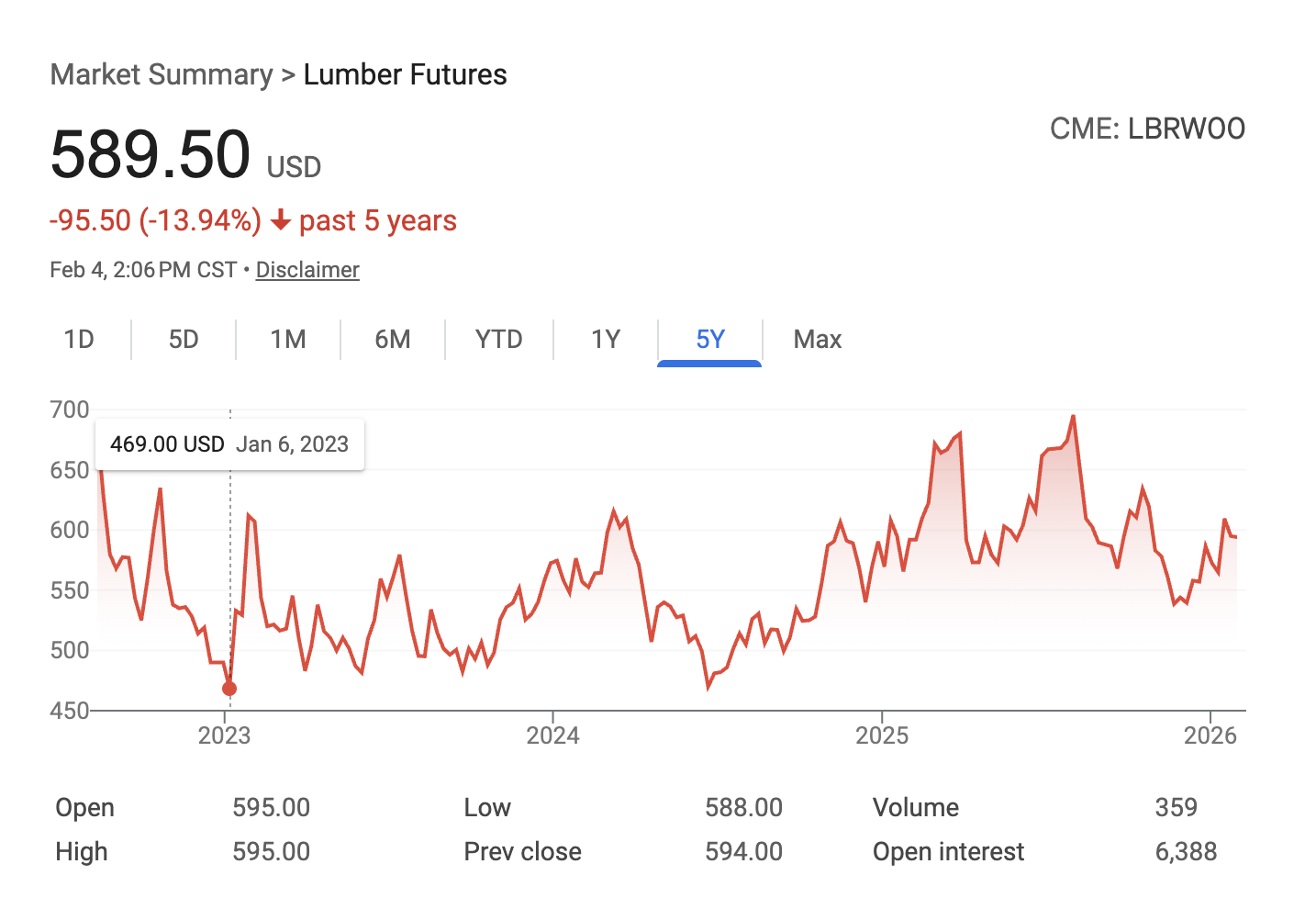
As Waters spoke, Bessent attempted to interject, noting that lumber was trading at a five-year low. Lumber futures are not, in fact, at a five-year low, priced at $589.50, versus a price of $469 in January 2023.
Bessent’s interruption triggered an immediate and sharp rebuke from the ranking member. “Reclaiming my time. You don’t get to talk,” Waters declared, refusing to yield the floor. As Bessent continued to speak over her, attempting to pivot the blame for the housing shortage to “massed immigration” and the “10 million immigrants” admitted into the country, Waters’ patience visibly disintegrated.
“Can you maintain some level of dignity?” Waters snapped as the two spoke over each other.
The committee chair eventually intervened, stating that the “gentlewoman’s time has expired,” though Waters protested that the secretary had consumed her time with his interruptions.
Generally, Waters’ questioning was aligned with research showing high pass‑through from tariffs to import and retail prices, a nontrivial contribution of Trump tariffs to overall inflation, and significant cost effects in sectors like residential construction, where input tariffs hit concentrated supply chains. Bessent’s response is aligned with arguments that tariffs’ share of total consumption is limited, so they cannot explain most of the recent inflation surge, which is heavily service‑driven.
In the current research landscape, the weight of evidence supports the conclusion that Trump’s tariffs have been modestly but clearly inflationary at both the goods and aggregate levels, even if they are not the primary driver of overall inflation. The hearing dramatizes that tension: Bessent is effectively arguing that “modest” equals “irrelevant,” whereas Waters is stressing that for families squeezed by housing and groceries, the tariff‑driven portion of inflation is politically and materially significant.
For this story, Fortune journalists used generative AI as a research tool. An editor verified the accuracy of the information before publishing.