
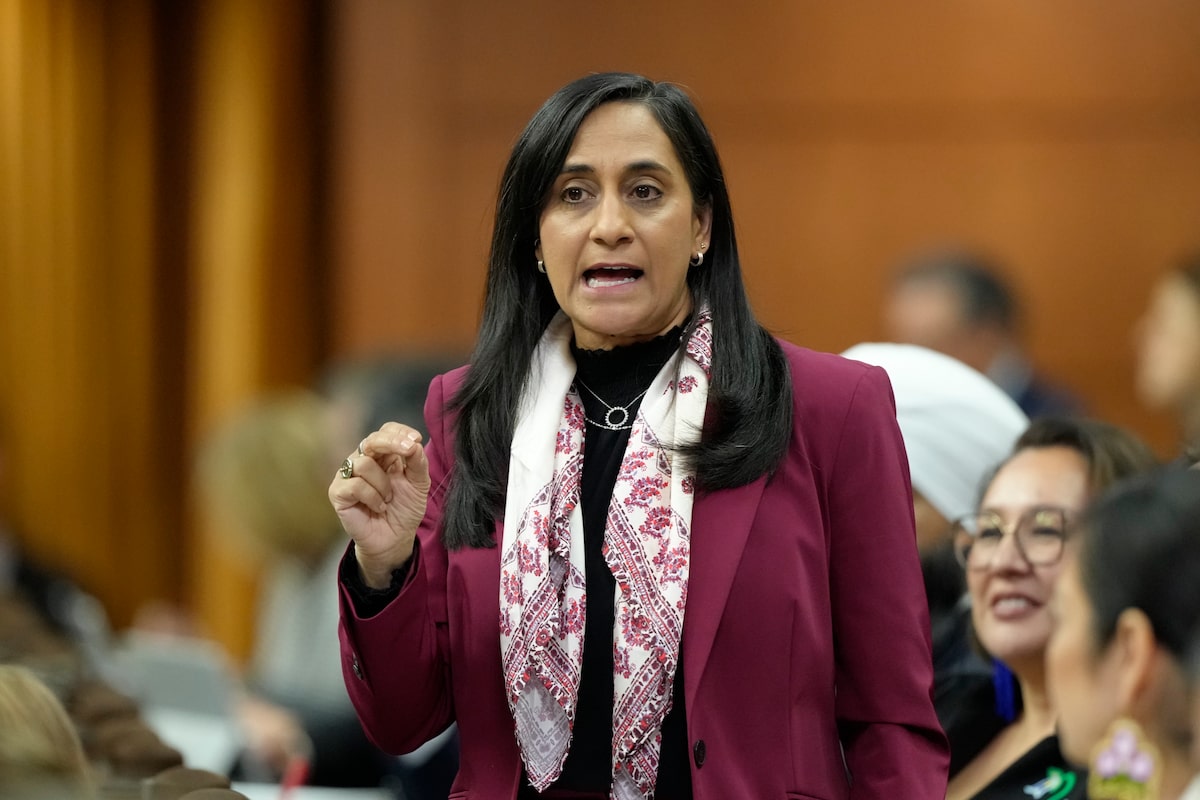
Foreign Affairs Minister Anita Anand says Ottawa is not eager to cut a single-sector deal with the U.S. on critical minerals while it’s preparing for overarching discussions on the USMCA.Adrian Wyld/The Canadian Press
Canada will decide whether to join a new critical minerals trading bloc being proposed by the United States only as part of larger talks about the future of the United States-Mexico-Canada Agreement, Foreign Affairs Minister Anita Anand said Wednesday.
Earlier in the day, the Trump administration had pitched a pact that U.S. Vice-President JD Vance called the Agreement on Trade and Critical Minerals, to be negotiated with partners and allies.
The administration on Wednesday convened more than 50 countries, including Canada, as it sought to create a trade zone for critical minerals, in which participants would use tariffs to maintain minimum prices – or price floors – and ease reliance on China for these resources.
If free trade dies, what happens to Canada?
But Ms. Anand told The Globe and Mail in an interview Ottawa is not eager to cut a single-sector deal with the U.S. on critical minerals while it’s preparing for overarching discussions on the USMCA, the free-trade pact that governs the countries’ entire economic and trade relationship. The USMCA, also known as CUSMA, is up for a mandatory review by the three countries this year.
She suggested a one-off deal on critical minerals could remove Canada’s bargaining leverage as it prepares for that review, noting this country is a major producer of critical minerals – key elements needed for everything from fighter jets to smartphones.
“We’re only signing deals that are favourable to Canada. We are not looking to sign sector-by sector-deals, and we are looking forward to the comprehensive CUSMA review,” the minister said.
“There’s a logic to that position, and the logic is that signing sector-by-sector deals, especially in critical minerals, could potentially undermine the broader effort on CUSMA.”
U.S. Vice-President JD Vance speaks at the first Critical Minerals Ministerial in Washington on Wednesday.Chip Somodevilla/Getty Images
Ms. Anand, who attended Wednesday’s meeting on critical minerals, spoke before leaving Washington. She said consultations between the U.S. and partner countries on the critical mineral trade zone pact are scheduled to take place until April 1 and negotiations on the pact are expected to commence after that.
The U.S. also announced Wednesday it was drawing up critical mineral action plans with Mexico, the European Union and Japan that include setting price floors. It made no announcements about similar co-operation with Canada.
The Office of the United States Trade Representative did not immediately respond to a query about why Washington announced no new vehicle for co-operation with Canada on Wednesday. Canada signed a Joint Action Plan on Critical Minerals Collaboration with the U.S. in 2020, but there is no mention of price floors in the public description of that agreement.
President Donald Trump’s administration has stepped up efforts to secure U.S. supplies of critical minerals after China rattled senior officials and global markets last year by withholding rare earths required by American automakers and other industrial manufacturers.
Opinion: An old idea for North American trade would be bad for Canada
While the two global powers reached a truce to pull back on the high import taxes and stepped-up rare earth restrictions, China’s limits remain tighter than they were before Mr. Trump took office.
Ms. Anand said her visit to the Washington critical minerals summit Wednesday was intended to allow her to gain a better understanding of what the United States is proposing.
She said the structure the Trump administration envisions would be a “preferential trade zone with adjusted price floors and co-ordinated tariffs.”
Ms. Anand said Canada needs to study the proposal further, including the suggested inclusion of “right of first refusal” language. She did not elaborate, but the United States has been signing critical minerals agreements with other countries that give it preferential access to their supplies.
“It’s important for Canada to understand the full ambit of the proposal, especially because we are only signing deals that are favourable to Canada’s economic and security interests,” Ms. Anand said.
Opinion: Canada needs a critical minerals strategy that actually works
Mr. Vance in remarks before the critical minerals summit said the U.S.-China trade war over the past year exposed how dependent most countries are on the critical minerals that Beijing largely dominates, so collective action is needed now to give the West self-reliance.
“We want members to form a trading bloc among allies and partners, one that guarantees American access to American industrial might while also expanding production across the entire zone,” Mr. Vance said at the opening of the meeting, which Secretary of State Marco Rubio hosted with officials from several dozen European, Asian and African countries.
Ms. Anand said Canada has long recognized the need to ensure more stable access to critical minerals for global supply chains. At the 2025 G7 Leaders meeting in Kananaskis, Alta., Canada set up a Critical Minerals Production Alliance, or buyers’ club, intended to help pay for and stabilize critical mineral extraction projects while avoiding restricting access to these resources on a preferential basis.
Critical minerals are minerals and metals that are economically and strategically essential to modern economies and national security, but whose supply is vulnerable to disruption.
Disruption can occur when a few countries dominate mining or processing, when governments impose export controls or tariffs, when conflicts, coups or strikes shut down major mines, or when prices are pushed artificially low by state‑subsidized competitors that drive other producers out of business.
With reports from Associated Press and Reuters