
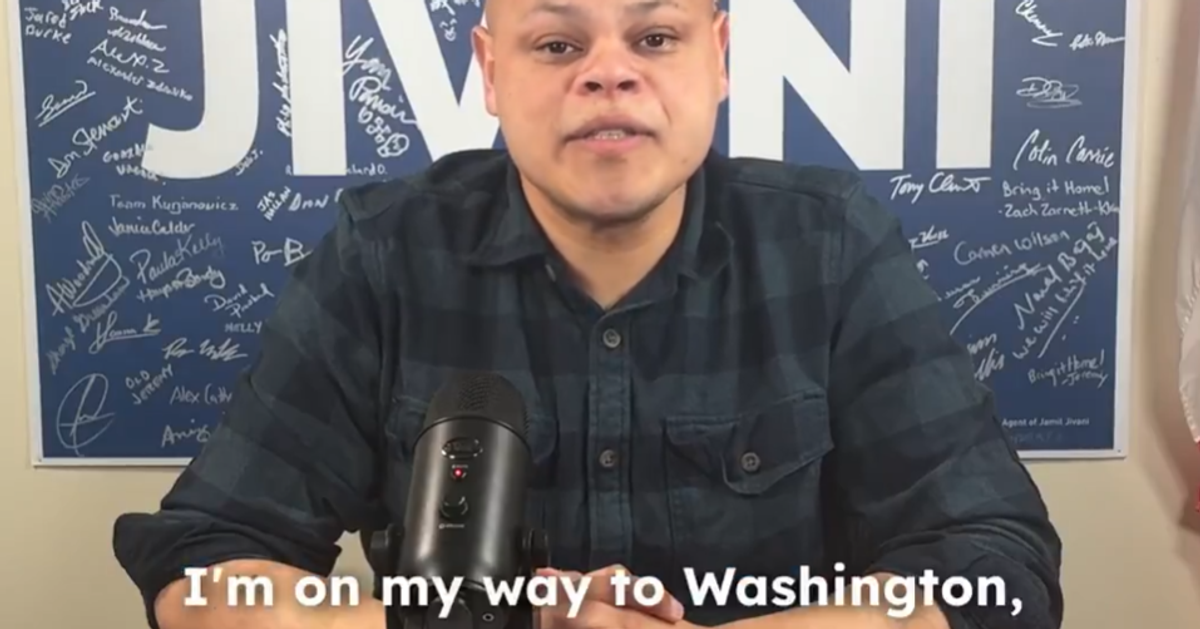
Canadian Conservative MP Jamil Jivani said he focused on defusing tensions during talks this week with high-level US government officials as the neighboring nations barrel towards a summer deadline for trade talks.
While underscoring that he wants Canada to be on a path to “positive dialogue” with the Trump administration, Jivani also pointed to a specific way to get there: avoiding further deals with China.
In an exclusive interview with Semafor, the longtime friend of Vice President JD Vance laid out how he approached his unofficial talks on Wednesday with Vance and his wife, second lady Usha Vance, as well as Secretary of State Marco Rubio. Jivani said US-Canada trade discussions have “become too partisan,” adding that he hopes that the Canadian government will create a “multi-partisan committee” for trade talks set to start in July.
“Part of what I’m trying to do by being here,” Jivani said, is convey the message that “we’re all on the same team, and we don’t need to be fighting with each other. I think there’s a real opportunity to build something with the US administration.”
The course of those upcoming hemispheric trade talks is less clear after Canada reached a multi-front trade agreement with China — one that Jivani called a “red flag.” Soon after that pact was finalized, Canadian Prime Minister Mark Carney delivered a high-profile address at the World Economic Forum where he indirectly criticized the US’ aggressive trade approach, describing a “breaking of the world order.”
Carney also lauded the China deal, saying Canada is “rapidly diversifying.” His remarks drew a sharp Davos rebuke from Trump, who said Canada “should be grateful” to the US.
Jivani said Wednesday’s conversations focused on the looming summer trade talks, and emphasized that he was not purporting to speak for Carney or his team. But said he hopes his conversations this week with the US establish to Canada that “we don’t need to go further with China.”
“It kind of shows to me — before we’re even really doing everything possible to get this done with the US, now we’re willing to work with a government that, less than a decade ago, we were saying was a genocidal state,” Jivani added. “Now, all of a sudden, we’re offering to import their electric vehicles while workers in my community in the auto industry are getting laid off.”
He posited that Canada is more willing to do business with China in part amid a rise of “anti-American” sentiment at home.
“Certainly, there have been people fanning the flames of anti-American resentment in Canada, and I think in doing so, have created an open mindedness to doing business with China,” Jivani said. “It didn’t exist before. So I think that’s part of what set the conditions for that agreement.”
Carney’s office did not immediately return a request for comment.