

Listen to this article
Estimated 4 minutes
The audio version of this article is generated by AI-based technology. Mispronunciations can occur. We are working with our partners to continually review and improve the results.
Christopher Duong was placed on a 24-hour involuntary psychiatric hold just days before he and his family were found dead, according to testimony from a former Prince Rupert RCMP officer.
Former constable Matthew Jones testified Tuesday at day two of the coroner’s inquest into the deaths of the Duong-Nguyen family.
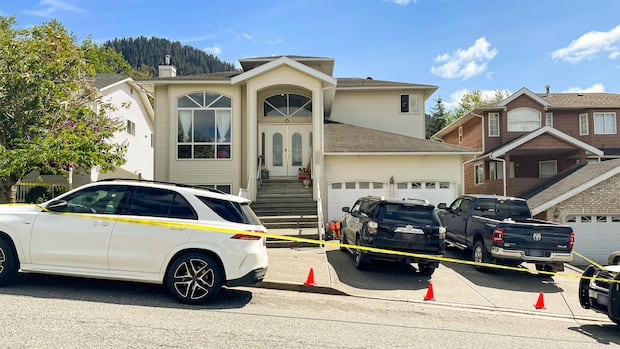
Duong, Janet Nguyen and their sons, Alexander, 4 , and Harlan, 2 were found dead in a Prince Rupert home on June 13, 2023. At the time, police said they did not believe there were any outstanding suspects.
The inquest, held in Burnaby, B.C., heard earlier this week that prior to their deaths, Duong told police his family was being targeted in a “hit,” and he was apprehended under the Mental Health Act by police.
Duong apprehended under mental health act
In 2023, Jones was a corporal and served as a watch commander for the Prince Rupert RCMP, and was neighbours with the family.
He told the court about what happened when he pulled Duong over — with Nguyen and the kids in the car — for a traffic stop around 2 a.m, just days before the family was found dead. Jones noted Duong appeared restless and agitated. He also could not answer what month it was.
Nguyen was on a call with Duong’s sister who was on speakerphone “screaming over and over” that her brother “wasn’t crazy.”
Jones took Duong aside to speak separately, and said it became clear to him that none of Duong’s fears were based in reality.
Jones said Duong told him he had a “feeling” someone was trying to kill them, but it wasn’t because anyone had actually threatened them.
Duong, who was believed to be involved in the drug trade, told Jones that two cars had been “circling for hours” around his home, but Jones responded that they were neighbours and he hadn’t seen anything like that. Nguyen later agreed that she hadn’t either.
Nguyen told him she had to believe Duong’s claim since he was her husband, but she later agreed that the best place for him was in a hospital.
Involuntary admission
Police apprehended him during that traffic stop, and took Duong to the hospital.
Jones flagged to doctors that Duong had been in a serious car crash a year before, where he suffered a traumatic brain injury and fractured vertebrae.
Dr. Chantal Piek, a family physician, was working in the Prince Rupert emergency room that night, and assessed Duong.
Duong was co-operative but very anxious, she testified, and he hadn’t slept in several days.
Piek asked him if he knew why he was in the hospital and he said yes.
She also asked if he truly believed his life was in danger and he replied that he didn’t know, but was scared.
Piek completed a “form 4” medical certificate for involuntary admission, believing Duong suffered an acute stress reaction, but no formal diagnosis was made.
People in a stressful, sleep-deprived environment can enter into a brief psychotic state, she said.
Duong did not appear to be under the influence of drugs or alcohol, and he was suffering from real fear, whether or not it was based on reality.
Duong received anti-anxiety medication, rested in the hospital and was released the next morning.
Inquest will hear how family died
The inquest, which began Monday, has not yet heard from investigators about how the family died.
On Thursday, witnesses from the Major Crimes Unit are expected to give further information on the investigation.
Coroners’ inquests do not assign blame but are public inquiries that aim to determine the circumstances surrounding a death.
The coroner’s jury will make non-binding recommendations to prevent similar deaths in the future.
The inquest is scheduled to last through to Feb. 20.