
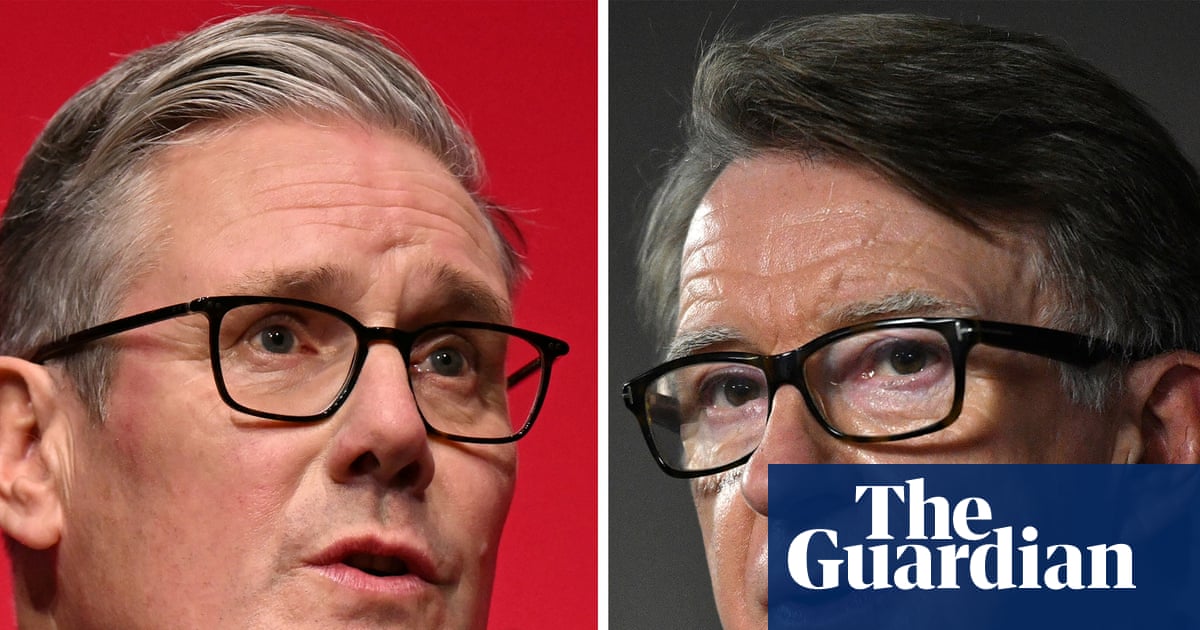
It remains to be seen how many documents connected to Peter Mandelson’s appointment as US ambassador will be released, and also when they will emerge, given they need to be vetted by parliament’s intelligence and security committee.
But when the information does arrive, these are some of the key questions that Labour MPs in particular will be keen to have answered.
What did No 10 know about Mandelson’s links to Jeffrey Epstein?
This is the central issue, albeit one where we do already know one answer. As conceded by Keir Starmer in the Commons on Wednesday, when he made the appointment late last year he knew Mandelson had maintained his links with Epstein even after the disgraced financier had served a jail term for soliciting a minor for prostitution.
This was an admission of the obvious, given the fact it had been reported by the media before the ambassadorial appointment was made. But there will be intense scrutiny of what was formally acknowledged on this front by No 10, and how it was explained.
How was the appointment justified?
The follow-on question is equally important: given the facts about Mandelson, how did Starmer and his team justify giving him one of the plum jobs in public life?
While it remains to be seen if the documents set this out, the answer is also fairly well known already, if difficult to admit. They appear to have decided Mandelson’s many flaws were a risk worth taking to parachute a consummate political operator into Donald Trump’s court. Equally, there would have been an unspoken acceptance that given the many links Epstein had to Trump and a number of his associates, Mandelson would hardly stand out in this regard.
Who made the decision?
Ultimately, the buck stops with the prime minister. But a number of Labour MPs are pushing for the departure of Morgan McSweeney, Starmer’s chief of staff, who is close to Mandelson and is known to have been keen for him to get the role.
Documentary evidence that McSweeney essentially made the call could be very damaging to his chances of staying in No 10. Equally, any files showing Starmer pushing for the decision would not reflect well on his judgment.
Did anyone push back against the idea?
This is a side to the process that will indicate to MPs how structural the problems inside No 10 are. There is a sense among some backbenchers of Starmer’s team being an overly partisan boys’ club, lacking people able to take a step back and ask: do we really want to appoint the close friend of a convicted child sex offender?
For many, this ties into wider worries about Starmer’s political judgment and the way he seems to blunder into so many avoidable rows.
To what extent did Mandelson deceive Starmer?
This relates to the narrative very firmly pushed by Starmer on Wednesday, as he said Mandelson had “lied repeatedly” about his Epstein connections and “betrayed our country”.
Here, however, there is less chance of seeing things set out in black and white. While Mandelson was fully vetted before being appointed, this process is based on personal details that are very unlikely to be published due to data protection rules. Labour MPs might have to take Starmer’s word for it.