
Sign up for the Slatest to get the most insightful analysis, criticism, and advice out there, delivered to your inbox daily.
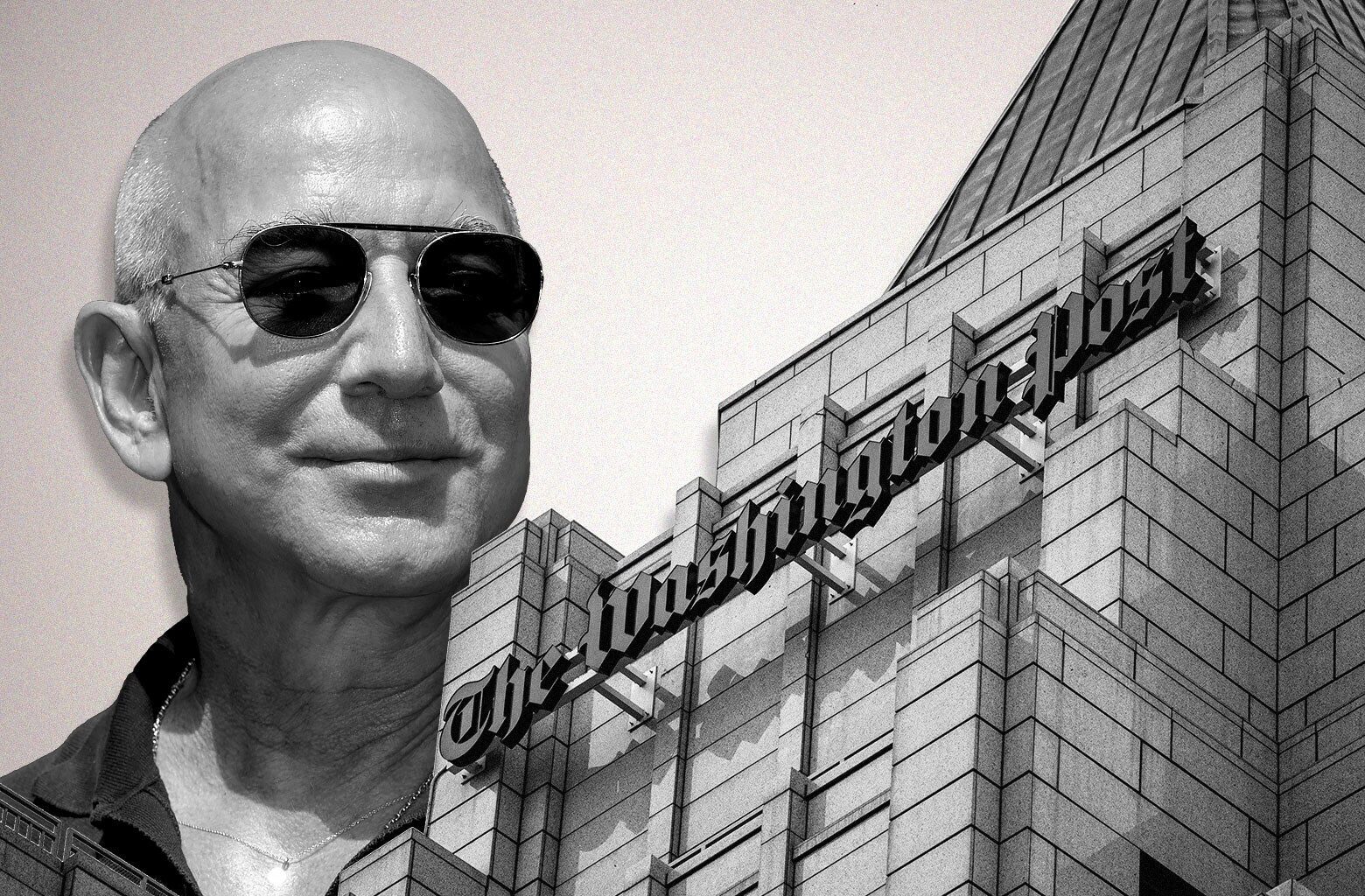
Jeff Bezos killed the Washington Post on Wednesday. The paper survives as a husk, but the institution that became one of the cathedrals of world journalism is gone. The biggest mistake one could make in analyzing this corporate slaughter is to lay the blame solely on the state of journalism. That’d be wrong.
Times are hard in journalism, just like they always are. The big new problem is A.I. swallowing up search traffic, which itself had already sucked up the ad revenue that used to go to newspapers and magazines. Otherwise, all of the things that have been hard for the past 20 years are still hard now. Powerful corporate interests have captured great newsrooms, or run their own old family businesses into the ground. Fox News, social media, and podcasts—in that chronological order—have cocooned a lot of people to want only “news” that isn’t really news. Megyn Kelly is now a red-meat podcaster instead of an occasionally punchy Fox host.
The Post laid off 300 journalists on Wednesday. This included more or less the entire remaining staff of the paper’s legendary sports section, which produced several of the best writers to ever do the job. The days of the superstar columnist with the biggest megaphone in town were long gone, but the section remained tremendous. The paper slashed its international coverage, laying off a journalist who found out as she reported from Kyiv. Many editors across desks lost their jobs. Worst of all, not that it’s a contest, but the Washington Post will now be a lot less Washingtonian. The paper has fired at least a substantial chunk of its metro reporters, who serviced a city and region that have been under a multifront attack from the Trump administration.
In a stiff email, Post executive editor Matt Murray tried to make this move sound like yet another example of a tough business forcing tough decisions. “The ecosystem of news and information, on- and off-platform, is changing radically,” Murray wrote to his staffers, fired and not. He lamented the “serious decline” of search traffic. He wrote of increased competition from other people, other platforms.
He did not write about one specific person: Bezos, who bought the paper from the Graham family in 2013 for $250 million. (Note: Slate is owned by Graham Holdings, the company controlled by the Graham family.) That is because Murray values his paycheck and didn’t want to point out the Post’s real cause of death—namely, that one of the richest people in human history staged a controlled burn to turn it into ash. Bezos wanted the Post to die, because a vigorous, well-resourced Washington Post does not suit his vision for the world or his own bottom line. The end of the Post is a matter not of journalistic economics but of Bezos’ incentives.
Whatever the Post is worth today is immaterial to Bezos’ wealth. It’s barely even what you’d call a rounding error. Bezos could sustain the Post’s operating losses for hundreds of lifetimes without even threatening his current wealth, let alone the additional wealth he and his heirs will amass passively in years to come from his stakes in Amazon, Blue Origin, and who knows what else. A man worth more than $240 billion does not care even a little bit, in pure dollar terms, about a $100 million annual loss running a prestige business. When Bezos bought the paper, he made clear to the Post’s prior management that he viewed the paper not purely through a profit lens, the New York Times reported. Bezos wrote to Post employees, “The paper’s duty will remain to its readers and not to the private interests of its owners.” That turned out to be, at best, incredibly misleading.
The Post itself doesn’t affect Bezos’ vast fortune much, but what it represents does. One of the employees he laid off on Wednesday was the paper’s Amazon reporter, Caroline O’Donovan. More critically, even under Bezos’ ownership, the Post frequently published stories that upset the Trump administration, whose vindictive approach to regulation could pose obvious problems for Amazon and Bezos’ space company, Blue Origin.

Mary Ziegler
How Trump Used a Law Meant to Protect Abortion Seekers to Arrest Members of the Press
Read More
Bezos understood this risk more than a year ago, when he drove away 250,000 paying subscribers by stepping in to prevent the paper from endorsing Kamala Harris. Bezos then transformed the Post’s opinion section, away from a broad-based page and into a propaganda arm devoted to promoting “personal liberties and free markets.” The paper’s executives and owner punted away from aggressively covering Trump’s second term, bleeding both subscribers and a general share of viral stories that instead went to competitors like the Times and Wall Street Journal. There was money to be made by investing in the paper’s reporting staff, who never stopped doing their best to provide honest (and necessarily adversarial) coverage of Trump. Bezos just didn’t want that money.
You can see why. Bezos got a full embrace from the Trump administration just this week, when Pete Hegseth visited Blue Origin to discuss the space company’s latest partnership with the government. The most optimistic theory about Bezos’ ownership of the Post was that his fortune would insulate him from the need to pinch pennies in a tough business. What actually happened was the opposite: Bezos’ external economic interests turned him into a virus that ate the Post from the inside.
Whether or not you think billionaires should be obligated to fund public-interest projects, Bezos did not merely rest on his laurels as a legacy paper declined. He accelerated the decline on purpose. Not even Rupert Murdoch has chosen that path; the Journal continues to churn out damning reportage on Trump and defend its reporters against threats. Bezos (who, it’s worth noting, is married to a former journalist) does not express that view of a free press. He recently had nothing to say when the FBI raided the home of one of his reporters, as Status noted. Bezos has no love for reporting but lots for sycophancy.
What the Latest Epstein Documents Say About Bill Gates, Elon Musk, and Donald Trump
I Couldn’t See What Was Happening to My Daughter—Until It Was All I Could See. By Then, It Was Almost Too Late.
This Content is Available for Slate Plus members only
The Real Reason Jeff Bezos Killed the Washington Post
This Content is Available for Slate Plus members only
Did a Tiny Oscar Winner Really Brainwash People About Wine Forever? The Truth Is Weirder.
Which brings us back to Murray’s letter to Post employees on Wednesday. “Even as we produce much excellent work, we too often write from one perspective, for one slice of the audience,” the executive editor wrote. Murray, Bezos, and publisher Will Lewis (who allegedly didn’t even join the Zoom call that ended it all) want you to believe that the death of the Post was a consequence of not merely journalism problems but the paper’s too-liberal editorial slant. If only the Post gave a little more slack to our great president, right-wingers would flood the paper with their eyeballs. These mythical future right-wing fans of the Washington Post could surely offset the many millions of dollars in losses from the liberal and center readers who once spent money on the Post but stopped after Bezos began throwing his weight around to benefit Trump’s political project.
The whole letter is Bezos’ grievance talking, laundered through one of his fixers. There is no conservative audience in the wings just waiting to subscribe to the Washington Post if the paper is a little bit friendlier to Trump. Fox News and the Tucker Carlsons and Candace Owens of the world devoured that audience long ago. There’s no selling a serious newspaper to a political movement that has arranged itself into a cult of personality around one man and has no interest in the consumption of objective reality. There is only the death of a great American institution, justified with a fake business reason instead of the real one.

Sign up for Slate’s evening newsletter.