

Listen to this article
Estimated 4 minutes
The audio version of this article is generated by AI-based technology. Mispronunciations can occur. We are working with our partners to continually review and improve the results.
Vancouver’s auditor general said the city engaged in “serious wrongdoing” when they failed to track whether $6 million in promised community amenities for a much-publicized downtown tower ever happened.
“The deficiencies in the City’s management … for Vancouver House represent an unacceptable level of risk to the City and do not meet the high standard expected at the City of management of public funds,” wrote Mike Macdonell, the City of Vancouver’s independent auditor general, in his report.
“The City’s failure to document, monitor or enforce in-kind Community Amenity Contributions falls below a reasonable standard such that it meets the definition of waste.”
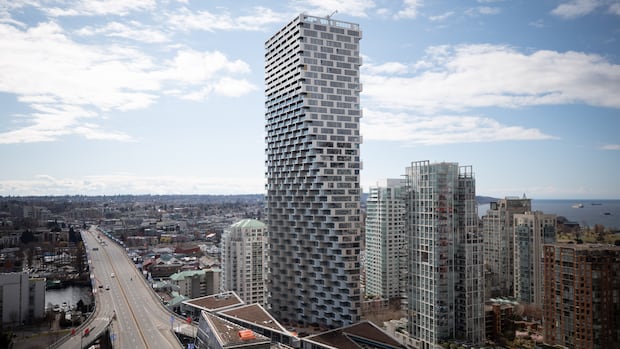
Vancouver House, a twisting skyscraper at the foot of the Granville Street Bridge, was approved by then mayor Gregor Robertson and Vancouver council in 2013, after they sold the majority of the land to development company Westbank for approximately $32 million.
According to council documents, Westbank agreed to a $10 million community amenity contribution, a commonly-used negotiation by Vancouver and other B.C. municipalities to gain money for infrastructure improvements to offset the increased demand on public services and infrastructure that comes with higher densities.
A staff report said $4 million of that would be cash, while a number of in-kind “public realm improvements” to the surrounding area, valued at $6 million, would be planned, including “special lighting, kiosks and public seating” along with “basic infrastructure to facilitate event programming … and accessibility to public washrooms.”
But the auditor general found no evidence of any of those improvements happening.
No enforcement, no lists
Macdonell’s report, said that “no enforceable, specific and itemized list of what was to be delivered, broken down by the value of each component, was produced”, and that the city had “no enforceable agreement regarding those specific improvements.” The only example of something proposed in council reports becoming reality was an elevator from the development’s ground floor to the deck of Granville Street Bridge, but has been closed to the public.
Macdonell said some of that became public in 2015, when council agreed to a request from the engineering department to scrap some of the $6 million in pledges, because of concerns around long-term maintenance costs.
But Macdonell criticized the lack of documentation by the city of those changes, a lack of action to “quantify and replace the value of the eliminated amenities”, or any record of the city tracking changes between agreed upon amenities by developers and end results.
“Performing such calculations is essential to having credible evidence that the publicized agreement between the City and developer was satisfied,” he wrote, saying it met the city’s definition of waste under its whistleblower policy.
“The nature of what was initially agreed upon by the developer, and what was eventually delivered appear material.”
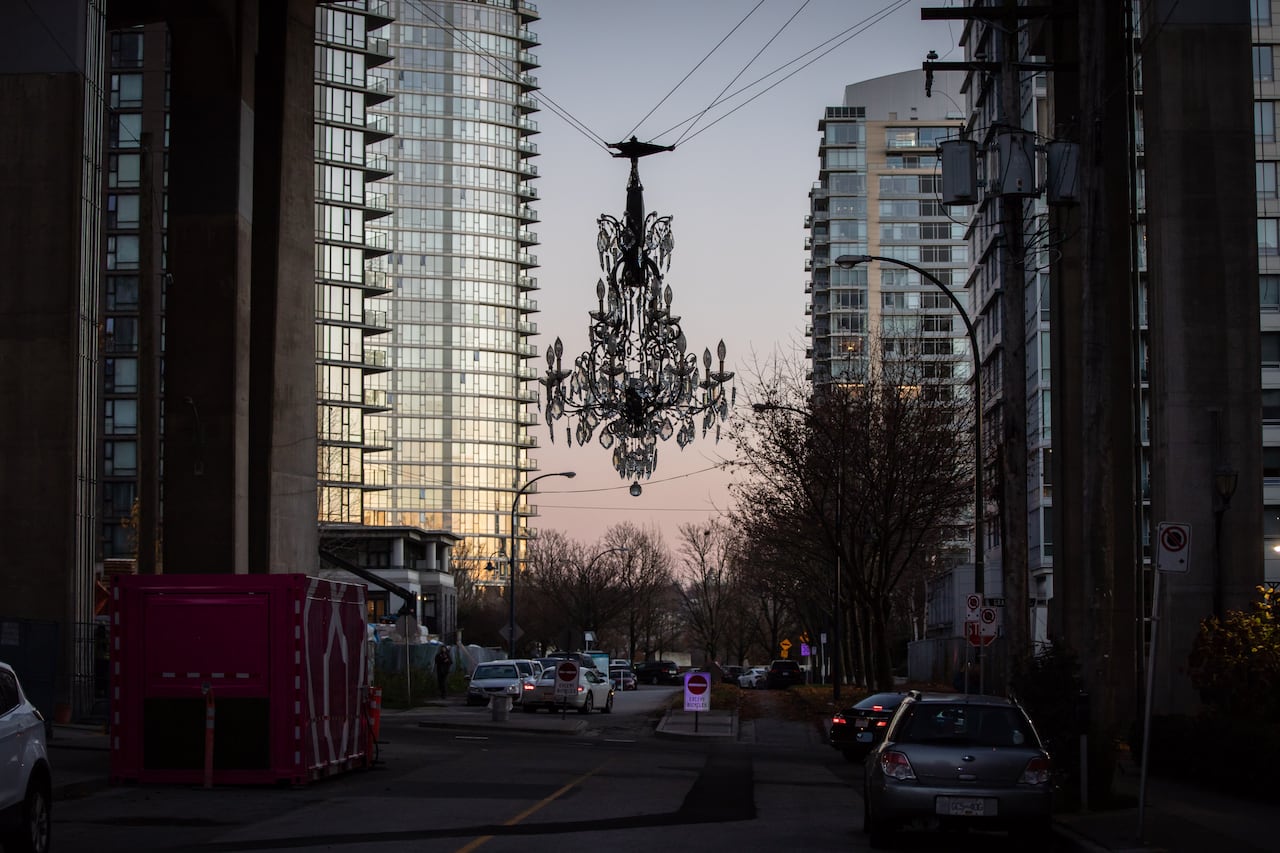 The $4.8-million chandelier, commissioned by developer Westbank, was not part of the community amenity package, but provided under a different program for public art. (Maggie MacPherson/CBC)’There’s no accountability,’ says whistleblower
Robert Renger, a retired development planner for the City of Burnaby, put forward the complaint and applauded Macdonell’s findings.
“I think there’s a real problem in Vancouver that when mistakes are made or concessions are granted without approval of council, there’s no accountability,” he said.
“City staff should be protecting and representing the public interest, and somehow that’s got lost.”
Macdonell made a number of recommendations in his report, including the creation of a clearly itemized and costed list of deliverables to be included for in-kind community amenity contributions, and council approval of changes to those agreements.
The City of Vancouver did not respond to a request to respond to Macdonell’s report, but Renger said he hoped the city would take it seriously.
“[We need] more reporting to council, not giving concessions without getting them approved by council,” he said.
“And unfortunately, I think we’re moving in the other direction.”