
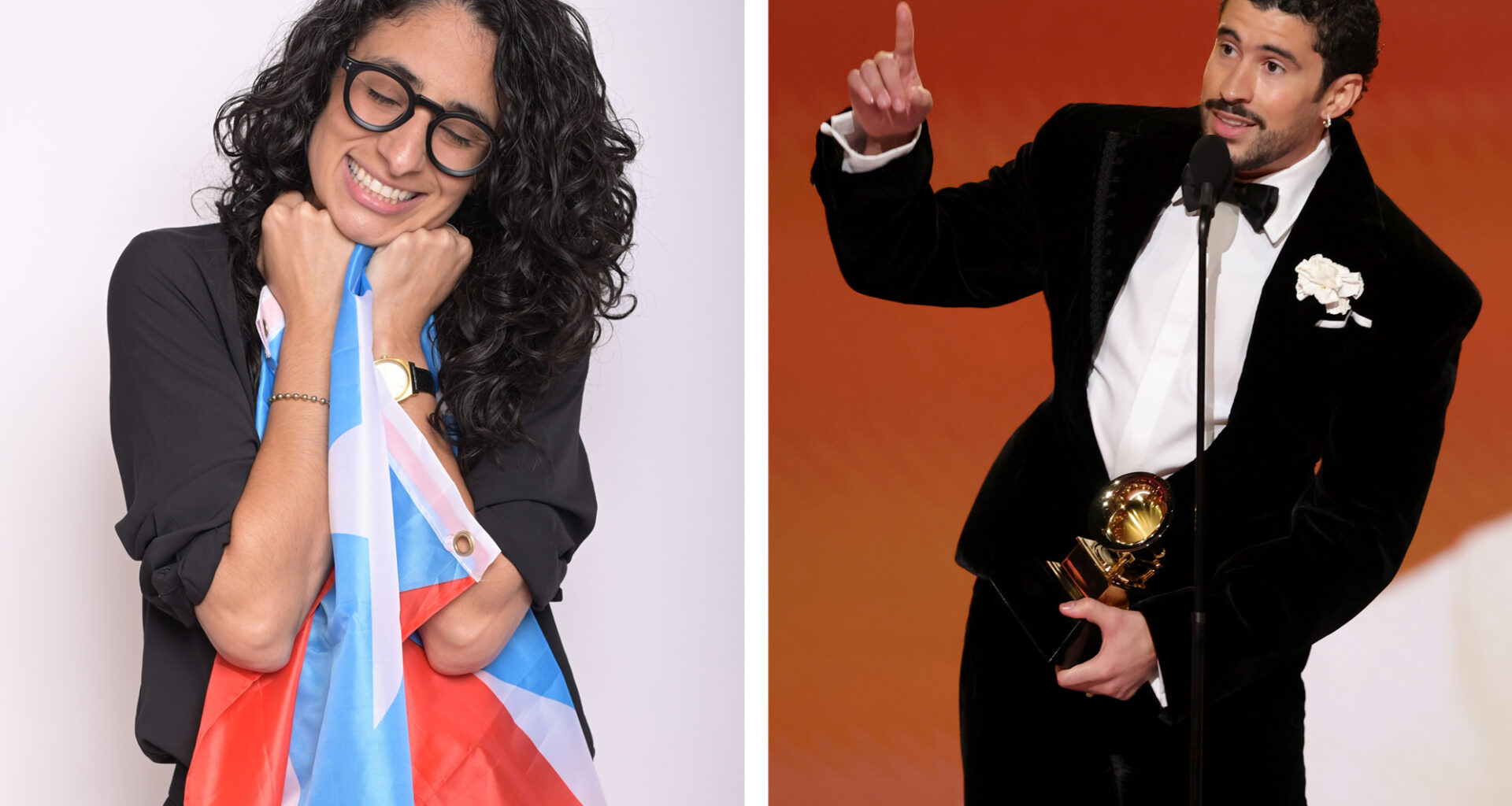
Rivera Cosme’s appearance on the Super Bowl stage comes at a high point in Bad Bunny’s career. Last summer, she was one of the interpreters at his 30-date concert residency in Puerto Rico, No Me Quiero Ir de Aquí (I Don’t Want to Leave Here), which injected hundreds of millions of dollars into Puerto Rico’s economy.
With lyrics that capture the grief and alienation of Puerto Ricans forced to leave home in search of opportunities, Bad Bunny’s 2025 album DeBÍ TiRAR MáS FOToS became a global phenomenon that continues to resonate across cultures. And aside from the Super Bowl, Bad Bunny is skipping the U.S. entirely on his ongoing world tour, which has broken even Beyoncé’s records in terms of earnings and attendance.
As she looks forward to the Super Bowl, Rivera Cosme says she’s especially proud to interpret songs that spotlight Puerto Rican traditions, like “Café Con Ron,” which features the folk ensemble Los Pleneros de la Cresta.
“I grew up in the mountains, in the countryside,” she says. “So I really identify with that song.”
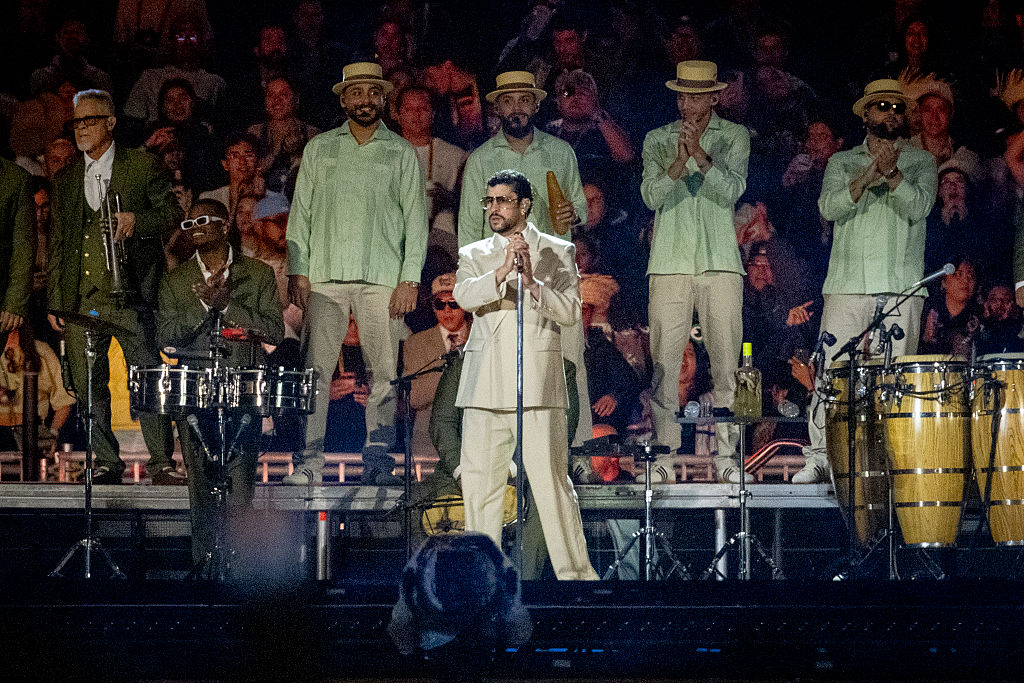 Bad Bunny performs on stage during the Debí Tirar Más Fotos world tour at Estadio GNP Seguros on Dec. 11, 2025 in Mexico City, Mexico. (mma McIntyre/Getty Images)
Octavio Cuenca Maldonado, president of the National Hispanic Latino Association of the Deaf, says this Super Bowl halftime show is much more than a performance. Speaking through an interpreter, he says Rivera Cosme is providing crucial representation for Deaf Latinos.
“This is about language, culture, identity, and recognition by the world,” he says.
It’s rare for interpreters’ cultural background to reflect the music itself, says AV Vilavong, a Deaf concert interpreter who performs at major music festivals across the country.
“The fact that Celimar is Puerto Rican, there are cultural nuances that are already embedded in how she, as a Deaf interpreter, will match the tone, the cultural aspects, the songs, the significance behind the slang for particular vocabulary,” Vilavong says through an interpeter. “It’s embedded in who she is as an individual.”
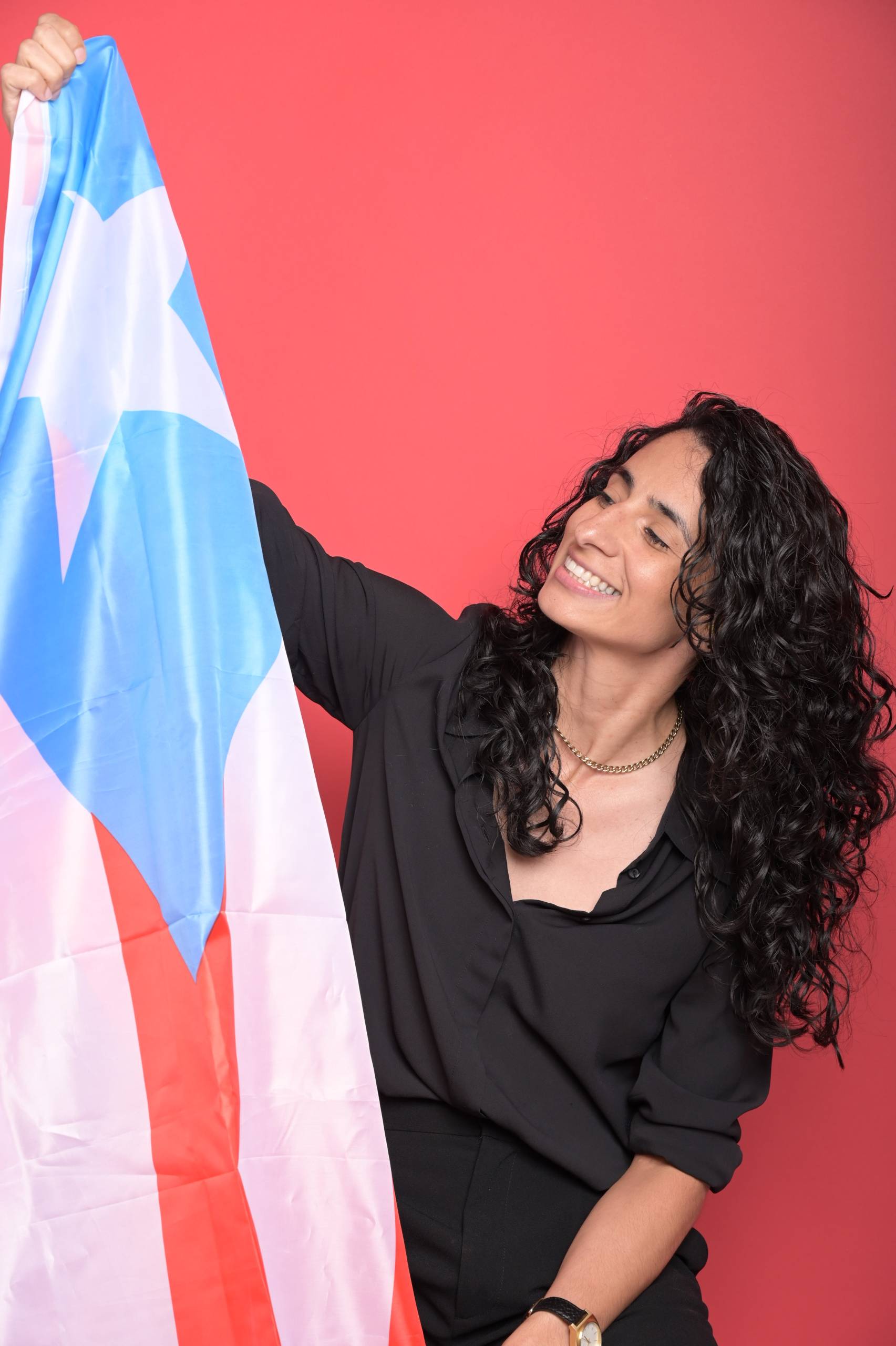 Celimar Rivera Cosme. (Courtesy of the artist)
Bad Bunny’s halftime performance resonates here in the Bay Area, which has a long history when it comes to disability justice. In the late ’70s, protesters occupied a San Francisco federal building demanding that the government enforce laws promising equal access to public services. It was a turning point for the disability justice movement that became known as the 504 Sit-In.
Ardavan Guity, director of Deaf studies at Ohlone College in Fremont, says the Bay Area is a hub for nonprofits, schools and services for the Deaf community.
“There are some states where they are ignorant about the Deaf community,” he says through an interpreter. “I found that not to be the case in the Bay Area. The Bay Area is fantastic when it comes to that.”
Now, Bad Bunny’s halftime show is poised to add a new chapter to the region’s long legacy of advocating for accessibility.
Rivera Cosme says this historic moment isn’t just about her. “I know I’m going to be the one standing up there,” she says, “but it’s the Deaf community of my island that’s going to shine.”