
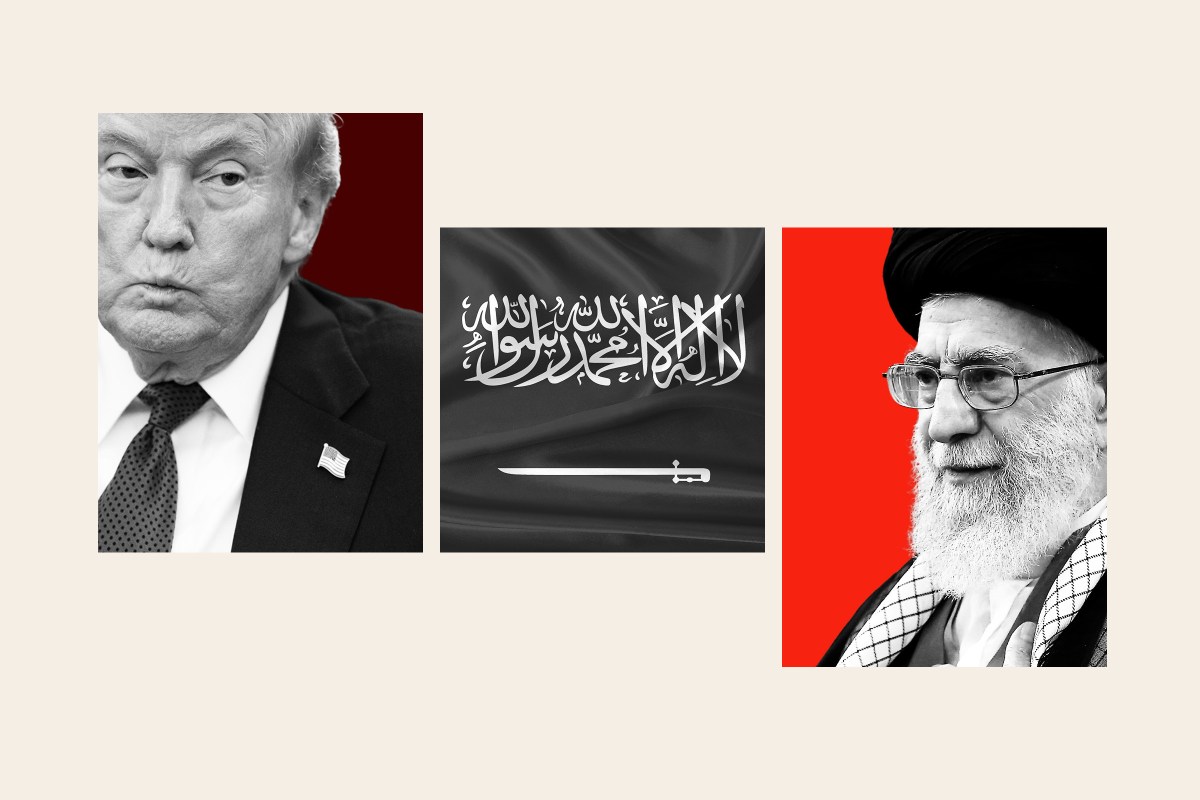
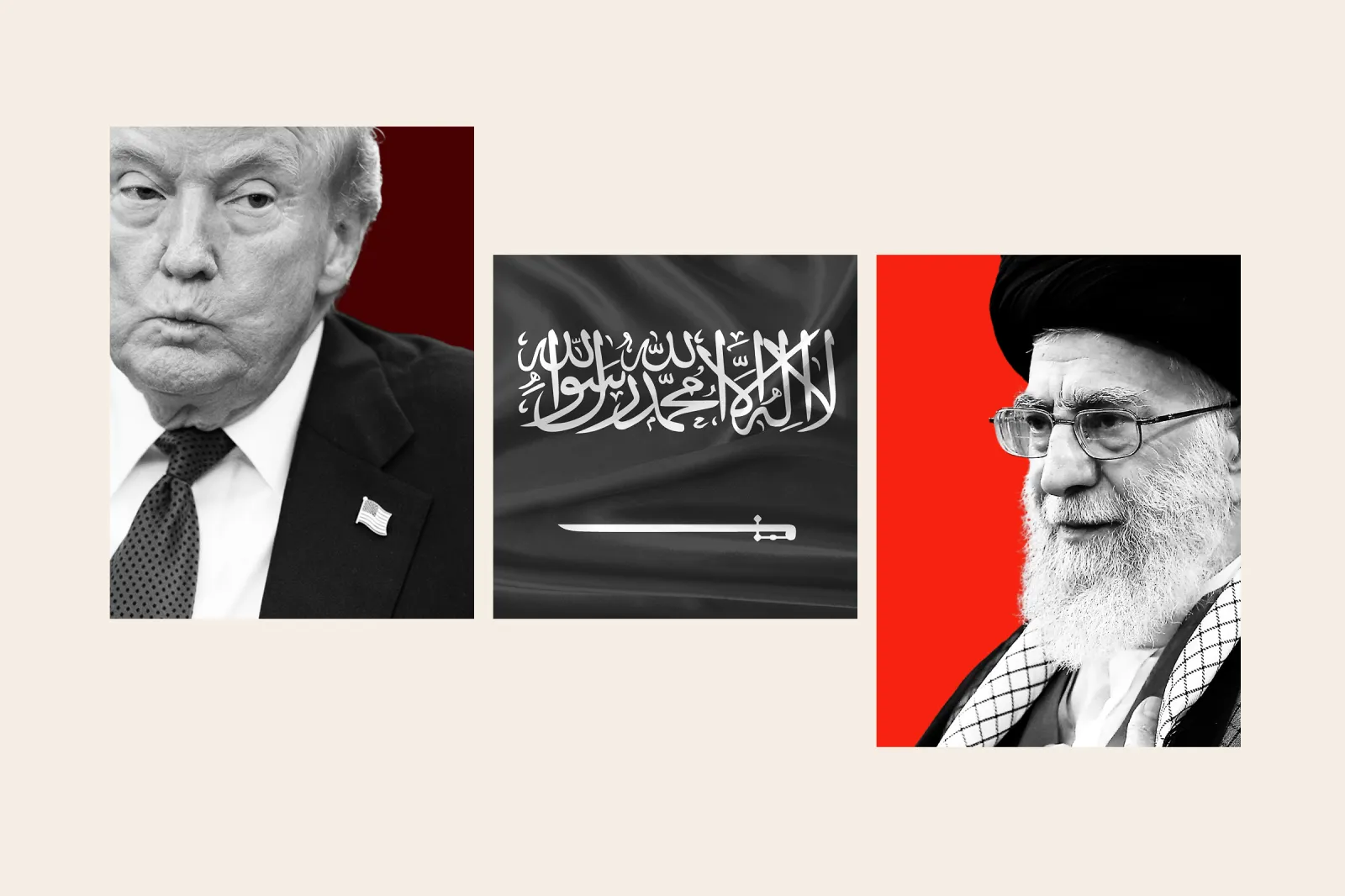
With the United States and Iran engaging in their first round of nuclear talks since coming to direct blows over the summer, Saudi Arabia occupies an influential position on the course of discussions that may be the difference between diplomacy and conflict in the Middle East.
Much attention has been focused on fellow regional players Egypt, Qatar and Turkey, each of which is working to support negotiations in the latest U.S. attempt to forge an agreement regarding Iran’s nuclear program—and potentially other issues—after President Donald Trump abandoned the last deal during his first administration in 2018. Iran has since ramped up uranium enrichment and other activities, drawing regional concern despite the Islamic Republic’s consistent vows against the production of weapons of mass destruction.
Yet Saudi Arabia holds a unique place in the equation. Riyadh has long been viewed as Tehran’s top rival in terms of regional influence and the Kingdom’s fast-growing and diversifying economy, rapid modernization and religious significance as host of Islam’s two holiest cities have only empowered its place in the Middle East and beyond, particularly at a time when Iran and its Axis of Resistance have suffered serious blows in a prolonged war with Israel.
Now, with the U.S. threatening military intervention against Iran and a growing partnership emerging between the United Arab Emirates and Israel prompting new debates in the Saudi calculus, Riyadh is looking to capitalize on Trump’s strategy of consulting with regional partners to find a path toward an agreement that both addresses regional concerns and avoids the kind of conflict that could impose crippling consequences for the states of the Gulf Cooperation Council (GCC).
“Saudi Arabia’s position is clear and categorical,” Nawaf Obaid, a former adviser to the Saudi government now serving as a senior research fellow at King’s College London’s Department of War Studies, told Newsweek. “As the most influential and leading Arab state today, and as the country actively leading a forming regional coalition against the destructive policies pursued by Abu Dhabi and Israel, Riyadh is firmly opposed to any U.S. or Israeli military action against Iran at this stage.”
“From the Saudi vantage point, strikes without defined political objectives and a credible endgame would almost certainly trigger uncontrolled escalation,” Obaid said, “with the GCC absorbing the immediate costs through maritime disruption, energy insecurity, asymmetric retaliation, and internal destabilization.”
 ‘The Decisive Variable’
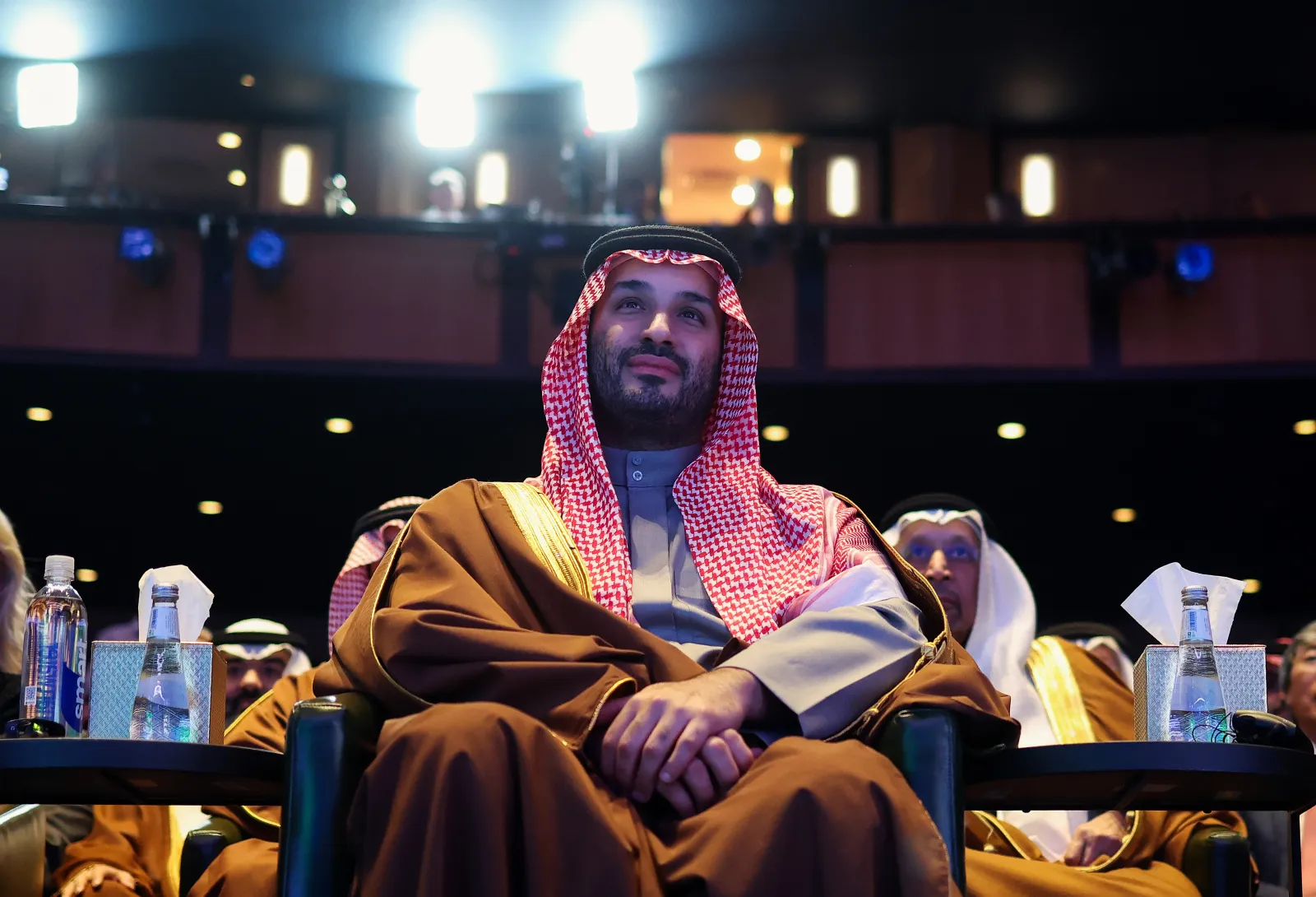
Among the driving factors behind Saudi Arabia’s prioritization of diplomacy with Iran is the sheer unpredictability of what may ensue in the event of the Iranian government’s downfall, a prospect once openly called for by Crown Prince Mohammed bin Salman, who serves as the Kingdom’s de facto leader under his father, King Salman.
The Iranian government’s survival was thrown into question just last month as the nation found itself beset by nationwide protests last month devolved into the deadliest clashes since the founding of the Islamic Republic. The threat was compounded by Trump’s warnings of imminent intervention as he ordered an “armada” consisting of the USS Abraham Lincoln carrier strike to the region.
But with no unified opposition within Iran and only dissident leaders abroad attempting to present themselves as credible alternatives, the government and its security forces, including the Islamic Revolutionary Guard Corps (IRGC), have largely prevailed. Even Secretary of State Marco Rubio acknowledged during a congressional testimony last week that “no one knows who would take over” should Supreme Leader Ayatollah Ali Khamenei be ousted from power.
The uncertainty has prompted speculation both within and outside of Iran of scenarios that may only compound regional concerns, including a hard-liner takeover from the likes of the IRGC or even a civil war involving insurgent factions and militant groups known to operate in Iran and neighboring countries.
“Equally important is Riyadh’s assessment of the ‘day after,'” Obaid said. “There is a serious concern that the sudden collapse of the Islamic Republic could prove more dangerous and less predictable than the current adversarial equilibrium. A forced regime change risks fragmentation within Iran’s security institutions, intensified internal violence, proliferation dangers, refugee and economic shockwaves, and the empowerment of the most radical elements of the system.”
“For Saudi Arabia, externally imposed regime change is not a solution but a liability,” he added, “any sustainable transformation in Iran must be endogenous, organic, and internally driven.”
While Trump has a track record of threatening attacks as a negotiating tactic, the strikes conducted against three nuclear facilities amid the 12-Day War between Iran and Israel last June and the U.S. Delta Force raid that captured Venezuelan President Nicolás Maduro and his wife from their home in Caracas last month have demonstrated a commitment to making good on such threats.
Obaid, who also works on gathering real-time intelligence on developments in the region, shared with Newsweek a “high confidence” assessment that outlined the extent of the U.S. military build-up surrounding Iran and other factors signaling that “U.S. forces are postured not merely for a single limited strike, but for extended strike optionality, with escalation control retained at the political level.”
The Israeli Air Force, was also found to be on “heightened alert,” with various platforms prepared to strike “either in parallel with or immediately following U.S. strike authorization.” Meanwhile, intercepted intelligence also identified an ongoing campaign of crackdowns by Iranian authorities and Iran-aligned Iraqi militias across a number of cities and provinces, along with planning for retaliation to U.S. strikes through the targeting of Israel and U.S. bases in the region, including those located in GCC countries.
“The decisive variable remains political authorization, not force readiness,” the report found.
‘A Tricky Situation’
While Saudi Arabia enjoys ties with the Trump administration that include both geopolitical and business interests, the situation presents one of the most serious challenges yet to Riyadh’s efforts to present itself as a pragmatic regional leader.
These efforts were demonstrated in March 2023 when Riyadh ended years of diplomatic isolation with Tehran to forge a strategic agreement geared toward resuming ties and de-escalating tensions that have been compounded by the two nations backing opposing sides in the war in Yemen. The deal, which was backed by China, came months before the Hamas-led attack against Israel that sparked the war in Gaza and the broader regional conflict across the Middle East that halted a parallel process by Saudi Arabia toward exploring normalization with Israel.
Today, with Trump leading a Gaza peace plan established last September, Saudi Arabia has sought to ensure its seat at the table, joining the U.S. leader’s Board of Peace alongside around two dozen nations, including a number of GCC and other majority-Muslim nations. Crown Prince Mohammed has also pledged to contribute to the reconstruction of war-torn Gaza.
But with a new conflict looming on the horizon, Saudi officials have reportedly engaged in a flurry of diplomatic moves geared toward advising Trump on the benefits of opening new talks with Iran rather than pursuing military action. Saudi leadership has also been in direct touch with Iranian counterparts, with Saudi Crown Prince Mohammed telling Iranian President Masoud Pezeshkian during a phone call last week that he would not allow the U.S. to use the Kingdom’s airspace to support any strikes on the Islamic Republic.
The Saudi position has been the source of debate, however, given Riyadh’s longstanding criticism of Tehran’s regional behavior and an Axios report citing four unnamed sources who quoted Saudi Defense Minister Khalid bin Salman as telling U.S. officials during closed-door meetings in Washington last week that failing to strike Iran may only embolden the Islamic Republic. A subsequent report by Al-Sharq Al-Awsat cited a high-ranking Saudi official who rejected the veracity of the report and affirmed the Kingdom’s opposition to conflict between the U.S. and Iran.
Ali Shihabi, a Saudi author and commentator who served on the advisory board of the NEOM city megaproject, argued that the risks associated with a U.S. strike weighed heavily on Riyadh’s view of the situation, even if putting a stop to certain Iranian activities across the region brought with it some strategic benefits.
“Saudi is obviously concerned about the potential impact of an attack on Iran given the uncertainties that inevitably are associated with such a step,” Shihabi told Newsweek. “The Iranian regime has been a destabilizing force over the years and anything that ends that behavior is welcome but not at the risk of more instability.”
Calling it “a tricky situation,” he said that the Kingdom has now mobilized in support of the current talks and may even play a direct role should they progress.
“The Kingdom is very supportive of these upcoming negotiations and may attend meetings also in support,” Shihabi said.
In a statement shared with Newsweek, a senior official at the Saudi Embassy to the U.S. said that “the administration has no stronger partner in working to resolve conflict and instability in the region, including developments in Iran.”
“We are in constant contact with the administration on all developments in the region, and share President Trump’s approach to try and resolve tensions through dialogue whenever possible, as we continue to work together to enhance security and stability in the region,” the Saudi Embassy said.
Other GCC states have also stepped up in support of the talks, with Qatar utilizing its longtime mediator status to support the drafting of a new agreement and Oman hosting the negotiations on Friday. Kuwait has voiced the need for restraint amid the soaring tensions and the UAE, while engaged in its own clash of regional influence with Saudi Arabia, has echoed Riyadh’s calls to avoid another war in the Middle East.
Contacted for comment by Newsweek, the UAE Embassy to the U.S. referred to comments made Tuesday by UAE presidential adviser Anwar Gargash at the World Governments Summit in Dubai, where he stated, “I don’t know what’s going on in President Trump’s mind, but I can give you the view from the region, the view from the UAE” and that is that “the region has gone through various, various climactic confrontations. I don’t think we need another one.”
Newsweek has also reached out to the Iranian Mission to the United Nations and the White House for comment.
 ‘Middle Eastern Realities’
Even with the swell of regional support in favor of a deal, skepticism exists regarding a new attempt at a process that has failed several times in the past, both under Trump and his predecessor, former President Joe Biden.
Salman Al-Ansari, a prominent Saudi geopolitical analyst, described the Iranian government as “its own biggest enemy” in terms of its approach to diplomatic opportunities, including tactics that may ultimately run afoul of Trump, particularly at this decisive juncture.
“The Iranian regime prides itself on probing the resolve of its adversaries and manipulating time. It now believes it can read Trump’s intentions and is counting on his disdain for all-out wars,” Al-Ansari told Newsweek. “Tehran’s bet is to distract the U.S., offer promises and signals of progress, change meeting venues, leak contradictory messages, and wear Washington down. I have to concede that they are skilled at time manipulation, but I am not sure how far this strategy can go with a president like Trump.”
Mixed reports have emerged regarding Iranian officials’ willingness to compromise on key issues, including the ability to enrich uranium, at what levels enrichment may take place and non-nuclear items such as Iran’s Axis of Resistance ties and vast arsenal of missiles and drones. Ultimately, both U.S. and Iranian officials have expressed a stated preference for diplomacy, while at the same warning they were prepared for confrontation.
As for Saudi Arabia, Al-Ansari said the Kingdom was approaching the situation through “two lenses,” both of which were rooted in an aversion to conflict.
“Through the first lens, Saudi Arabia views the situation with deep concern,” Al-Ansari said. “Any escalation risks spiraling out of control and destabilizing the region, much like the aftermath of the U.S. invasion of Iraq. Regime change is not a preferred Saudi outcome, not out of sympathy for the Iranian regime, but because sudden collapse creates uncertainty, power vacuums, and unpredictable consequences.”
“Through the second lens, Riyadh approaches the escalation with cautious optimism,” he continued. “The best outcome is not war, but an agreement in which Iran abides by international law and accepts President Trump’s core demands: dismantling the nuclear program, dismantling Iran-backed militias across the region, and dismantling the ballistic missile program. These demands are difficult for Iran to accept all at once, but sustained U.S. pressure aims to show Tehran that there is no viable alternative.”
Ultimately, he argued, “Pressure without purpose leads to war. Pressure with clarity can lead to agreement.”
Meanwhile, Al-Ansari said that the participation of Saudi Arabia and other regional countries in the process marks “a meaningful improvement over the old P5+1 framework” through which all five permanent United Nations Security Council members—China, France, Russia, the United Kingdom and the U.S.—as well as Germany served as guarantors of the 2015 Iran nuclear deal known as the Joint Comprehensive Plan of Action (JCPOA).
While that agreement, overseen under former President Barack Obama, led to the curbing of Iranian nuclear activities in exchange of the lifting of sanctions, it also drew backlash for not sufficiently bringing regional players on board, including Saudi Arabia. From Al-Ansari’s view, the “the P5+1 did not stop Iran, but rather that format “funded it, emboldened it, and kicked the crisis down the road” and “failed to address Iran’s missiles, militias, or regional conduct and did not end Iran’s nuclear ambitions.”
“Consulting Saudi Arabia strengthens diplomacy because it anchors talks in Middle Eastern realities, not distant abstractions,” Al-Ansari said. “Saudi Arabia’s role is to ensure that any future agreement addresses nuclear, missile, and militia-based threats together and reflects the real security concerns of the region.”
Obaid, for his part, also saw Trump’s emphasis on engagement with regional players as an important step toward affirming a realistic agreement.
“The Trump administration’s shift toward consulting Saudi Arabia and other regional powers represents a more realistic framework than the legacy P5+1 model,” Obaid said. “Unlike distant stakeholders, Saudi Arabia has direct exposure to escalation, direct leverage in the region, and a clear interest in preventing a large-scale war. This makes regional consultation not symbolic, but operationally relevant—particularly in shaping the boundaries of what escalation will and will not be tolerated.”
“In this context, Saudi Arabia is not merely a stabilizing actor, but the strategic stabilizer by virtue of its leadership, influence, and coalition-building role,” he added. “Riyadh is uniquely positioned to shape regional consensus, constrain spoiler behavior, and reinforce the principle that neither Washington nor Tehran can ‘lose’ outright without catastrophic consequences. Its role is to anchor deterrence while creating political space for diplomacy—ensuring that restraint is not mistaken for weakness, and that diplomacy does not become a cover for further destabilization.”
Update 2/6/26 4:12 p.m. ET: This article has been updated to include comments provided by a senior official at the Saudi Embassy to the United States.