
Stay informed with free updates
Simply sign up to the War in Ukraine myFT Digest — delivered directly to your inbox.
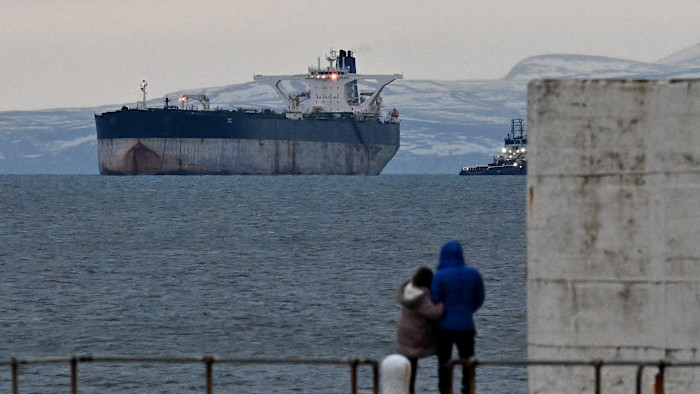
The EU plans to impose a full ban on services to ships carrying Russian crude oil, as part of its latest package of sanctions targeting Moscow in response to its war in Ukraine.
If agreed by all EU member states and backed by G7 partners including the US, the new measure would ban all maritime services — such as insurance — to tankers regardless of the price of the crude they carry. This would in effect replace the current system of restrictions linked to a G7 oil price cap that was designed to reduce the Kremlin’s export revenues.
“It will slash further Russia’s energy revenues and make it more difficult to find buyers for its oil. As shipping is a global business, we propose to enact this full ban in co-ordination with like-minded partners after a decision of the G7,” European Commission president Ursula von der Leyen said on Friday.
The proposal follows consultations with US officials on the proposed ban, two people briefed on the discussions told the FT.
It comes after another round of US-led peace talks aimed at brokering an end to the conflict this week that failed to yield any breakthrough. European officials say Russia has shown no inclination to find an agreement.
Imposed in December 2022, the G7-led oil price cap allowed western insurers and other service providers to do business with Russian oil tankers that could show their crude was being sold below a price set under global benchmarks, forcing exporters to sell at a discount.
Von der Leyen had hoped to adopt the new sanctions — the EU’s 20th package since 2022 — before a planned visit to Kyiv on February 24 to mark the fourth anniversary of the war. But the Commission faces opposition from some capitals that are Russia-friendly, notably Budapest.
Alongside the maritime services ban, 20 more Russian banks will be added to the sanctions list and “several banks in third countries involved in facilitating illegal trade in sanctioned goods”, von der Leyen said.
It would also introduce new bans on exporting goods and services including rubber to tractors and cyber security services that the Commission says are worth more than €360mn, and bans on importing certain metals, chemicals and critical minerals worth more than €570mn.
It also adds 43 new vessels to a list of so-called shadow fleet ships used by Russia to transport its crude in breach of the oil price cap.
“We must be clear-eyed: Russia will only come to the table with genuine intent if it is pressured to do so. This is the only language Russia understands,” von der Leyen added.