
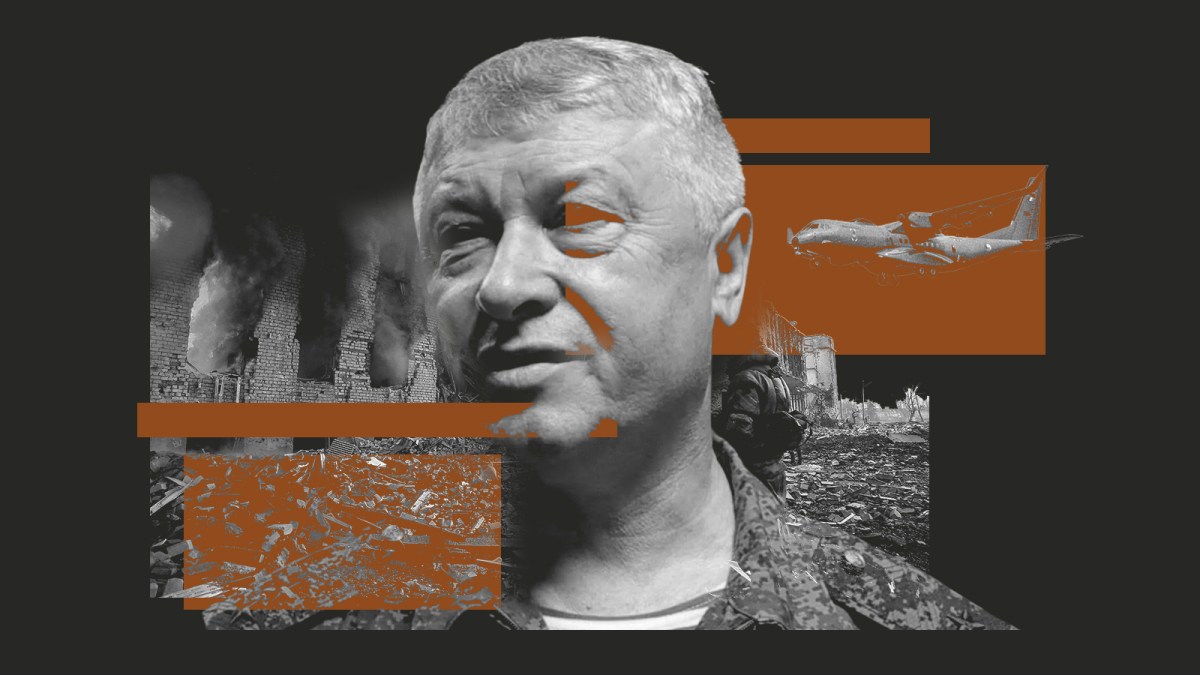
On Friday morning, Lieutenant General Vladimir Alexeyev, second-in-command in the blandly-named Main Directorate of the General Staff (GU or GRU) — Russian military intelligence — was confronted by an unknown gunman in the lobby of an apartment building where he was staying.
Shot three times, the former special forces commander reportedly still grappled with the assailant, who fled rather than finishing him off. Alexeyev was seriously hurt, and, at the time of writing, is still in intensive care but out of danger.
Although no one has admitted responsibility, it is inevitable — and entirely plausible — that the Ukrainians have been blamed.
Kyiv has been behind a string of attacks on senior Russian officers. The Security Service of Ukraine (SBU) and military intelligence (HUR) have carried out assassinations of Russian generals in recent months including lieutenant generals Igor Kirillov in December 2024, Yaroslav Moskalik in April 2025 and Fanil Sarvarov in December 2025.
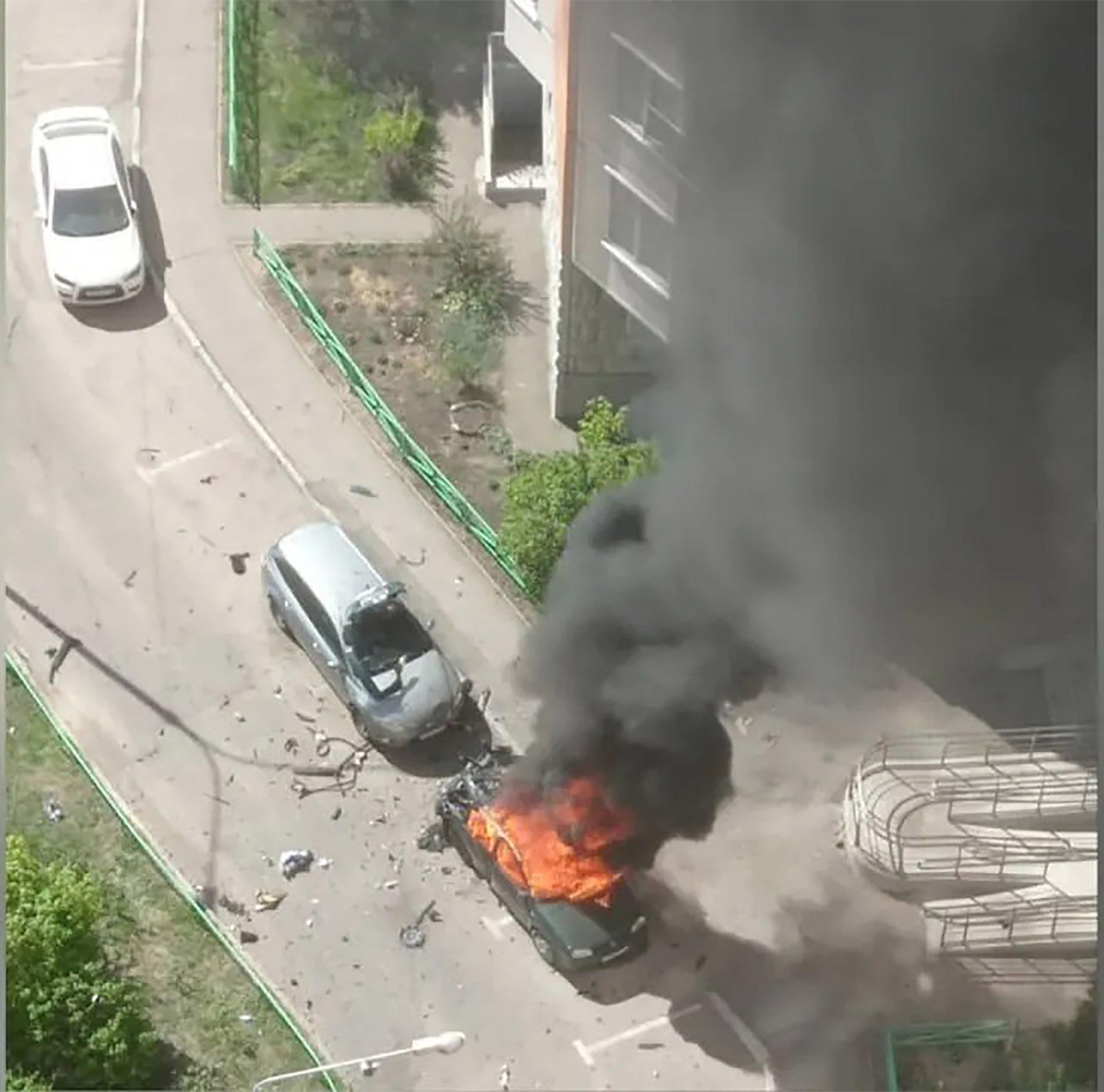
A car bomb killed Yaroslav Moskalik in Moscow last year. President Putin has faced calls for greater security
EAST2WEST
• Russia accuses Ukraine of terrorism as general shot in Moscow
Kyiv has denied being behind this latest attack, and some have speculated that it may be a tardy revenge from former members of the Wagner mercenary army. Alexeyev had once been its patron, but then took part in its dismemberment after the group’s mutiny in 2023, helping to roll most of its fighters into the regular military and the rest into a new unit called the Africa Corps, under tight GRU control.
However, a Russian defence analyst who previously had close ties to Wagner dismissed the idea. “These are the kind of guys who act in the moment. Two years ago, maybe, but this looks much more like an SBU operation,” he observed.
Alexeyev was a high-value and legitimate target in Ukrainian eyes. He was in charge of Russian special forces and covert operations, including Unit 29155, the shadowy hit squad blamed for a string of attacks in Europe, including the 2018 attempt to murder double agent Sergei Skripal in Salisbury.
Alexeyev had deployed special forces inside Ukraine to try to assassinate President Zelensky at the outset of the invasion. He was also responsible for negotiating the surrender of the final defenders of the Azovstal steelworks in Mariupol in 2022, making them promises about civilised treatment that the Ukrainians believe proved empty.
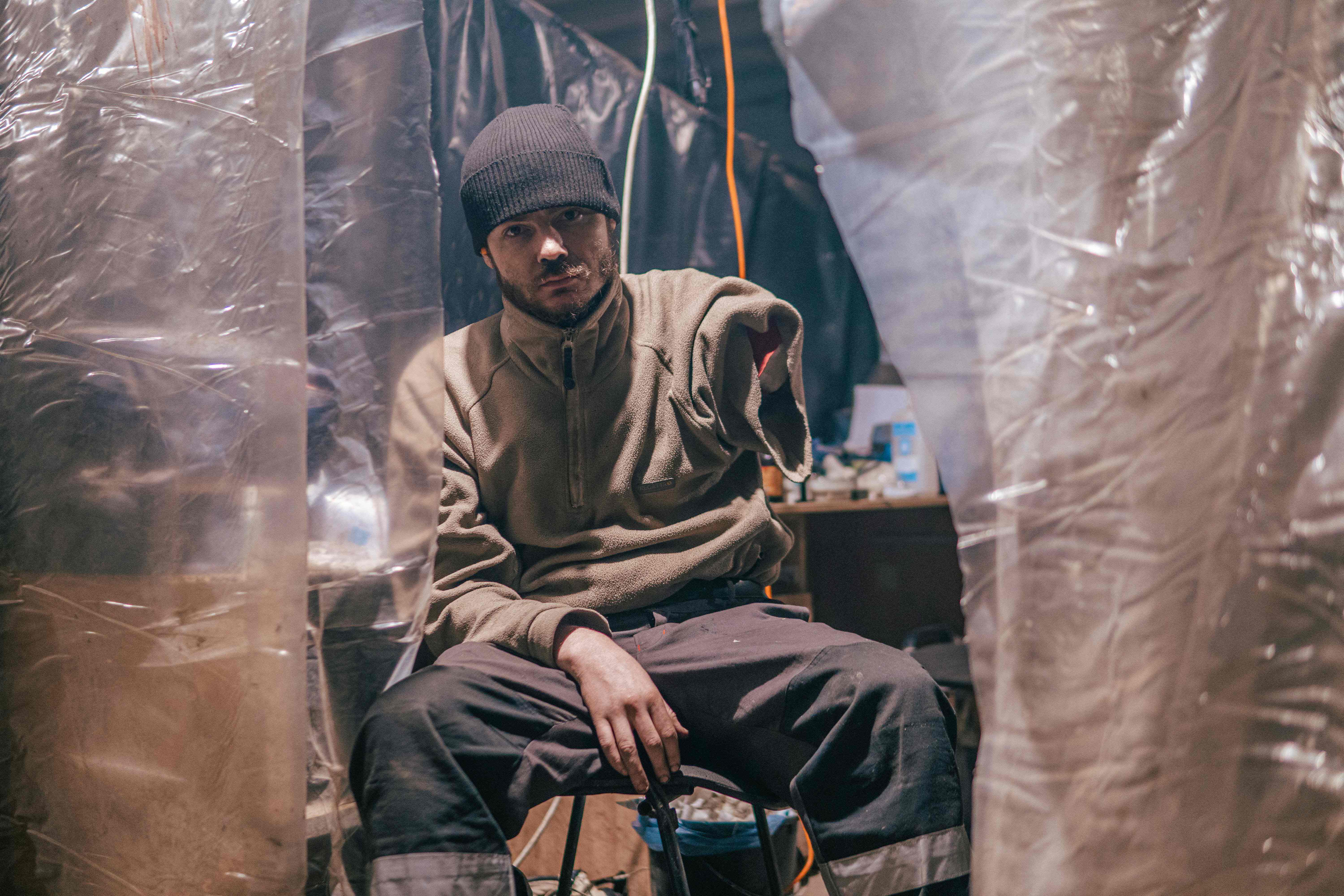
An injured Ukrainian serviceman during the siege of the Azovstal steelworks in 2022
AFP
That Alexeyev was born in Vinnytsia in southeastern Ukraine only makes his behaviour more heinous in Kyiv’s eyes.
But the shooting could have wider implications for the war in Ukraine, potentially encouraging Vladimir Putin to end the fighting, or forcing his hand towards greater escalation.
Timing is everything
Alexeyev’s immediate superior, Admiral Igor Kostyukov, head of the GRU, has been leading the episodic peace talks in Abu Dhabi. So far, they have not managed to resolve the outstanding issues of Moscow’s demand for territorial concessions and Kyiv’s need for meaningful and reliable security guarantees, but a Ukrainian insider suggested they have been “more serious, pragmatic and respectful” and “less dominated by political grandstanding” than previous negotiations.

Igor Kostyukov has been leading peace talks in Abu Dhabi
GETTY
One immediate result was the exchange of 157 prisoners of war by each side on Thursday, the first such swap in months.
More important is the detailed preparatory work for a potential future deal. Previous rounds of talks were dominated by pressure from the Trump team for some splashy political declaration, without serious consideration of the difficult detail. While there is a growing acceptance that it will take higher-level contact — maybe even a Putin-Zelensky summit — to break the current deadlock, these talks do at least seem to be laying the necessary foundations.
Both Russian and western sources suggest that there is some movement towards drawing up a plan by the end of March that could provide a timeline for an end to the war, although this is still by no means guaranteed.
Sergei Lavrov, the Russian foreign minister, has claimed that Kyiv staged the attack on Alexeyev “to disrupt the negotiation process”. It does not seem that Moscow is going to use the shooting as an excuse to walk away, so much as to try to claim credit in Washington, to make a big show that Russia is willing to rise above the Ukrainians’ “provocation”.
More controversial has been the notion, floated on Russian social media, that the attack was the responsibility of hardliners within the Ukrainian government operating without official approval. “Seeing Zelensky on the verge of agreeing a peace deal, the SBU is doing what it can to prevent this,” one commentator claimed.
The irony is that this actually exonerates Zelensky, who for years has been presented variously on Russian social media as a drug-addicted usurper, protector of neo-Nazis, and tool of Russophobic “Anglo-Saxon elites” — which, now that Moscow is having to flatter Trump, really means the British.
Yet the emergence of this narrative also reflects a subtle but significant fragmentation of nationalist opinion in Russia.
Putin’s nationalist flank
The more liberal and technocratic wing of the Russian elite has long been unhappy with the war, watching the economy slide into recession and their country become increasingly dependent on China. Their capacity to influence Putin, though, is minimal.
The Kremlin has been more concerned by ultra-nationalists, galvanised by the 2022 invasion and yet disappointed by the lack of progress and a perceived half-heartedness on Putin’s part, as he tries to balance fighting a bloody war with cushioning the impact at home.
They argue that instead of relying on volunteers, hundreds of thousands of reservists should be mobilised and, along with conscripts, thrown into the fight. Meanwhile, the country should be put under martial law, with the kind of tough security controls that would make incidents like Alexeyev’s shooting much less feasible.
At first, Putin tried to ignore or co-opt these extreme voices. After the Wagner mutiny, there was a partial crackdown, but Putin has been unwilling to tackle them head on, aware that these ultra-nationalists are a small minority but one disproportionately represented in the military and security forces.
Divided loyalties
The growing sense that a peace deal might be reached this year is concentrating minds. Many within the nationalist camp will be satisfied if Putin can secure a Ukrainian withdrawal from the last parts of Donetsk region left unconquered, a fixing of the front lines, and some degree of sanctions relief. These people see political utility in not blaming Zelensky for Alexeyev’s shooting.
The extremists, though, consider this kind of deal, which would see the rest of Ukraine free to align itself with the West, as a betrayal of the 1.2 million Russians already thought to have been killed or wounded in Putin’s war. The Kremlin’s particular fear is that they will find a ready constituency among returning veterans, many psychologically or physically damaged, who will be angry and disappointed that the glorious promises made to them will be unfulfilled.
Putin hardly wants to give extremists free rein, but nor does he want to risk alienating them. True to form, when confronted with a thorny dilemma with no easy answers, he has hidden from it. He has simply wished Alexeyev a speedy recovery and, when asked about increased security for generals, his spokesman ducked the question, saying “it’s not the Kremlin’s place to discuss how to ensure their safety. That’s a matter for the security services.”
Off the fence
The more he dithers, the more Putin loses authority in the eyes of these extremists. The ultra-nationalist Tsargrad media outlet said Alexeyev’s shooting “poses a stark question: do we want to fight or pretend?” It added that, “while the Ukrainian security services operate like rabid maniacs, unfettered by any boundaries, Moscow stubbornly attempts to fight with white gloves, adhering to canons of gentlemanliness that no longer exist in the modern world.”
It may seem surreal to talk of “gentlemanliness” while Russia hammers Ukraine’s power infrastructure, leaving hundreds of thousands of civilians without light or heating while temperatures fall below -20C.
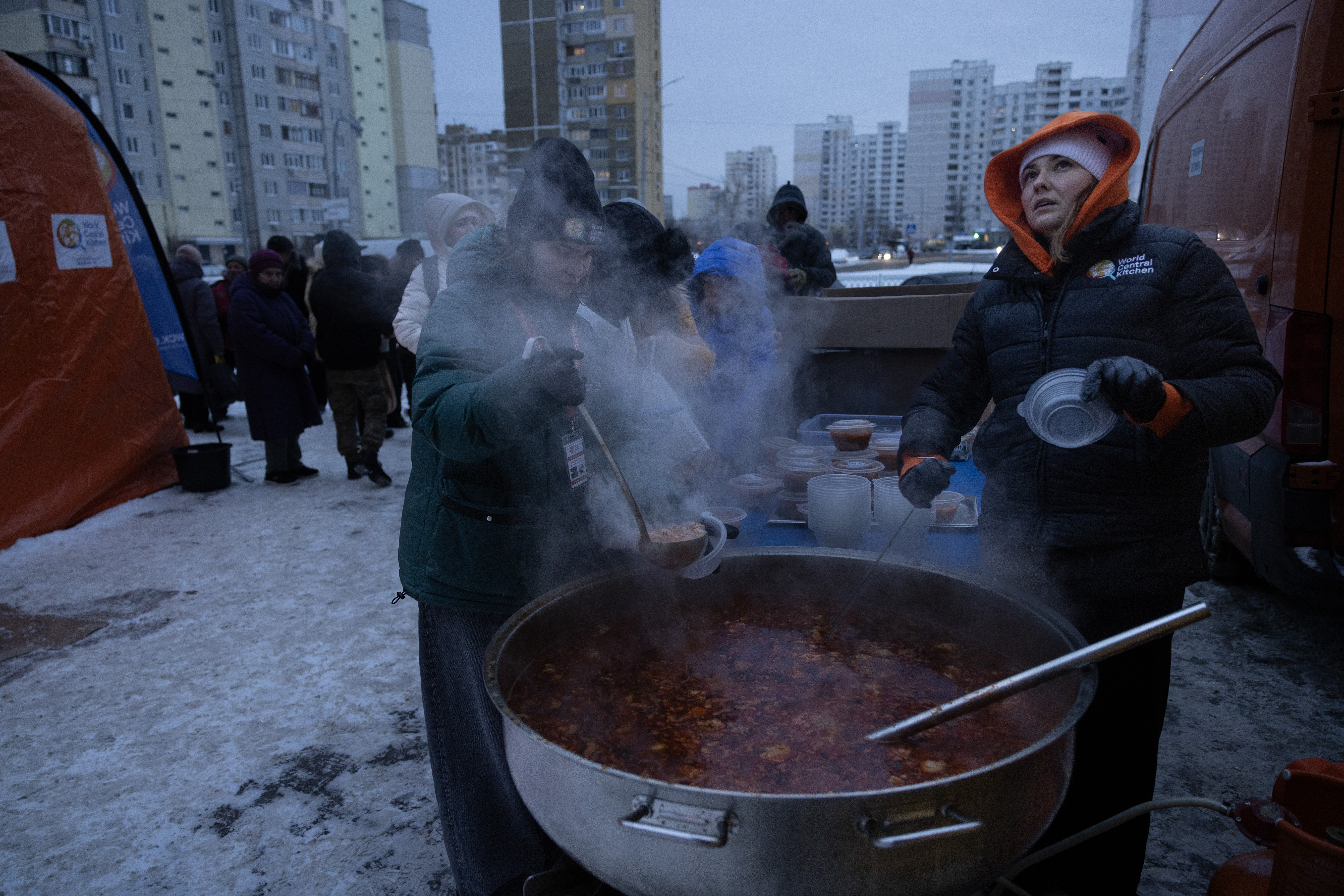
A soup kitchen in Kyiv, where residents are struggling with lack of heat and electricity
GETTY
But that is how the extremists see the situation, and they are less and less afraid of saying so.
Alexeyev’s shooting only makes it harder for the Kremlin to dodge some tough and overdue decisions. If the peace talks stall, it may encourage Putin towards flexibility in the name of avoiding an economic and political crisis, but he may still feel he has to escalate further, to avoid alienating the extremists at home all the more.