
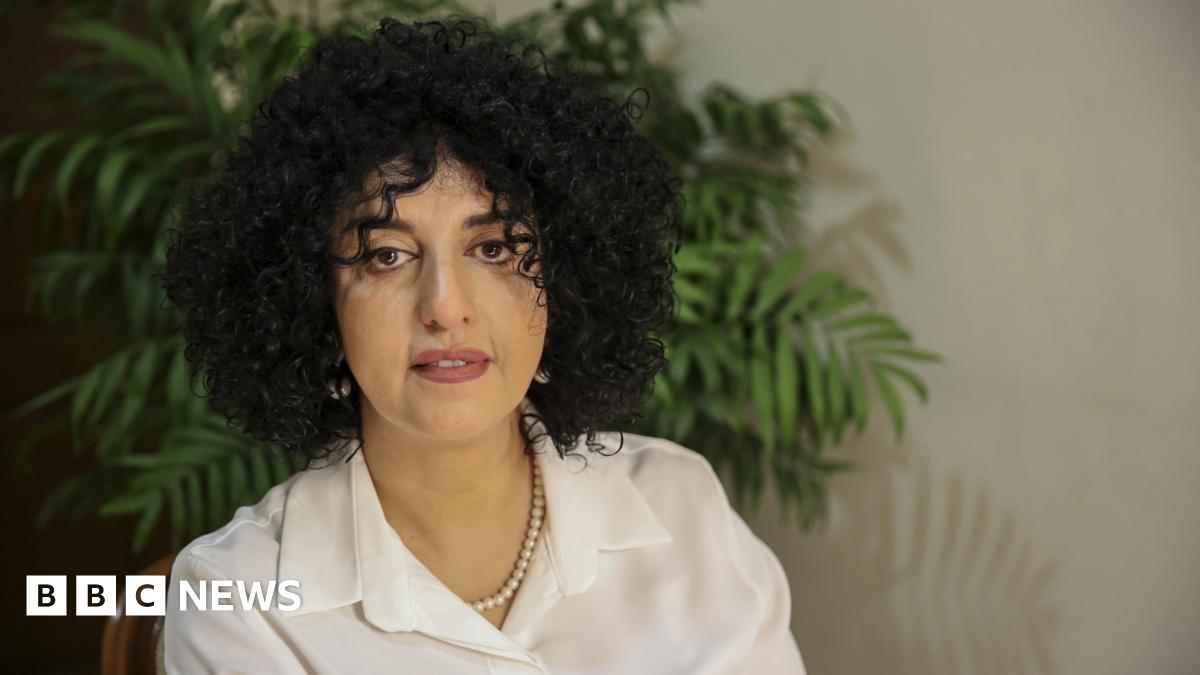
Nili, who spoke to Mohammadi for the first time since 14 December, said she had also been handed a two-year ban on leaving the country and two years of exile to the eastern Khusf region.
The Narges Foundation, which supports her, described the hearing on Saturday as a “sham” and explained she had begun a hunger strike on 2 February.
Nili said she had been taken to hospital three days ago “due to her poor physical condition” before being returned to the detention centre she is being held in.
“When she began to explain the events and how she was detained, the phone was disconnected.”
Mohammadi’s husband, Taghi Rahmani, said she offered no defence while in court due to her “steadfast” belief that “this judiciary holds no legitimacy” and that the proceedings were “a mere charade with a pre-determined end”.
“Though she was likely forced to attend, she remained silent – she did not utter a single word, nor did she sign a single paper.”
He described the sentence to the BBC as “cruel and very unfair”, and called on human rights organisations to protest against the ruling.
Meanwhile, Kiana Rahmani, Mohammadi’s daughter, said she was “gravely concerned” for her mother.
Mohammadi has already spent more than 10 years of her life in prison. The Narges Foundation says the latest sentence brings the total time she has been ordered to spend in prison to 44 years.
Since 2021, she has been serving a 13-year sentence for “propaganda activity against the state” and “collusion against state security”, charges she denies.
The activist was given temporary release from Tehran’s notorious Evin prison for three weeks in December 2024 on medical grounds.
She was expected to return to prison soon after, where she was serving multiple sentences.
The most recent arrest came as she attended a memorial for Khosrow Alikordi, a lawyer who had been found dead in his office in early December.
Norway-based group Iran Human Rights has called for an independent inquiry to establish how he died, saying the circumstances surrounding his death were “suspicious”.
The Narges Foundation previously said eyewitnesses had seen Mohammadi being attacked by around 15 plainclothes agents of the regime while at the memorial event, and that some were seen pulling her hair and beating her with clubs and batons.
Mashhad prosecutor Hasan Hematifar told reporters that Mohammadi had been among 39 people arrested, and she and Alikordi’s brother had encouraged those present “to chant norm-breaking slogans” and “disturb the peace”.
Mohammadi was among signatories of a petition that expressed criticism of the Iranian authorities and held Iran’s Supreme Leader Ayatollah Ali Khamenei responsible for what it called “crimes against humanity” over the killing of protesters during unrest that began in late December.
The US-based Human Rights Activists News Agency says it has counted more than 50,000 arrests related to the demonstrations and had confirmed at least 6,961 deaths.
The petition called for the prosecution of those acting on Khamenei’s orders and an end to the Islamic Republic.
Four prominent Iranian activists – identified as Abdollah Momeni, Mehdi Mahmoudian, Vida Rabbani and Ghorban Behzadian-Nejad – have also been arrested since 31 January for their contribution to the petition.
Taghi Rahmani urged the release of “all political prisoners in Iran”.