

Families are applying for grammars from thousands of miles away amid intense competition, with more than 30 candidates for each place at some selective schools.
Tutoring in some areas starts when children are six or seven years old, and some have more than one tutor. Tutor agencies report more interest in British grammar schools from families in other countries who plan to move if they are successful.
One school in north London, which had nearly 3,000 applications for its 104 places, took only one white British child in 2024-25. Another north London grammar had nearly 3,300 applications for 192 places and took two white British pupils.
Experts have said privately that some cultures are more focused on tutoring and ensuring their children are prepared for entrance exams.
The Times sent requests under the Freedom of Information Act to more than 50 of the 163 state grammar schools in England, asking about the number of pupils who joined from private schools, and the ethnicity and distance from the home address of those applying, for those due to start school in the academic years 2019-20 and 2024-25.
Crossing continents
Sir Thomas Rich’s School in Gloucester had an application from Shanghai in 2024. Stroud High School, in the same county, also reported an application from China that year.
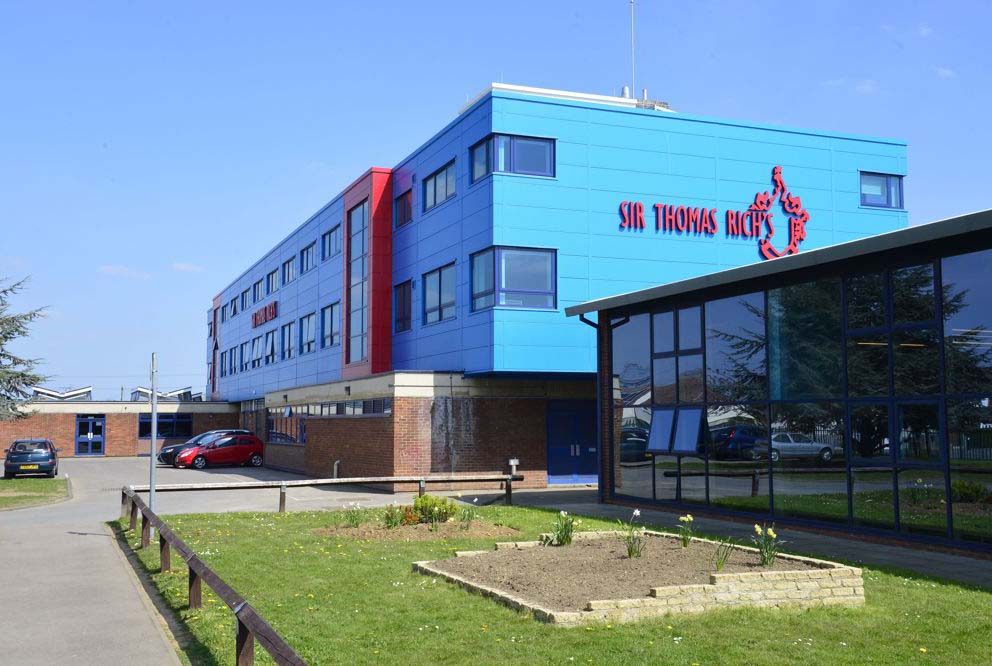
Sir Thomas Rich’s School in Gloucester
A child applied from Italy to Ripon Grammar School in North Yorkshire in 2019.
Within the UK, families can apply from hundreds of miles away and move if successful.
There was a candidate from Manchester for Colchester County High School for Girls in Essex; one from Leeds who applied to Colyton Grammar School in Devon; and one from Wiltshire for Ripon.
St Olave’s, a boys’ grammar in Orpington, southeast London, said: “In any given year, we typically receive applications from throughout the UK and from applicants living abroad, sometimes from other continents.”
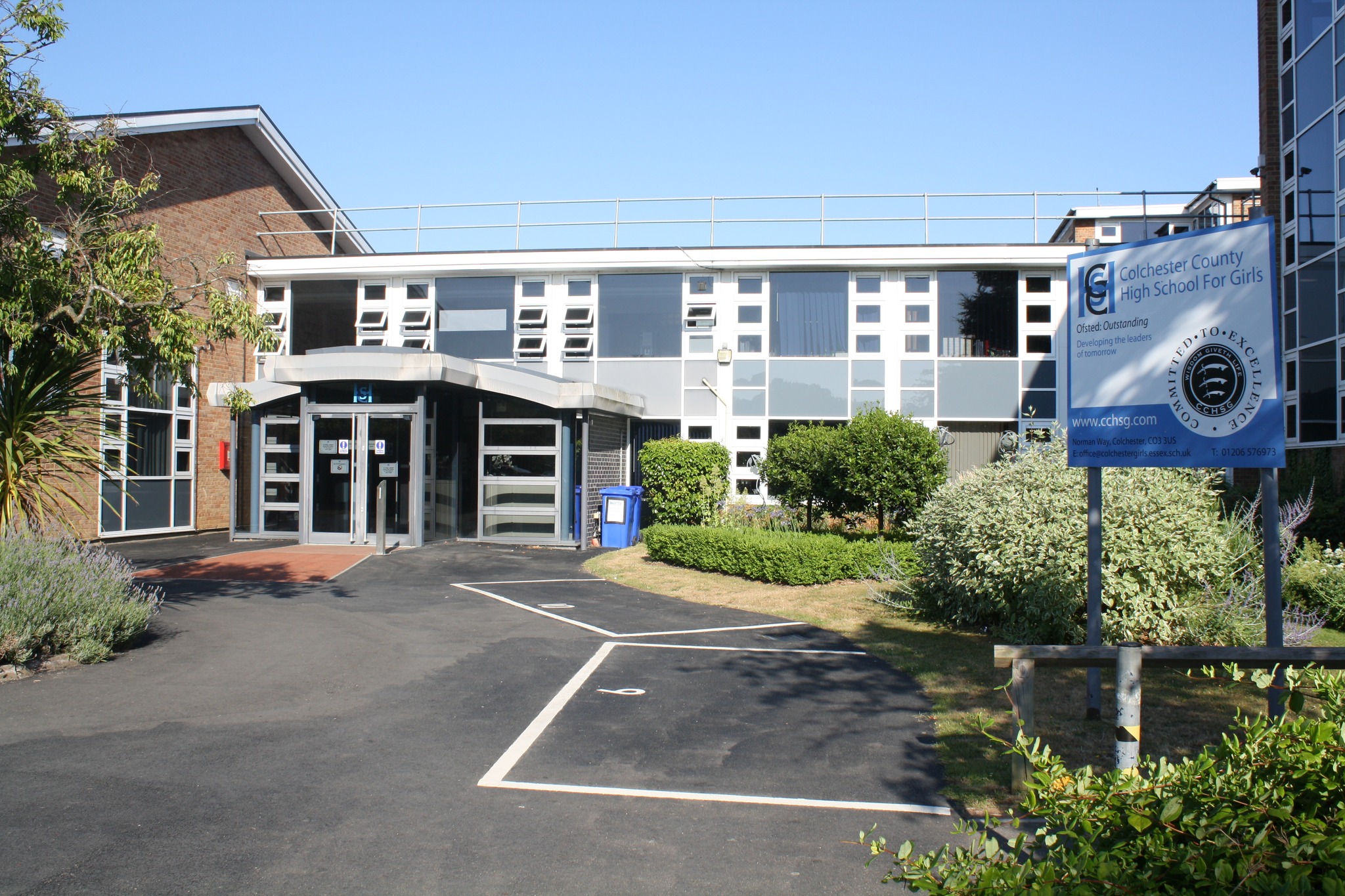
Colchester County High School for Girls
Lee Elliot Major, professor of social mobility at Exeter University, said: “When families are travelling hundreds of miles … to sit an entrance test, it’s a sign that a system originally designed to serve local academic talent is now operating as a national and global race for elite opportunity.
“If you can’t plan, pay and prepare years in advance, the race is often over before it has even begun. This is no longer just a test of academic potential — it’s a test of who can dedicate significant resources for the preparation.”
Fewer white British pupils
At 20 of the 22 schools that provided comparable data, the number of white British pupils had fallen from 2019-20 to 2024-25. At 14 of the 20 that did so for children from Indian families, the number had increased; the same was true for 14 of the 18 schools that provided comparable figures for Chinese pupils. The number of black pupils was about the same.
At Queen Elizabeth’s, a boys’ grammar school in Barnet, north London, the number of white British pupils in year 7 fell from nine to two in an intake of 192, while the number of those of Indian heritage increased from 103 to 120. The school is opening a private school in India in August and has plans for another in the next couple of years.
Henrietta Barnett, a nearby girls’ grammar, took one white British pupil in 2024 and 62 from Indian backgrounds.

Queen Elizabeth’s School was founded in the 16th century
ELEANOR BENTALL
At Pate’s Grammar School in Cheltenham the white British intake fell from 63 to 28 while its Indian-heritage intake increased from 45 to 72. At Sir Thomas Rich’s, white British starters fell from 102 to 53 and those from Indian families doubled from 22 to 45.
At Wallington High School for Girls in Sutton, south London, the white British intake fell from 26 to 15 but the ranks of those from Indian heritage swelled from 46 to 67.
Elliot Major said: “We need to be very cautious about comparing ethnic groups as if they are like-for-like, or treating ‘white British’ pupils as a single group, when they account for a vast and variable population of pupils. These differences could be due to white British pupils being more likely to come from lower-income households and to live in areas where education has not consistently translated into opportunity.”
However, Professor Peter Edwards, a fellow of St Catherine’s College, Oxford, who grew up in a working-class family in Liverpool, said: “White children from poorer backgrounds are simply being left behind. The plight of white working-class boys, the largest group of disadvantaged young people in this country, has always been the least fashionable.
• Disadvantaged white pupils fall furthest behind
“Attempts at drawing attention to this problem have been lazily targeted as so-called ‘far-right’ political thinking. I have heard comments that the cause of this complex problem is this particular class of young people’s ‘sense of themselves’. This is simplistic and bigoted. If this country is serious about social mobility, we must target where the attainment gaps are largest.”
Parent power
Although only 40 per cent of schools that provided comparable data faced more appeals from rejected families in 2024 than five years earlier, some of those reported that cases had increased eightfold.
The Good Schools Guide advises parents that they must “supply compelling evidence showing that the child is of grammar school ability, and evidence to back up claims that your child’s performance was affected by events on the day or immediately prior to the test”.
Tunbridge Wells Grammar School for Boys in Kent opened an annexe in Sevenoaks in 2021, increasing its annual admissions from 210 to 300. In 2024 it was instructed to take another 20 pupils after successful parental appeals, bringing its intake to 320.
Appeals doubled between 2019 and 2024 at Pate’s, St Olave’s and Torquay Boys’ Grammar School in Devon. They trebled at Sir Thomas Rich’s and quadrupled at Wallington. At Bishop Vesey’s Grammar School in Sutton Coldfield in the West Midlands, appeals rose from two to 19.
Pate’s Grammar School in Cheltenham
ALAMY
Social mobility
About two thirds of schools that responded had policies giving priority to some pupil premium candidates from disadvantaged homes, and about half reported an increase in the number of children on free school meals (FSM).
Despite this, of 27 schools providing data, 14 took on fewer than ten FSM pupils in 2024-25.
Sixteen schools provided data on intake from private primaries for both 2019 and 2024. They gave 247 places to privately educated pupils in 2024, compared with 256 in 2019.
At those 16 schools, 251 places were given in 2024 to children qualifying for FSM. The balance varied; Queen Mary’s Grammar School in Walsall took 52 FSM children and five from private schools, whereas Tonbridge Grammar School in Kent took 41 from independent schools and four on FSM.
Professor John Jerrim, of the Institute of Education at University College London, said some families applying from far away could be due to move anyway, but others may be doing so for the sole reason of sending their child to a grammar school.
Children usually sit the 11-plus in September and families will find out their secondary school places in March.
Jerrim said many pupils who received tutoring were “taught to the test on the reasoning components”, adding: “That won’t really benefit anyone long-term and is unlikely to be good for children who just scrape in because they have been tutored.
“Tutoring in selective areas for primary school kids should have VAT added on top. The money should be allocated to giving more funding to disadvantaged pupils in local schools. Shouldn’t Labour — of all governments — be looking at such a policy? There are clear changes that could and should be made. It’s really a matter of how radical the government wants to be.”
• Can you pass 11+ quiz grammar school head claims can’t be tutored?
Mark Fenton, chief executive of the Grammar School Heads Association, said: “The government’s admissions code allows parents to apply for any school and schools are obliged to assess all applicants regardless of where they live. Grammar school leaders would like to see this system reformed.
“Over 90 per cent of grammar schools prioritise disadvantaged children in their admissions policies, a significant increase over the past five years and a massively higher figure than in comprehensive schools. Research by the Sutton Trust has shown that the most socially exclusive schools in England are all comprehensive schools in affluent areas, not grammar schools.”
He said grammar schools were “working extremely hard on outreach activities” but “only about 5 per cent of children from disadvantaged backgrounds achieve highly enough at primary school to have a realistic chance of performing well enough to gain admission”.