
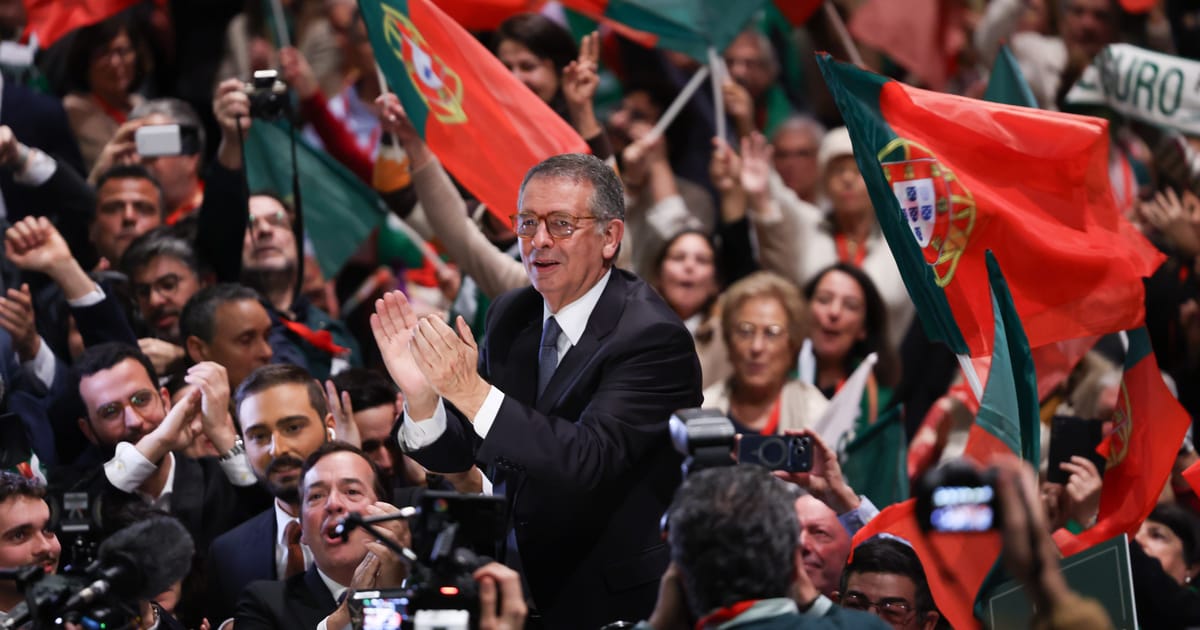
Seguro describes himself as someone who “engages in dialogue, unites and brings people together.” He has also promised to be more “discreet” than outgoing President Marcelo Rebelo de Sousa, a former law professor and television commentator who was both praised and criticized for being omnipresent during his decade-long tenure as Portugal’s head of state.
Positives for Ventura
Portugal is a semi-presidential republic in which the president serves as the country’s head of state and has the power to appoint the prime minister and dissolve parliament. The president also has the right to veto laws, appoint some members of key state and judicial bodies and issue pardons, and serves as supreme commander of the country’s armed forces. In that role, Ventura could have wielded considerable power to favor his own Chega party. But even in defeat, the presidential run represents progress for the far-right leader.
Ventura was backed by 33 percent of voters, securing a greater share of the vote than center-right Prime Minister Luís Montenegro when legislative elections were held last year. According to António Costa Pinto, a political scientist at the University of Lisbon’s Institute of Social Sciences, the results allow the far-right politician “to claim he’s the true leader of the Portuguese right.”
Moreover, the party was backed by more than 1.7 million electors — it’s greatest result to date.
Just by making it to the second round, Ventura outperformed more mainstream rivals like conservative TV commentator Luís Marques Mendes, who ran on behalf of the governing Social Democratic Party, and João Cotrim de Figueiredo, the candidate representing the rising liberal economic Liberal Initiative party.
The surge of conservative figures backing Seguro could also bolster Ventura’s argument that the country’s center-right and center-left parties are virtually identical mainstream entities.
And the campaign has ultimately provided the far-right leader with free — and extensive — media coverage and the opportunity to gauge support for what he has repeatedly said is his ultimate goal: to be the next prime minister of Portugal.
This article has been updated.