
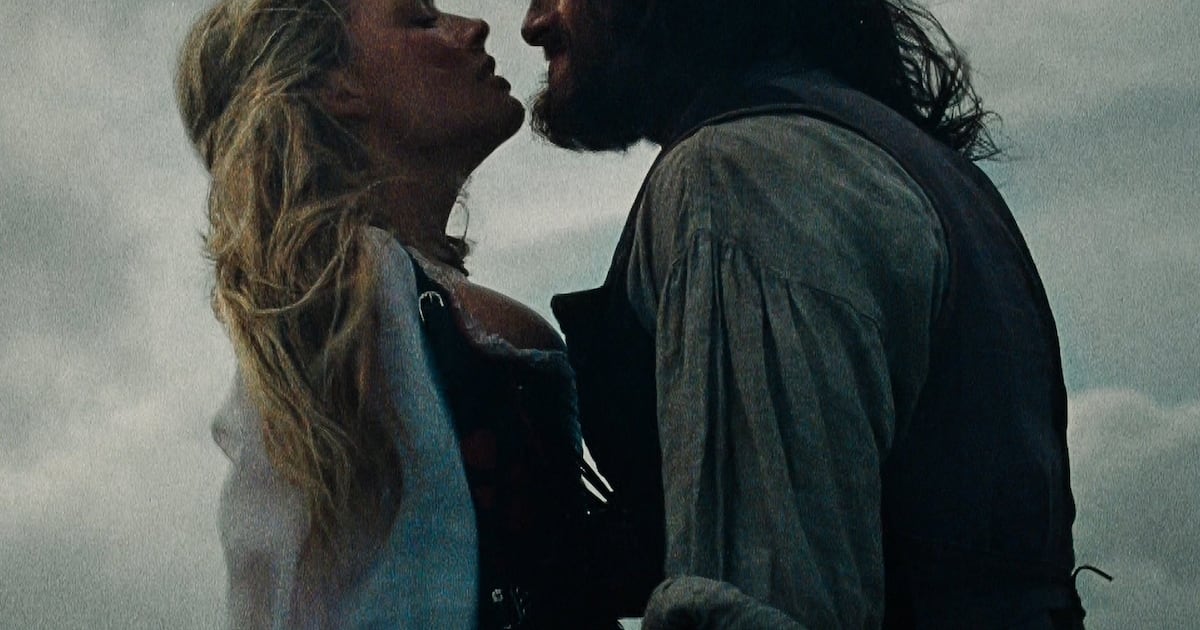
“Wuthering Heights”
Director: Emerald Fennell
Cert: 15A
Starring: Margot Robbie, Jacob Elordi, Hong Chau, Shazad Latif, Alison Oliver, Martin Clunes, Ewan Mitchell
Running Time: 2 hrs 16 mins
By the time we learned that Warner Bros was to render the title of Emerald Fennell’s “Wuthering Heights” within quotation marks, the rumour mill was already awash with suggestions the director had ripped the source apart with a bloody, sexy relish that might have given even Ken Russell pause for thought.
Remember the talk of an opening execution scene that ended with visible ejaculation and orgasming nuns? Inverted commas surely would not be enough. We’d need bold italics, multiple exclamation points and eggplant emojis. Right?
Not so much. We do indeed begin with debauchery at a public hanging, but the scene is carried off with more bawdy mischief than pornographic subversion. It’s closer to Carry on Heathcliff than The 120 Days of Sodom.
The surprise for many will be how closely this supposed deconstruction sticks to the shape of Emily Brontë’s original narrative. As has been the case with virtually every feature adaptation (the 1992 film with Ralph Fiennes being a rare exception), “Wuthering Heights” entirely ditches the second generation, but, in its guiding structure, it makes few more radical swerves than did William Wyler’s 1939 classic.
You know what happens. Mr Earnshaw (Martin Clunes) brings an orphan of uncertain racial origins back to his windy home on the Yorkshire moors. The lad, named Heathcliff (Owen Cooper from Adolescence), becomes close to Catherine (Charlotte Mellington), Mr Earnshaw’s daughter, but, following jealous disputes about the neighbouring, more civilised Linton family, Heathcliff, a strapping force of nature, flees the county to make his fortune.
Literal and figurative storms accompany his eventual moneyed return. Now in the starry form of Margot Robbie, often dressed, inexplicably, like an Alpine milkmaid, and Jacob Elordi, a caber of landscape made flesh, the couple spread bottomless misery wherever their blustery passion touches down.
Fennell, who has already had a crack at interclass amour fou with Saltburn, makes her distinctive presence felt in the knowingly vulgar – somewhat inconsistent – visuals and in a clash of cheeky anachronisms that keep the soundtrack on awkward edge: Charli XCX’s smart beats rubbing against the folk singer Olivia Chaney’s lovely version of The Dark-Eyed Sailor.
The nightmarishly heightened contrast between the horrors of Wuthering Heights (pyramids of bottles stacked near tiling that suggests Derek Jarman’s work for the Russell film The Devils) and the stifling civilisation of the Lintons’ Thrushcross Grange (think Austen pimped up for a themed Las Vegas casino) will surely secure the film’s production designer, Suzie Davies, awards in a year’s time.
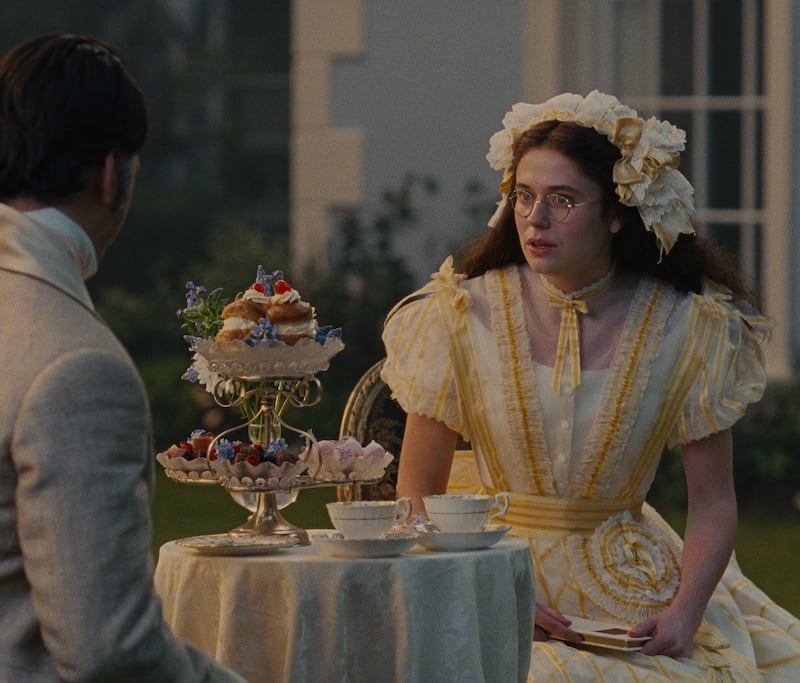 “Wuthering Heights”: Alison Oliver as Isabella. Photograph: Warner Bros
The supporting cast are flawless in their dedication to an aesthetic that heightens the poisonous chemistry at the heart of the core relationship. Clunes is magnificently doomed as the Earnshaws’ thirsty pater familias. Alison Oliver, from Cork, is better still as a character often undersold in adaptations. Her Isabella Linton is first encountered as a hilarious Cathy superfan – she’d be drooling over her every Insta post in 2026 – before becoming disturbingly compliant in Heathcliff’s literal enslavement of her.
The problem – and it is no small one – rests with the leads. Elordi is fine as an unthinking hunk of abusive resentment. But the script cannot make sense of this Cathy as someone of Robbie’s age. At least one sarky crack confirms the character is no longer supposed to be a teenager (or anything close), but the dialogue does not satisfactorily retune Cathy to a woman in her 30s.
It would have been a nice trick to pull off, because, much rubbished by those who haven’t seen it, “Wuthering Heights”, is, elsewhere, successful at nodding politely to the original text while snubbing its nose at slavish faithfulness. The wallowing in sexually suggestive egg yolk. The hilariously phallic architecture. Oliver chained to the fireplace. Better that than another politely reverent variation on Sunday-evening telly.
In cinemas from Friday, February 13th