
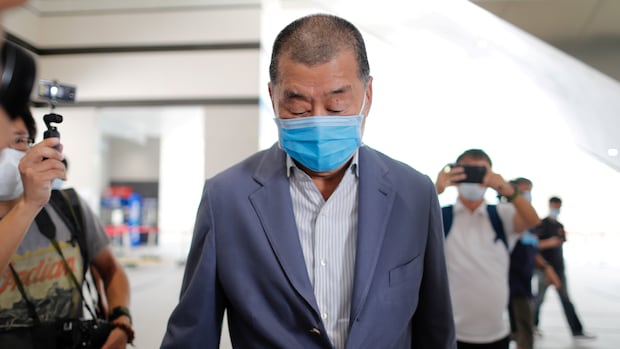
Jimmy Lai, the pro-democracy former Hong Kong media tycoon and a fierce critic of Beijing, was sentenced to 20 years in prison in one of the most prominent cases prosecuted under a China-imposed national security law that has virtually silenced the city’s dissent.
Judge Esther Toh said 18 years of Lai’s sentence should be served consecutively to his jail term in his fraud case, for which he received a sentence of five years and nine months. Lai can appeal his case.
His co-defendants, six former employees of his Apple Daily newspaper and two activists, received prison terms of between 6¼ and 10 years on collusion-related charges.
Three government-vetted judges spared Lai, 78, the maximum penalty of life imprisonment on charges of conspiring with others to collude with foreign forces to endanger national security, and conspiracy to publish seditious articles.
He was convicted in December. Given his age, the prison term still could keep him behind bars for the rest of his life.
Lai’s sentencing could heighten Beijing’s diplomatic tensions with foreign governments. It drew criticism from around the world.
U.S. Secretary of State Marco Rubio in a statement urged authorities to grant Lai humanitarian parole. The sentence, Rubio said, “shows the world that Beijing will go to extraordinary lengths to silence those who advocate fundamental freedoms in Hong Kong.”
Foreign Affairs Minister Anita Anand in a statement also called for Lai’s release on humanitarian grounds and said Canada was disappointed with the outcome.
“Canada will continue to support free and independent media worldwide,” she said.
WATCH | Jimmy Lai speaks with the CBC’s Adrienne Arsenault in 2020: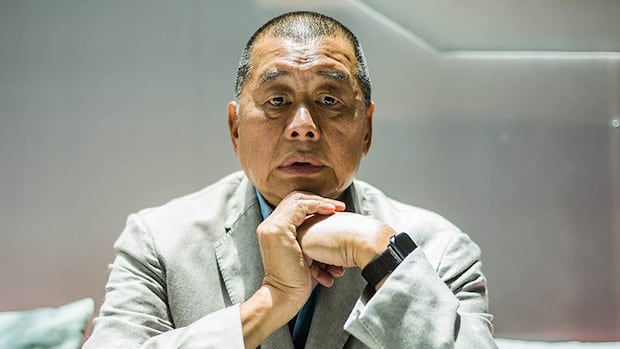
Hong Kong tycoon Jimmy Lai risks everything to take on Beijing
Hong Kong media tycoon Jimmy Lai has already taken huge risks by having his newspaper openly criticize Beijing, including the new national security law, and he’s been arrested for organizing pro-democracy protests. He tells National co-host Adrienne Arsenault that Hong Kong as it’s known to its people and the world is in danger of disappearing.’Heartbreakingly cruel’
Robert Pang, one of Lai’s lawyers, said his client is suffering from health issues, including heart palpitations, high blood pressure and diabetes.
In a statement, Lai’s son, Sebastien, said the “draconian” prison term was devastating for his family and life-threatening for his father.
“It signifies the total destruction of the Hong Kong legal system and the end of justice,” he said.
His sister Claire called the sentence “heartbreakingly cruel” in the same statement. “If this sentence is carried out, he will die a martyr behind bars,” she said.
In an interview on CBC’s Power & Politics on Monday, Sebastien said China has imprisoned his father’s body “but they haven’t imprisoned his spirit,” recalling Lai’s “stoic” reaction when the sentence was announced.
“He even smiled at the judges, almost as an act of defiance,” he said.
WATCH | Son of Jimmy Lai says China hasn’t ‘imprisoned his spirit’: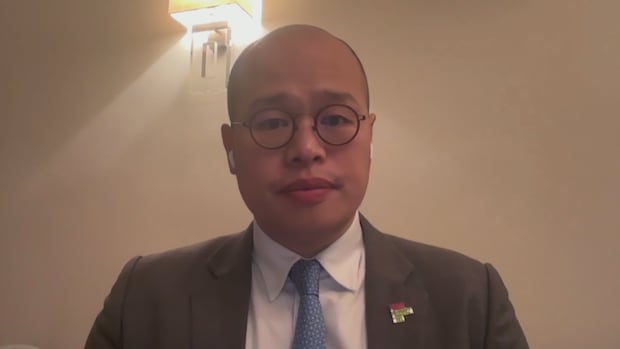
China hasn’t ‘imprisoned his spirit’: Jimmy Lai’s son on father’s sentencing
Sebastien Lai, son of pro-democracy former Hong Kong media tycoon Jimmy Lai, tells Power & Politics China has imprisoned his father’s body ‘but they haven’t imprisoned his spirit,’ as Beijing hands down a 20-year sentence to the 78-year-old under China’s internationally scrutinized national security law. Plus, Irwin Cotler, Canadian international legal counsel for Jimmy Lai, says the implications of the sentence are severe for democracy.
Before Lai left the courtroom, he looked serious, as some people in the public gallery cried. Earlier, Hong Kong’s outspoken Roman Catholic Cardinal Joseph Zen sat next to Lai’s wife when he arrived for the sentencing.
The democracy advocate’s arrest and trial have raised concerns about the decline of press freedom in what was once an Asian bastion of media independence.
The government insists the case has nothing to do with a free press, saying the defendants used news reporting as a pretext for years to commit acts that harmed China and Hong Kong.
Lai was one of the first prominent figures to be arrested under the security law in 2020.
Within a year, some senior journalists at Apple Daily, the newspaper Lai founded, were also arrested. Police raids, prosecutions and a freeze of its assets forced the newspaper’s closure in June 2021. The final edition sold a million copies.
The former Apple Daily staffers and activists involved in Lai’s case entered guilty pleas, which helped reduce their sentences. The convicted journalists are publisher Cheung Kim-hung, associate publisher Chan Pui-man, editor-in-chief Ryan Law, executive editor-in-chief Lam Man-chung, executive editor-in-chief responsible for English news Fung Wai-kong and editorial writer Yeung Ching-kee.
International condemnation
U.K. Foreign Secretary Yvette Cooper said Lai, a British citizen, was sentenced for exercising his right to freedom of expression after a “politically motivated prosecution.”
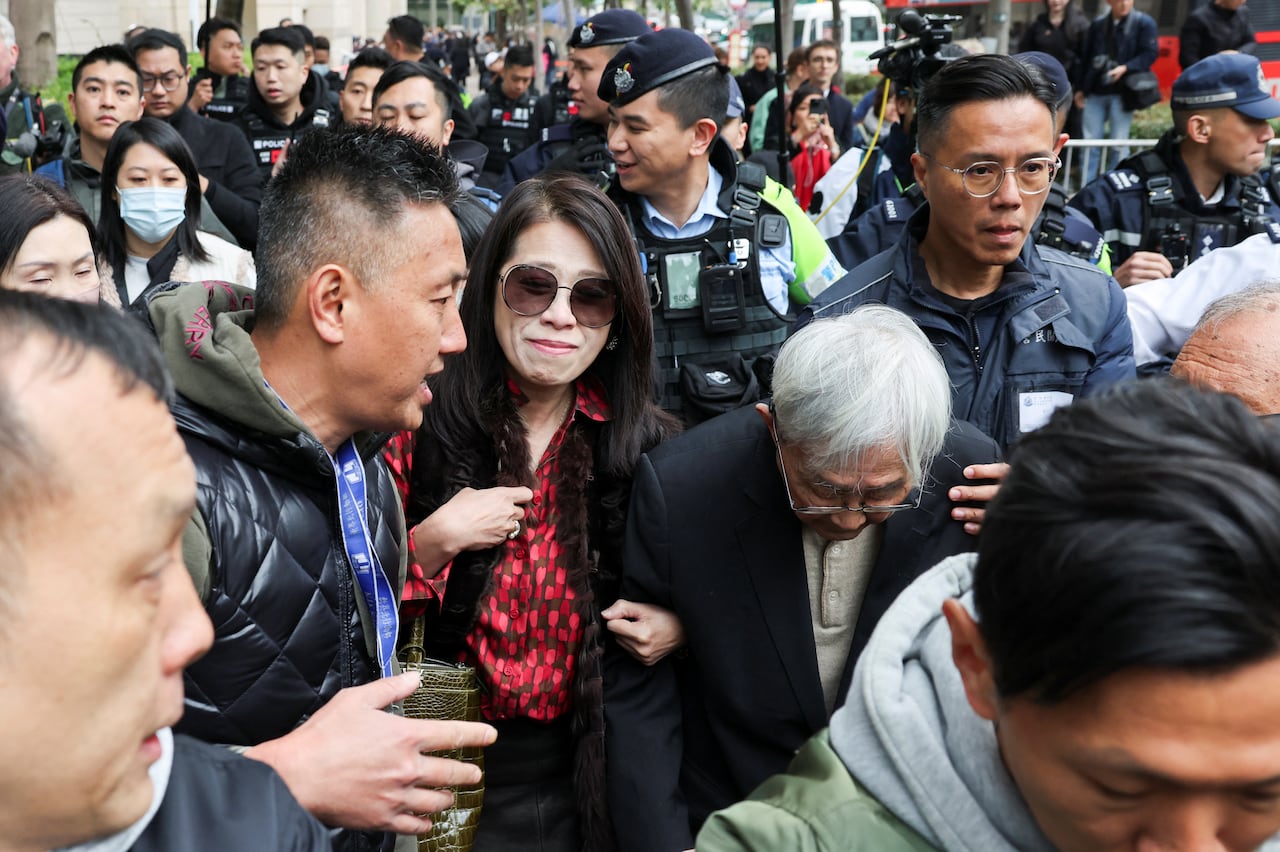 Jimmy Lai’s wife, Teresa, shown here at centre in sunglasses, leaves the West Kowloon Magistrates’ Courts building after her husband, founder of the now-defunct pro-democracy newspaper Apple Daily, was sentenced. (Tyrone Siu/Reuters)
The Inter-Parliamentary Alliance on China (IPAC), consisting of 86 politicians from nearly 30 countries, as well as the European Union, called on democratic governments to respond “through co-ordinated diplomatic pressure.”
“As Beijing dismantled Hong Kong’s autonomy, free press and rule of law, governments spoke out, but failed to act,” the group said.
Liberal MP Judy Sgro, Conservative MPs James Bezan and Garnett Genuis, Bloc Québécois MP Simon-Pierre Savard-Tremblay and former Liberal justice minister Irwin Cotler were among the Canadian signatories as part of IPAC.
The EU reiterated its call for the immediate and unconditional release of Lai, citing his advanced age and health condition.
Amnesty International said the sentence marked “another grim milestone” for Hong Kong.
“Imprisoning a 78-year-old man for doing nothing more than exercising his rights shows a complete disregard for human dignity,” said Sarah Brooks, Amnesty’s deputy regional director.
In Beijing, China’s Foreign Ministry spokesperson Lin Jian said the judicial cases are purely Hong Kong’s internal affairs, urging “relevant countries” to avoid interfering in Hong Kong’s judicial affairs or China’s internal affairs.
Lin said Lai was a major planner and participant in a series of anti-China destabilizing activities in Hong Kong.