
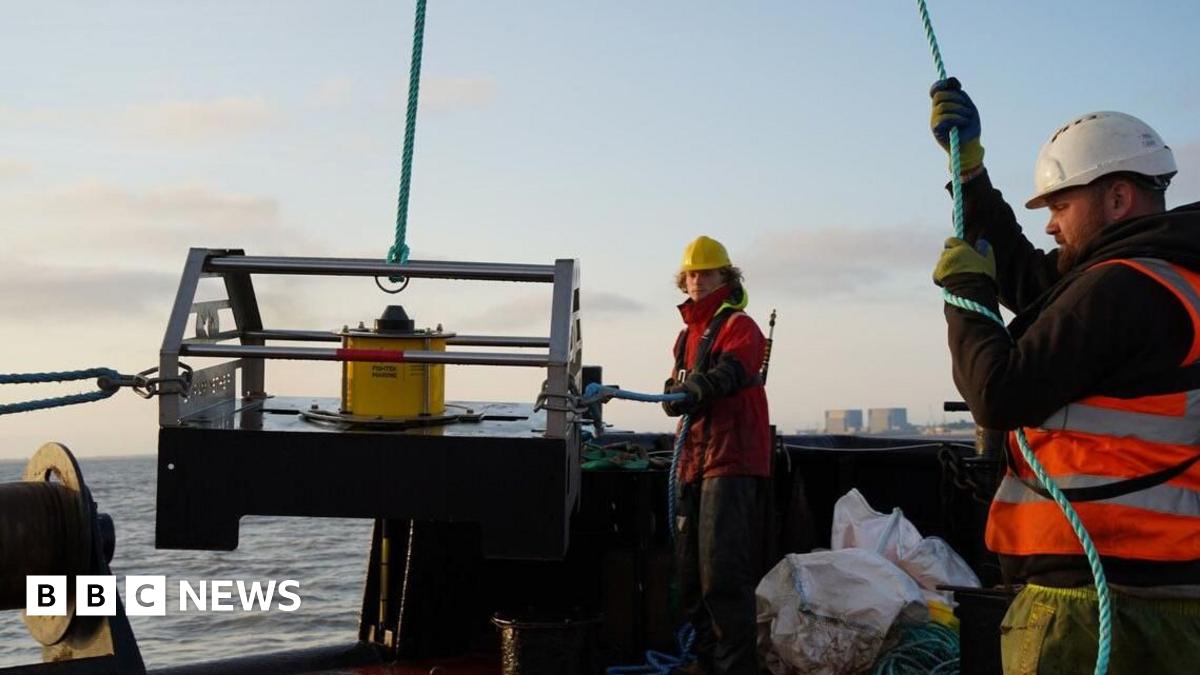
But some question whether this expensive technology is worth it.
Britain has become the “most expensive place in the world” to build nuclear power plants, according to a government review of nuclear regulation.
The estimated cost of Hinkley Point C has risen to £46bn from the £18bn predicted in 2017, and it is expected to open in 2031.
John Fingleton, who wrote the report, singled out Hinkley Point’s elaborate fish protection measures as a case study of “overly cautious regulation”.
Mr Fingleton added: “Motorways wouldn’t be very useful if we all drove at five miles (8km) an hour, but that’s sort of what we’re doing in nuclear safety.”
While the acoustic deterrent costs £50m, the wider fish‑protection system – including larger inlet heads and a return pipe for fish – will bring the cost to £700m.
But how many fish will actually be saved for this money?
EDF and Natural England agree that without the extra acoustic deterrent, around 2.6 million fish could be sucked into the cooling pipes every year.
Since many are tiny, the experts say it is roughly equivalent to the daily catch of one Cornish fishing boat.
Other campaign groups, like the Wildlife Trusts, insist that many more fish are at risk. They highlight research from Natural England that found that over seven million fish would die if no measures whatsoever were put in place.
Developing and approving Hinkley’s fish protection system has cost millions, taken years, and hundreds of farmers and local residents have been threatened with losing their land.
Now the new lightweight disco in a lobster pot has been tested, many hope this chapter in the extraordinary story of Britain’s new nuclear power station will be complete.