
The National Farmers Union (NFU) wrote to MPs in November last year to lay out the severe risks the farming sector was facing.
“Farmers and growers experience both [drought and floods] on an annual basis, and both severely impact their ability to produce food,” it said.
The wet winter of 2024 – the second wettest on record – saw the sector experience £1bn losses from damaged crops.
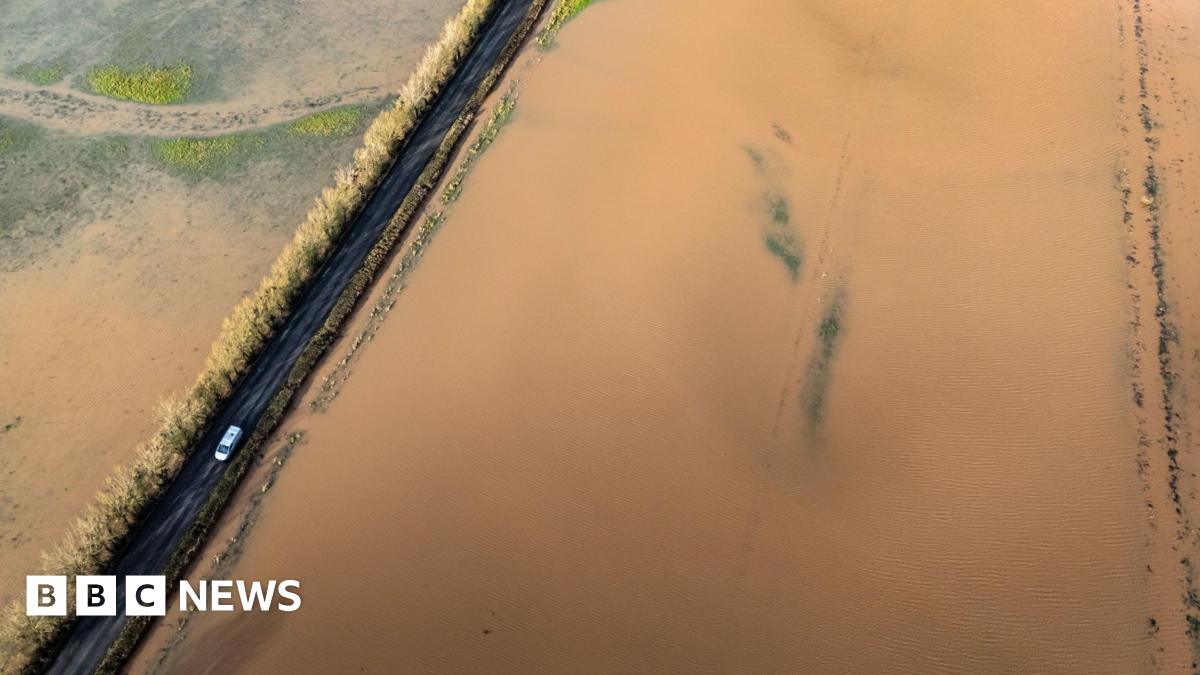
James Winslade, a beef and arable farmer from Somerset, has seen more than 90% of his farm submerged in the recent rains, and said he is days away from losing his crops to rot.
“We can’t protect everywhere. There isn’t insurance for crop damage. We don’t get compensation.”
He said he is a third-generation farmer, and that his father and grandfather never saw this level and recurrence of flooding.
The UK does have an extensive network of flood defences but there is a patchwork of organisations – including farmers, water companies and charities – responsible for them.
Half of flood defences – around 100,000 – are maintained by the Environment Agency and 9% of those are currently below their target condition. Each defence is given a score out of five they must achieve depending on their importance.
But previous analysis by the BBC Shared Data Unit estimated that the defences not maintained by the EA were 45% more likely to be below target.
And increased development will only exacerbate flooding – concreting over surfaces for housing or car parks prevents rain being absorbed and instead it runs off into drains and rivers which can become overwhelmed and breach defences.
An Environment Agency spokesperson told the BBC: “As a result of climate change, we are seeing more flooding and extreme weather. Whilst it is sadly not possible to stop all flooding, the Environment Agency is committed to helping communities to adapt.
“Through the government’s flood programme a further £10.5bn [will be] invested in protecting 900,000 more properties by 2036.”