
Your support helps us to tell the story
From reproductive rights to climate change to Big Tech, The Independent is on the ground when the story is developing. Whether it’s investigating the financials of Elon Musk’s pro-Trump PAC or producing our latest documentary, ‘The A Word’, which shines a light on the American women fighting for reproductive rights, we know how important it is to parse out the facts from the messaging.
At such a critical moment in US history, we need reporters on the ground. Your donation allows us to keep sending journalists to speak to both sides of the story.
The Independent is trusted by Americans across the entire political spectrum. And unlike many other quality news outlets, we choose not to lock Americans out of our reporting and analysis with paywalls. We believe quality journalism should be available to everyone, paid for by those who can afford it.
Your support makes all the difference.Read more
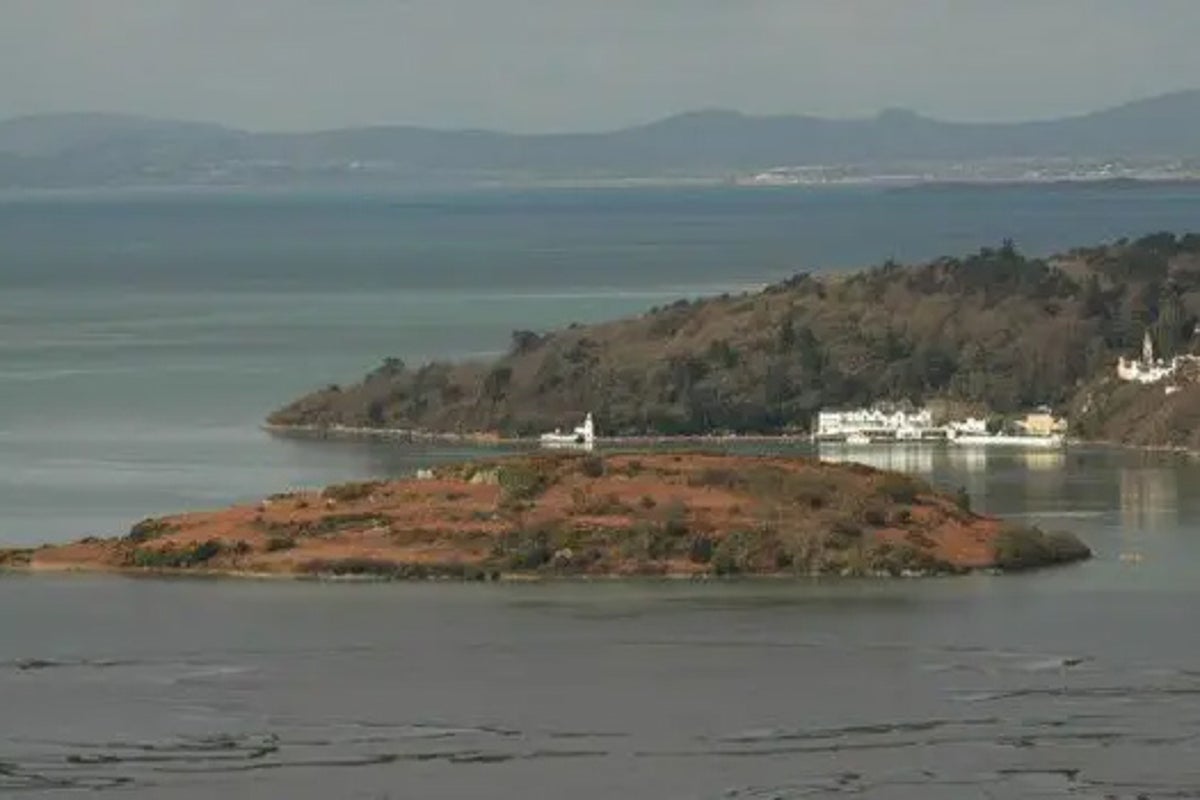
A 17-acre private island off the Welsh coast complete with a two-bedroom farmhouse and outbuildings, has hit the market for just £350,000.
This is about half the price of the average London home, which according to Rightmove was £656,694 over the last year.
The only downside – the house is falling apart with no mains electricity or running water.
The tidal island – cut off at high water and requiring a boat to reach, but accessible by foot when the tide is out – is in the Dwyryd Estuary, near Harlech and Porthmadog in the heart of Eryri (Snowdonia) National Park.
The estate agents, Carter Jones, describe the island of Ynys Gifftan as offering buyers access to “an expansive and unspoilt landscape with uninterrupted panoramic views across the coastline and surrounding mountains”.
Hugh O’Donnell from Carter Jonas’ Bangor office, said: “Ynys Gifftan presents a truly unique opportunity for a buyer who appreciates its exceptional location and potential.
“We expect interest from those seeking an ambitious lifestyle project in one of Wales’ most beautiful coastal settings, or someone searching for their own secluded haven.”
open image in gallery
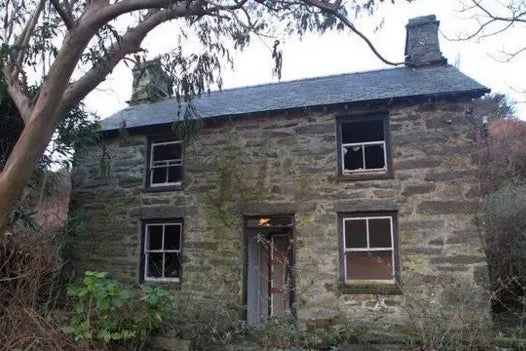
The farmhouse requires some refurbishment – including new windows (Arthur Charris/Geograph.org.uk)
The island is classed as one of just 43 unbridged tidal islands in Britain that can be reached on foot at low tide, adding to its sense of rarity.
A stone farmhouse sits on the eastern shore, looking across the estuary towards the village of Talsarnau.
Photographs reveal the building to be in a state of considerable dereliction, and therefore it requires full renovation, but nonetheless offers the chance to restore a traditional building in an extraordinary setting.
open image in gallery
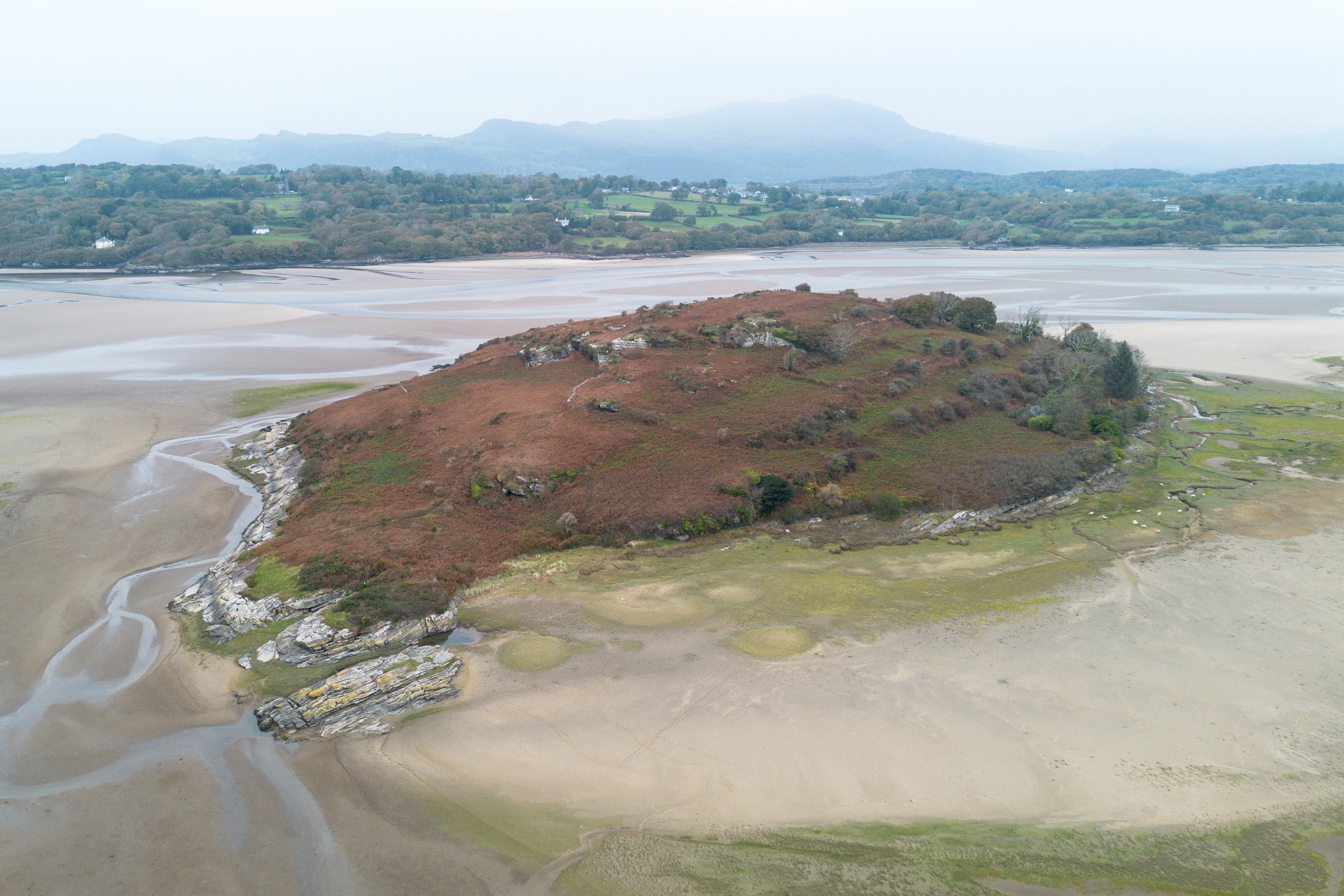
Ynys Gifftan – yours for just £350k (Carter Jonas)
A neighbouring stone outbuilding provides extra storage and could potentially serve an additional purpose, subject to permissions, the estate agents said.
The land covers 17.74 acres and is a mix of rocky grassland and permanent pasture, rising up to 38 metres (125ft) high, with some mature trees, before giving way to the estuary and its expanses of sand.
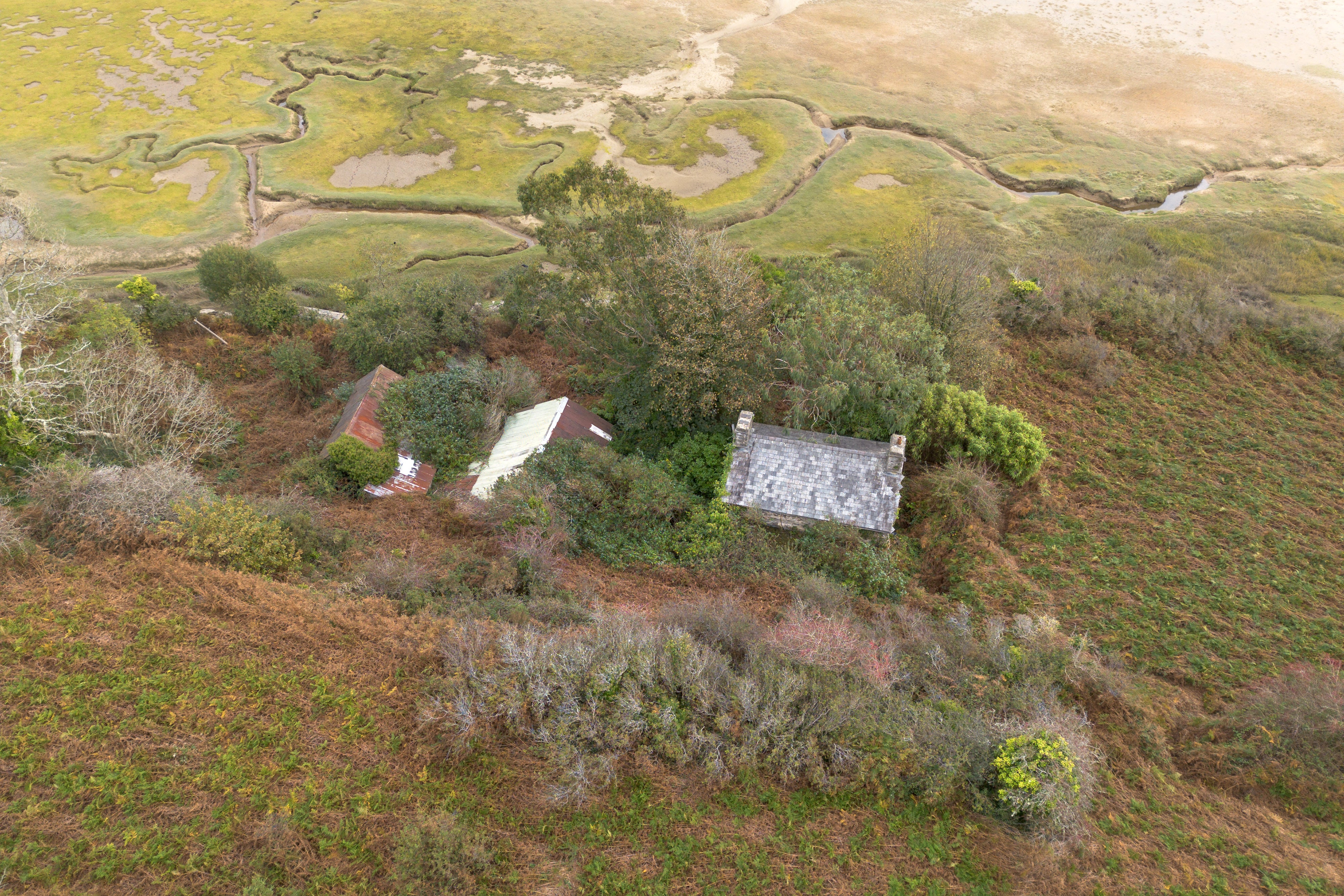
Much of the island has previously been grazed, but has now begun to return to a more natural state. Traces of old field boundaries remain, but would need repair and reinstatement in order to be fully functional again for livestock if desired.
open image in gallery
Fixer-upper: Much of the island would require renovation to use for living and rearing livestock (Carter Jonas)
In recent decades overgrazing by sheep has been recognised as a significant issue in Eryri, as well as other national parks across Britain.
It leads to ecological degradation, such as the loss of heather, bilberry, and native woodland regeneration, enormously reducing broader biodiversity.
The island is also close to the Italianate village of Portmeirion, built by Sir Clough Williams-Ellis between 1925 and 1975 and used as a key location in 1960s TV series The Prisoner.