
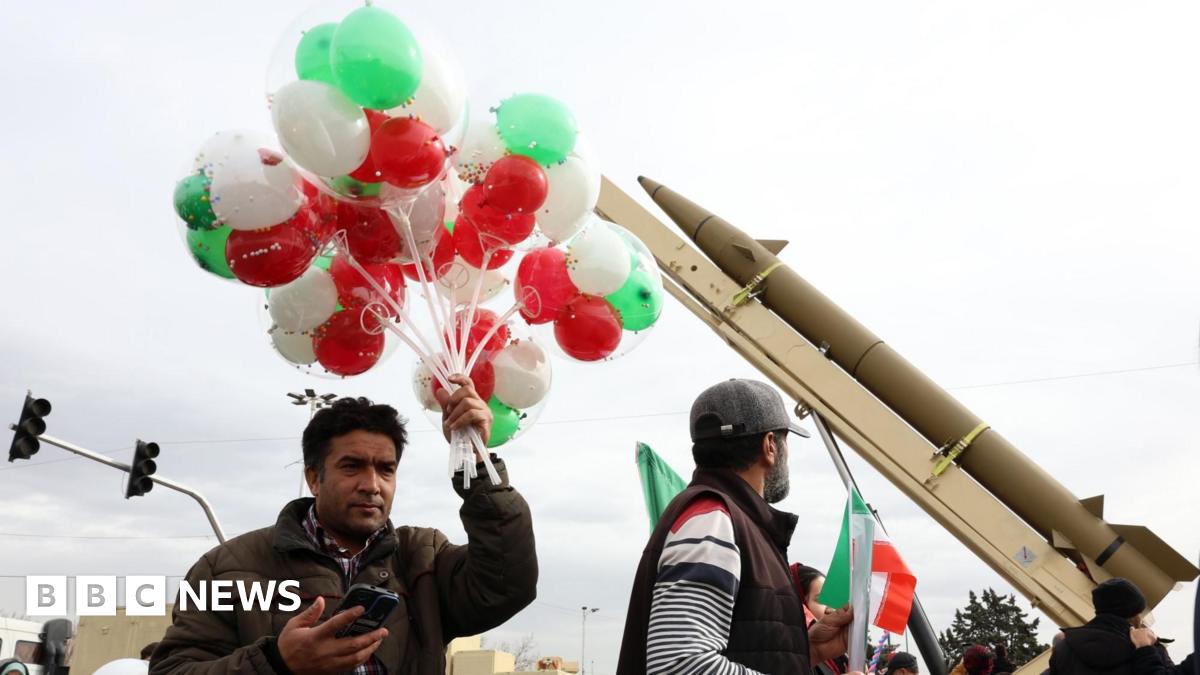
It’s our first trip to Iran since the protests, as the authorities slowly lift their near total internet blackout, described as one of the longest digital shutdowns in history, and gradually allow a small number of international media to return.
The mood in the capital is in stark contrast to our visit last June, at the end of the 12-day war with Israel, which also drew in America’s attacks on Iran’s nuclear sites.
That deadly conflagration had left many residents, including those who fled Tehran for safer cities, shaken by the blistering attacks and cemented their attachment to their country.
Now, this sprawling metropolis set against the stunning, snowy Mount Damavand is decked out in flags and bunting to mark what’s known as the “ten days of dawn”.
In 1979, this period ushered in an historic revolution that ousted the shah, totally transformed Iran, and created a radical “axis of resistance” among its allies across the region which has long been condemned and confronted by its enemies.
This year, the days are overshadowed by discontent and defiance over everything from the soaring prices of everyday goods hitting people’s pockets, to calls which sounded on streets last month for an end to clerical rule.
These internal pressures, compounded by US President Donald Trump’s warning of more military strikes if diplomacy fails, now pose an unparalleled challenge to Iran’s ageing theocracy.