
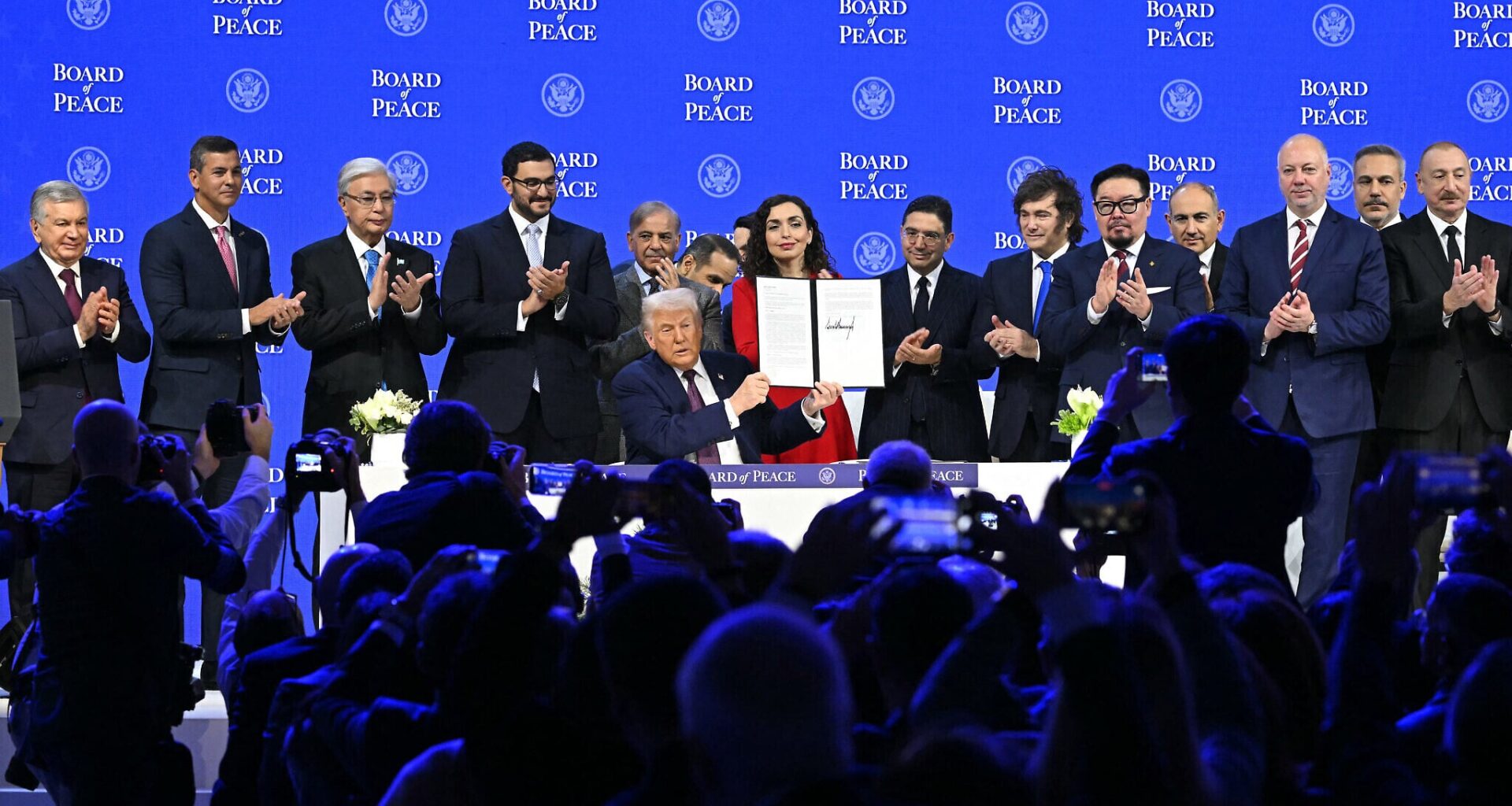
WASHINGTON — The United States will host the inaugural meeting of the Gaza-overseeing Board of Peace next week, using the opportunity to try and raise funds for the reconstruction of the war-torn coastal enclave.
It will be a tough pitch, as Hamas still dominates the western half of the Gaza Strip, Israel remains in control of the eastern half, and IDF strikes on what it says are terror operatives throughout the territory have continued on a near-daily basis since Washington brokered a ceasefire in October 2025 aimed at ending two years of war.
Addressing the Board of Peace signing ceremony on January 22, US President Donald Trump’s top aide and son-in-law Jared Kushner acknowledged that the reconstruction of Gaza will not be able to proceed if Hamas doesn’t disarm.
But the Trump administration isn’t waiting for the terror group to hand over its weapons and has sent out invitations to the fundraising conference on February 19 in Washington, where it believes it will be able to announce donations amounting to several billion dollars from countries around the globe, a US official told The Times of Israel.
The US is still working on a plan to decommission Hamas’s weapons, and hopes to unveil it in the coming weeks, the official said.
Get The Times of Israel’s Daily Edition
by email and never miss our top stories
By signing up, you agree to the terms
While the White House declined a request for comment, two sources familiar with discussions about the decommissioning plan said its fundamental principle will be stripping Hamas of weapons that can be used to threaten Israel.
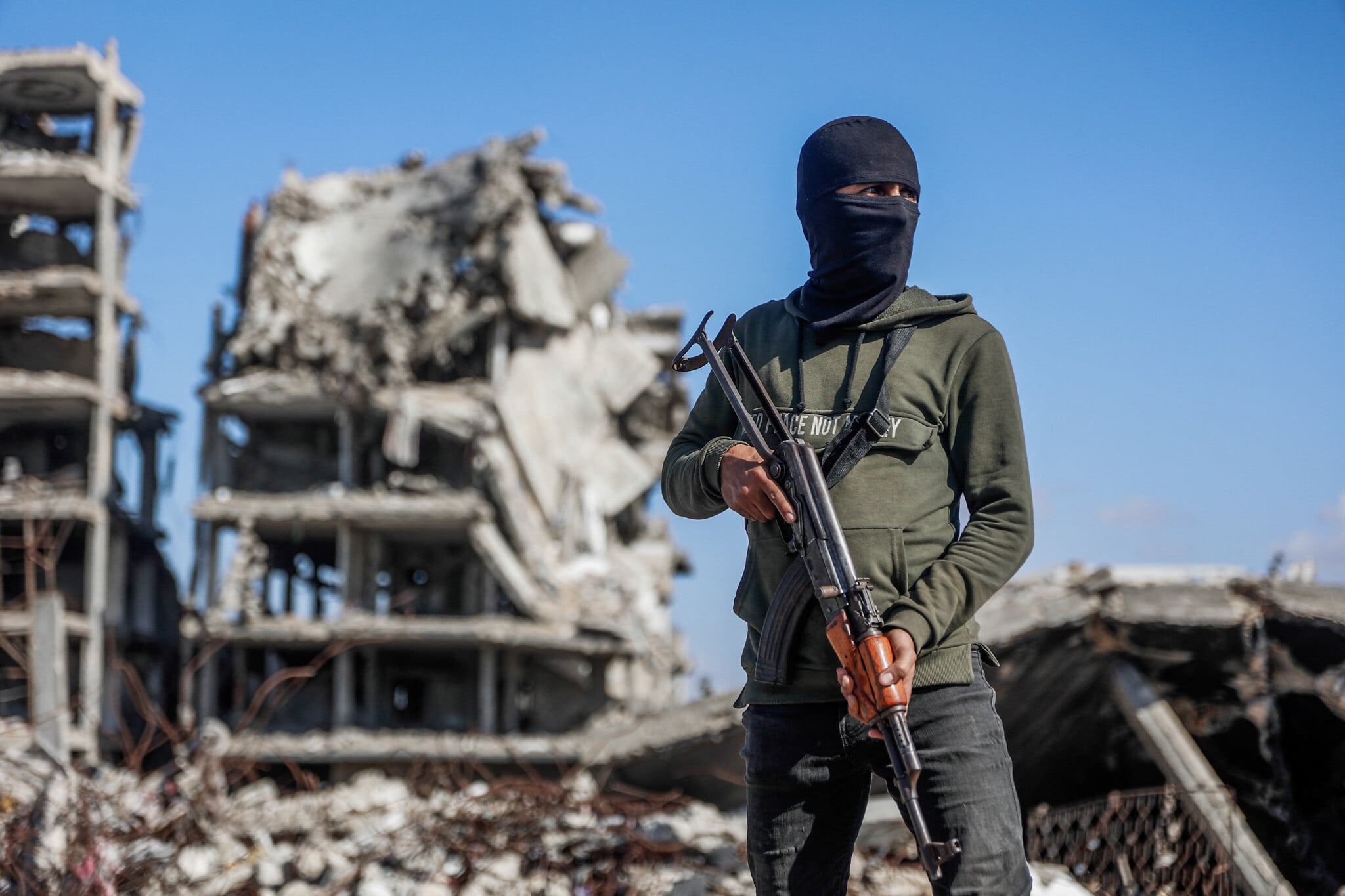
A Hamas operative stands guard as Egyptian workers accompanied by members of the International Committee of the Red Cross (ICRC) use a digger as they search for the remains of hostages in the Jabalia refugee camp, in the northern of the Gaza Strip on December 1, 2025. (Omar AL-QATTAA / AFP)
The plan envisions Hamas handing over heavy weaponry and destroying manufacturing sites in addition to incentivizing the handover of lighter weapons by offering funds, jobs and amnesty to those who cooperate, the sources said.
The proposal will focus on one section of Gaza at a time, rather than the entire Strip at once. Accordingly, it will take months to finish, the sources added.
While this may not lead to the recovery of every single weapon belonging to terror groups in the Strip, the US believes that enough pressure from mediating countries Egypt, Qatar and Turkey can prevent Hamas from playing spoiler.
For its part, the terror group has not shown it is prepared to cooperate, with one of its top officials in Doha, Khaled Mashaal, insisting earlier this week that it will not give up its weapons.
But an Arab diplomat argued that Hamas officials have expressed more flexibility in private and that Mashaal’s comments had more to do with electioneering ahead of a yet-to-be-scheduled leadership race within the group.
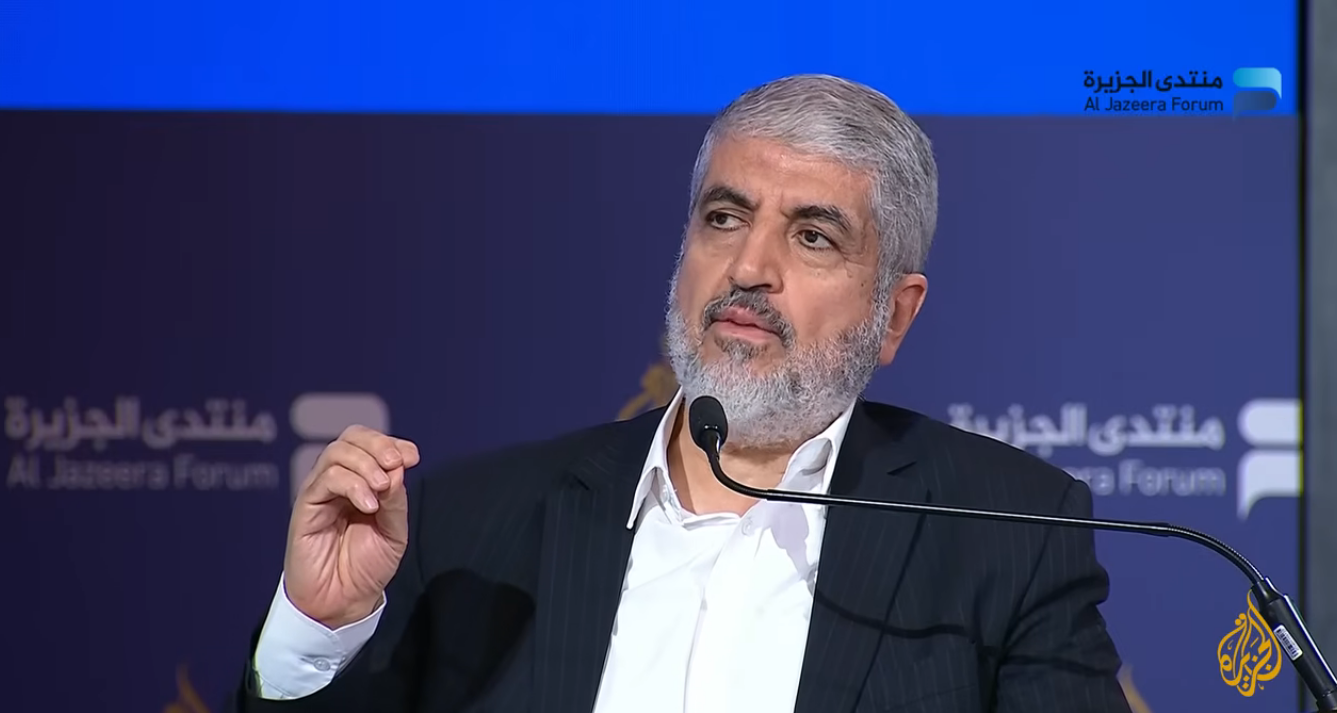
Senior Hamas leader Khaled Mashaal is interviewed by Al Jazeera on February 8, 2026 (Screenshot/YouTube)
RSVPing ‘maybe’
Adopting this optimistic approach about the chances for Hamas disarmament, the US sent out dozens of invitations to next week’s fundraising event.
Only a handful of the 27 Board of Peace member states have confirmed plans to attend. Trump allies Viktor Orbán of Hungary and Javier Milei of Argentina quickly confirmed that they’d make the trip, while Mideastern countries Washington wants to rely on are still deliberating whether to send a head of state or a less senior representative.
When invitations went out on Friday, the Trump administration was under the impression that the gathering would coincide with Prime Minister Benjamin Netanyahu’s visit to Washington, all but ensuring that the premier would enjoy a rare shared stage with Arab leaders.
The next day, though, Netanyahu announced that he had moved his DC trip up a week, amid a sense of urgency in discussing Iranian nuclear talks with Trump, leading to speculation that he was seeking to avoid participating in an initiative that has given rival countries Turkey and Qatar a foothold in Gaza and internationalizing Israel’s conflict with the Palestinians — something Jerusalem has long sought to avoid.
Netanyahu waited until hours before his Wednesday meeting with Trump to formalize his entry into the Board of Peace by signing its charter — a document he received almost a month earlier.
An Israeli source said Netanyahu is still slated to address an AIPAC conference on February 22. Whether he agrees to arrive four days earlier as originally planned remains to be seen.
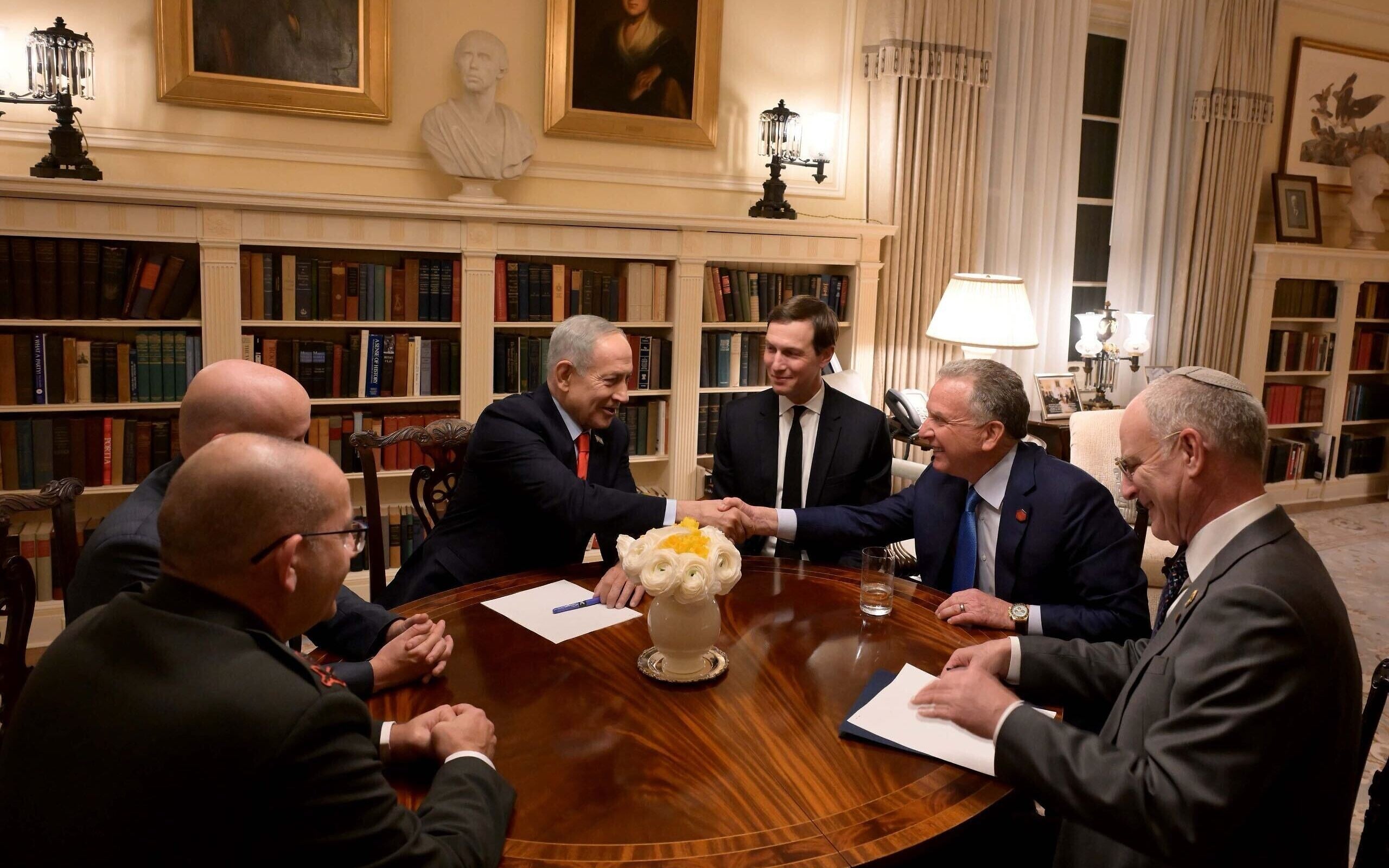
Prime Minister Benjamin Netanyahu (3rd-L) meets with US President Donald Trump’s senior aides Steve Witkoff (2nd-R) and Jared Kushner (3rd-R) at Blair House in Washington, February 10, 2026. (Avi Ohayon/GPO)
The last time Middle Eastern leaders faced the possibility of a joint event with Netanyahu — at Sharm el-Sheikh, celebrating the ceasefire in Gaza — at least some of them, such as Turkish President Recep Tayyip Erdogan, threatened to boycott.
Accordingly, a number of Arab and Muslim leaders may be waiting for more clarity on Netanyahu’s plans before RSVPing.
One leader who did not receive an invitation to the inaugural meeting was Palestinian Authority President Mahmoud Abbas. An Arab diplomat said that Ramallah has sought to recruit its allies to convince the US to offer it a spot on the Board of Peace, but Washington has held off on including Abbas, who did attend the Sharm el-Sheikh event.
Instead of Abbas, the US has invited Ali Shaath, the chief commissioner of the National Committee for the Administration of Gaza, to attend the Washington event, as it seeks to elevate the head of the technocratic committee slated to run the Strip instead of Hamas or the PA.
Also receiving invitations to next week’s event were European countries, including ones that already declared they won’t join the Board of Peace due to discomfort with its sweeping mandate, two European diplomats told The Times of Israel.
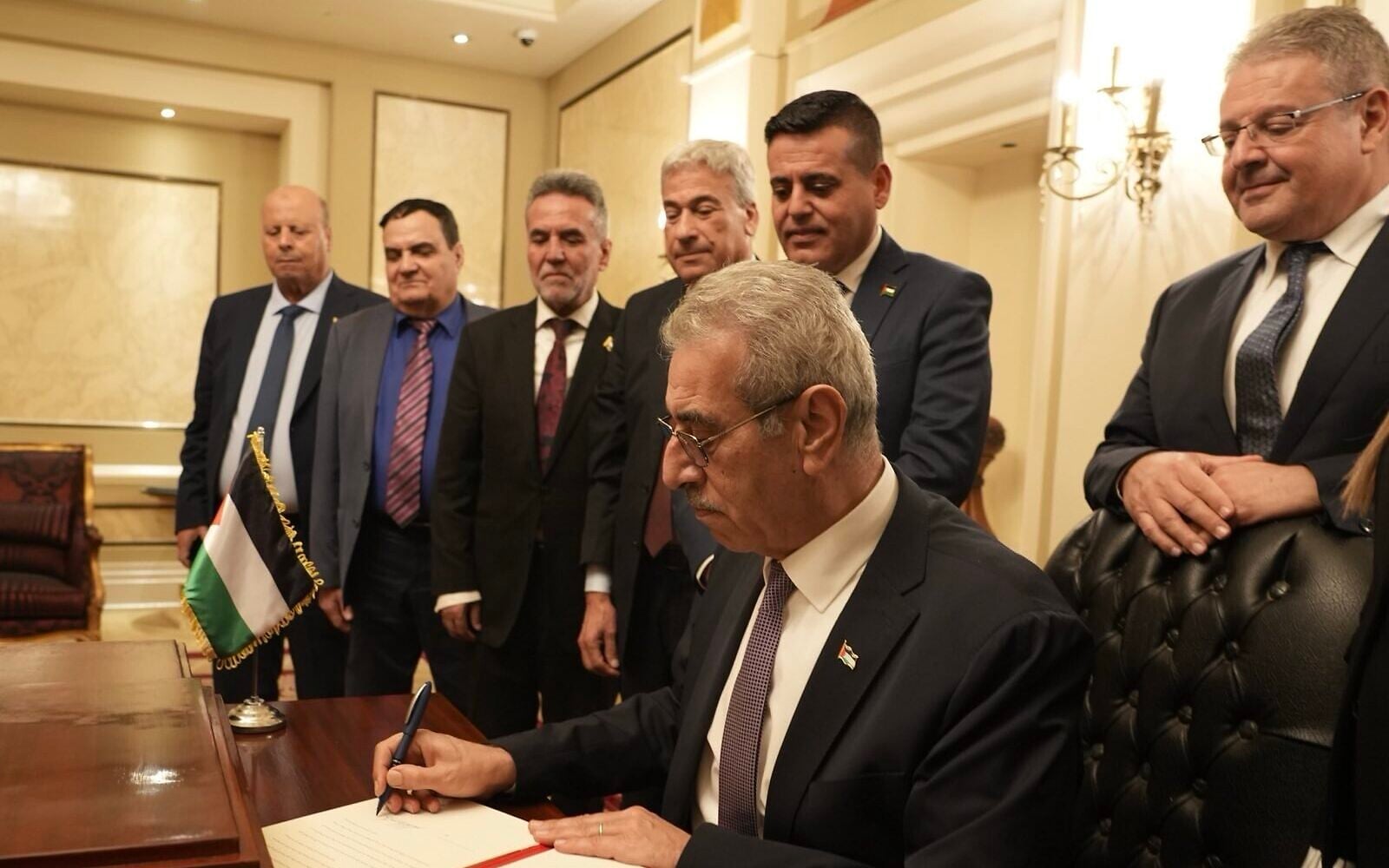
Ali Shaath, the top official of the National Committee for the Administration of Gaza, signs the committee’s mission statement in a photo posted to his X account on January 17, 2026. (Ali Shaath/X)
European Union member states are planning to hold a consultation in Brussels on Thursday to determine whether they want to proceed, with one of the diplomats speculating that countries will agree to send mid-level representatives to the Washington conference.
Additional hesitancy about attending may have to do with the lack of information provided to invited countries on what will take place at the event, which also coincides with the beginning of Ramadan.
The two Arab diplomats speculated that Trump will use the opportunity to sign resolutions, in his capacity as Board of Peace chairman, pertaining to the demilitarization and reconstruction of Gaza.
While US officials have pledged to publicize additional details regarding their Hamas disarmament plan in the coming weeks, a formal proposal has not yet even been submitted to Hamas, raising questions as to whether a binding Board of Peace resolution will be ready for Trump’s signature in just seven days.
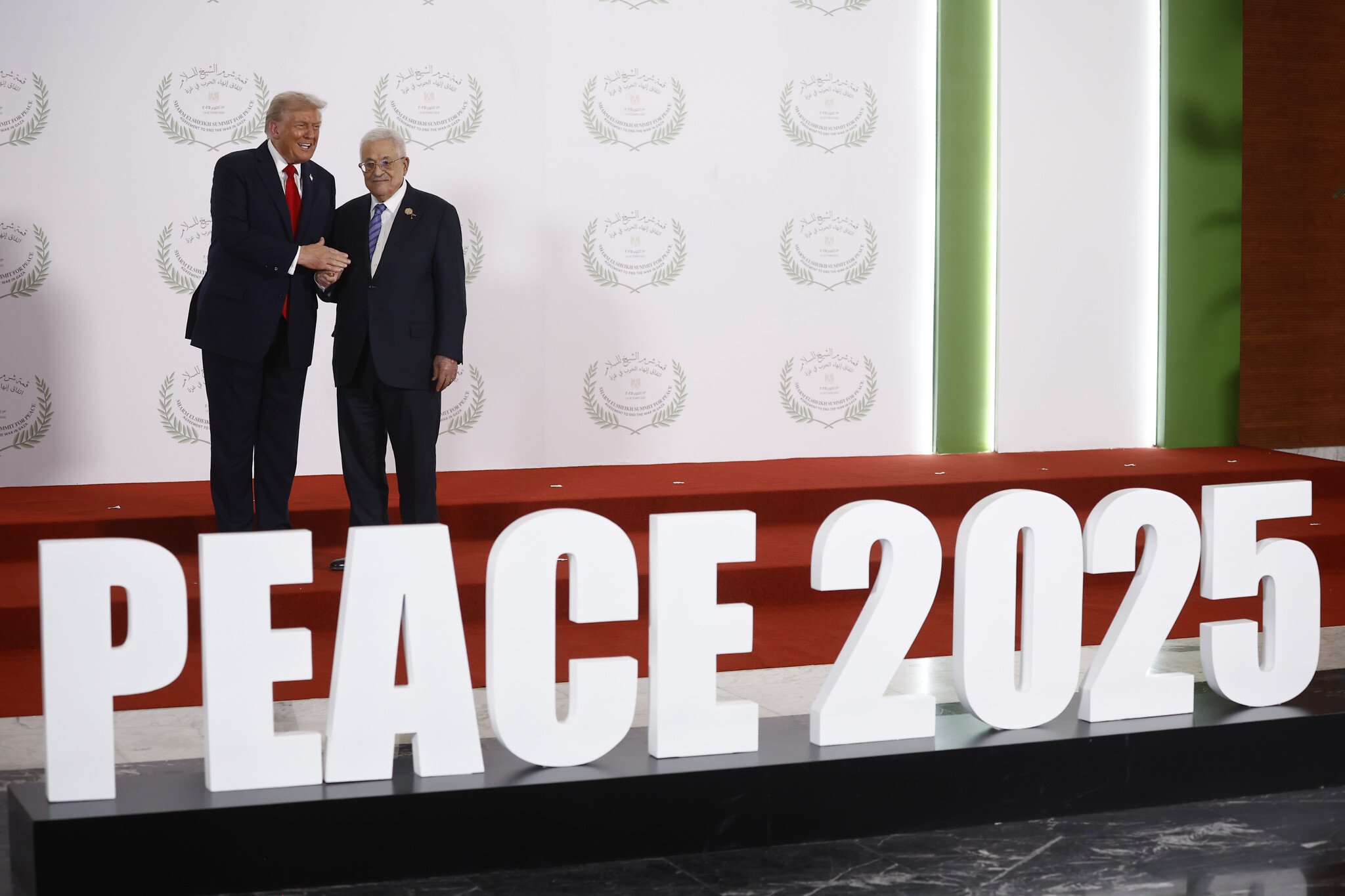
President Donald Trump and Palestinian President Mahmoud Abbas pose at the Gaza Peace Summit in Sharm el-Sheikh, Egypt, Monday, Oct.13 2025. (Yoan Valat, Pool photo via AP)
UAE modestly leads the way
Nonetheless, Washington still expects key Board of Peace donors to include Qatar, Kuwait and the United Arab Emirates, the latter of which will fund the Board of Peace’s first major housing project in Gaza, the US official and two Arab diplomats confirmed.
Emirati Minister of State Lana Nusseibeh told The Times of Israel that her country agreed to take part in the Board of Peace initiative after Washington advanced many of the UAE’s conditions for involvement in Gaza — an influx of humanitarian aid, the disarmament of Hamas, the deployment of an international stabilization force, a reform of the PA and a political horizon for the Palestinians.
Nusseibeh stressed that Emirati financial assistance will be limited to humanitarian relief, denying an Israeli media report that made waves for purporting to reveal that Abu Dhabi had agreed to take over the entire civil administration of Gaza.
That early humanitarian relief from the UAE will extend to temporary housing for thousands of Palestinians on the ruins of the southern Gaza city of Rafah, said the US official and two Arab diplomats.
But the project faces a series of obstacles.
It is located on the Israeli side of the Yellow Line to which the IDF withdrew at the start of the ceasefire. The overwhelming majority of Gaza’s 2 million residents currently reside on the Hamas-controlled side and aren’t prepared to move into an area under Israeli control.
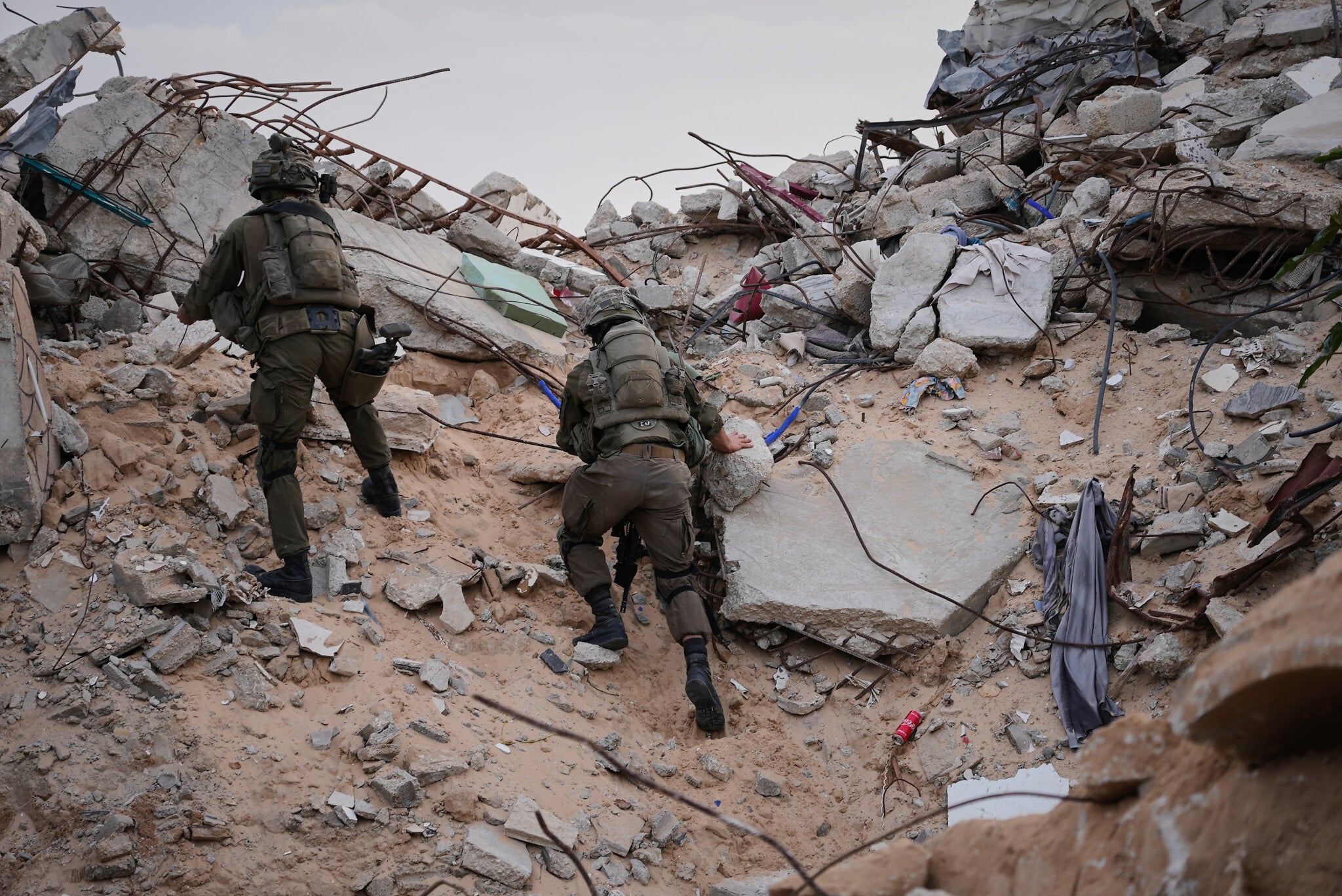
Illustrative: Israeli soldiers climb on the rubble next to the entrance of a tunnel in Rafah, Gaza Strip, December 8, 2025. (AP/Sam Mednick)
The Emirati project hinges on the IDF withdrawing from the area — something Israel has not shown willingness to do before Hamas disarms.
Moreover, the project — like all planned for the Strip — will require compensating the original landowners. This means cooperating with the PA, which has access to land registration documents. Israel has insisted on boxing Ramallah out of the postwar management of Gaza as much as possible, as it seeks to prevent the reunification of the territories under a single Palestinian political entity.
What’s more, the housing project is slated to sit on one of Gaza’s few agricultural zones, which are critical for a territory seeking to eventually wean itself off humanitarian aid.
Despite the challenges, the US is hoping the Emirati project will serve as a pilot plan that can be replicated throughout the Strip within a matter of years.
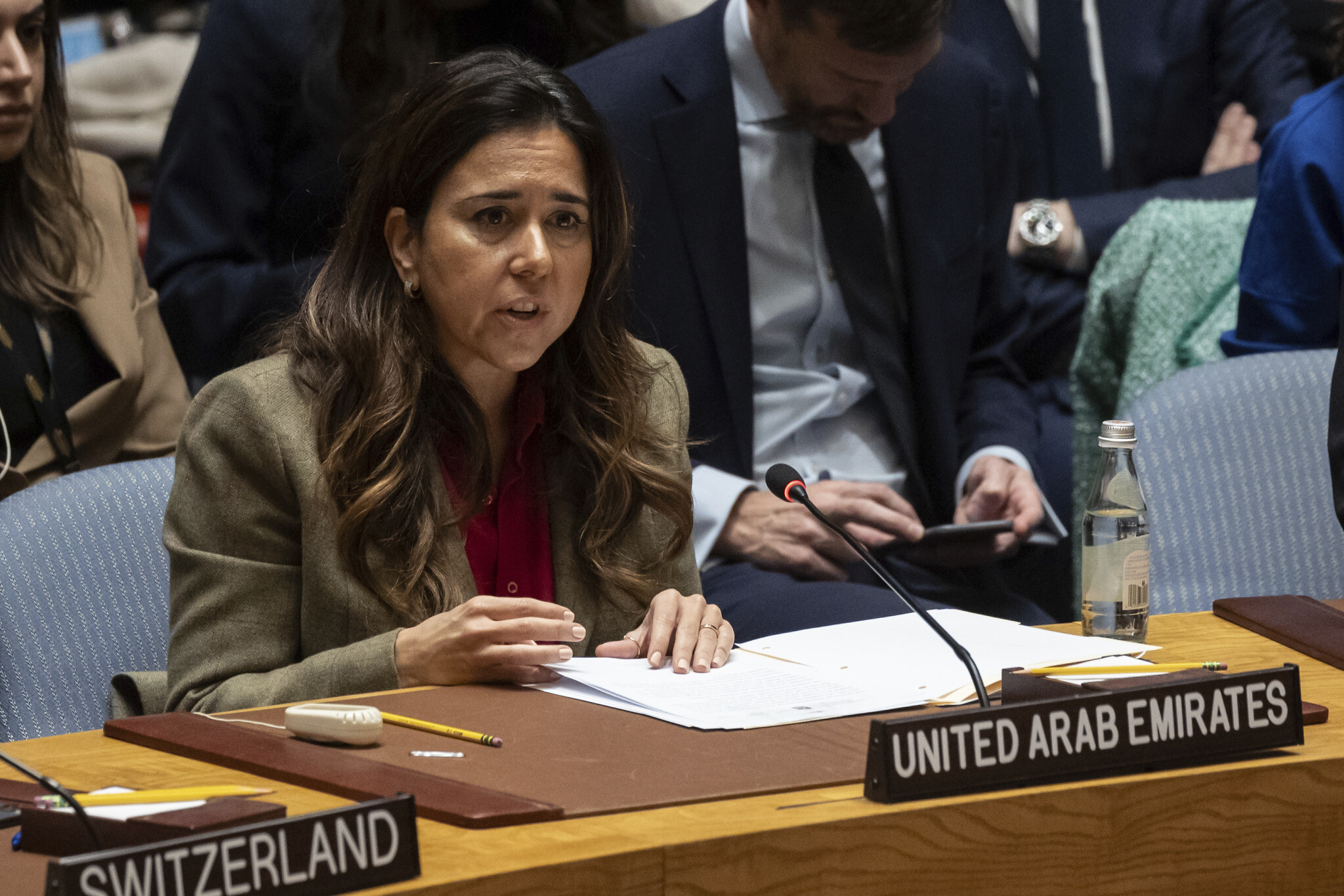
Permanent Representative of the United Arab Emirates to the United Nations Lana Nusseibeh speaks during a Security Council meeting at United Nations headquarters, December 22, 2023. (Yuki Iwamura/AP)
One of the Arab diplomats was far less optimistic, arguing that Israel would not agree to withdraw from the Rafah area designated for the Emirati project.
“It’s an election year in Israel, and Netanyahu has been fighting the US over logos,” the diplomat said, referring to Jerusalem’s fury over the National Committee for the Administration of Gaza’s adoption of a PA symbol.
“In this political climate, Israel is far more likely to intensify military operations in Gaza than it is to withdraw its forces further,” the Arab diplomat said.
In his remarks at the January 22 Board of Peace signing ceremony, Kushner urged those skeptical of the US plan to “just calm down for 30 days” and give it a chance.
That deadline will expire three days after next week’s ceremony.