
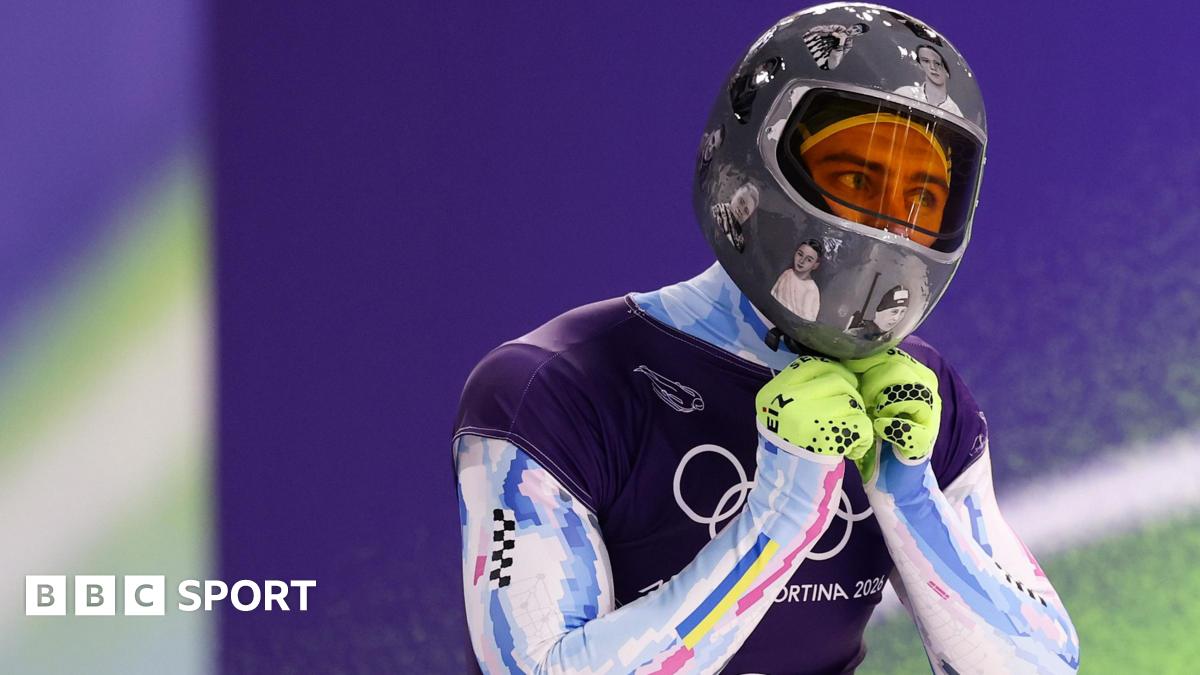
Heraskevych’s accreditation for the Games was initially withdrawn by the IOC but, following a “very respectful” conversation with the committee’s president Coventry, that decision was overturned and he will be allowed to remain at the event but not compete.
Heraskevych insists his tribute is no different to those that other athletes have displayed, such as figure skater Maxim Naumov. The American held up a photo of his parents, who were among 67 people killed in a plane crash in Washington DC just over a year ago, while waiting for his score to be announced on Tuesday.
Asked how strongly he felt about commemorating those who have been killed during the Russian invasion, Heraskevych said: “I believe they deserve to be here because of their sacrifice. I want to honour them and I want to honour their families.”
Heraskevych said that many of those pictured on his helmet were athletes, including teenage weightlifter Alina Peregudova, boxer Pavlo Ishchenko and ice hockey player Oleksiy Loginov, and some of them were his friends.
The IOC said earlier this week that Heraskevych could pay tribute to the fallen athletes by wearing a black armband during competition and could show his helmet in mixed zones, news conferences and on social media, but that “the field of play is sacrosanct”.
It added that IOC officials would “beg” him not to wear it as they wanted him to compete.
On Thursday, IOC spokesperson Mark Adams said that if the committee allowed athletes to wear kit commemorating those killed in war, it would open the Games up to exploitation.
“There are according to the Red Cross, 130 conflicts going on at any one time. We can’t have them all in competition [with each other at the Games],” he said.
“The field of play could become a field of expression, you could see it would lead to chaos. We cannot have athletes put on them by political masters to make expressions during competition.
“We do our best to create a level playing field, I make no apologies for that.”