
This article, originally published on Thursday morning, has been updated to reflect Sir Jim Ratcliffe’s statement issued later that day.
Whether they agree with Sir Jim Ratcliffe or not, Manchester United fans are growing accustomed to their main decision-maker publicly expressing his strong political views. For almost two decades, Ratcliffe’s predecessors, the Glazer family, said next to nothing about anything.
When United fans asked for more, or just any communication, they probably didn’t have in mind what they’re getting now, with United front-page news because Ratcliffe, an immigrant who lives in Monaco, said that the UK is being “colonised” by immigrants.
The UK Prime Minister, Sir Keir Starmer, has intervened, calling out his comments as “offensive and wrong. Britain is a proud, tolerant and diverse country. Jim Ratcliffe should apologise.”
Manchester United were brought into this because Ratcliffe spoke about the club directly in an interview about the problems of the petrochemical industry in Europe, comparing the work that — in his view — needs to be done in the UK to the work he’s doing trying to turn the club around. It’s a deeply divisive subject and his words will embolden those who agree with him, generating real-life repercussions on streets he rarely walks.
This won’t necessarily alter the opinion of many United fans about Ratcliffe. Historically, there has been little love for any leading executive or decision-maker at Old Trafford. There probably never will. It was rare that Ratcliffe was given such positive treatment in the stands; he was even applauded on the pitch in November 2024 when he presented Bruno Fernandes with an award for playing his 250th United game. But fans are not used to club figureheads speaking controversially.
The management usually sticks to football, not politics. But Ratcliffe has long waded in as the owner of a petrochemical business based in Cologne, advocating, for example, for Brexit in 2016. Ratcliffe’s current comments are about arguably the most divisive issue in the UK today and go far beyond business for a fanbase which is diverse and global.
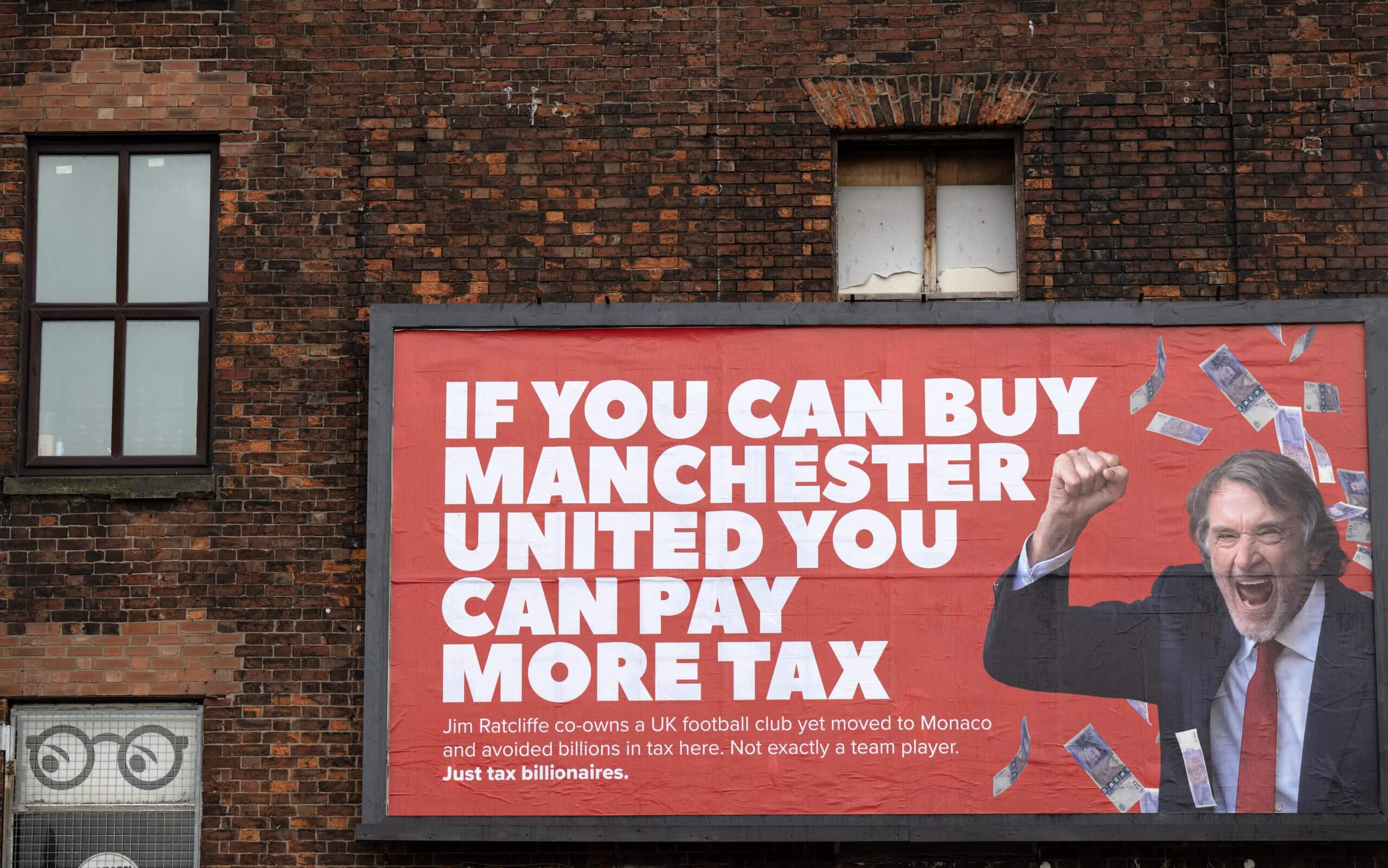
Sir Jim Ratcliffe’s tax affairs have been criticised (Oli Scarff/AFP via Getty Images)
If you are the head of United — Ratcliffe is not exactly a head but he’s the leading decision-maker, the man whose voice carries the most weight — then you’re a big hitter, enjoying the privileges akin to a statesman. You’re also a custodian, the man in charge of a club that is beloved by millions around the world and with that comes responsibility. Your words matter.
There are no barriers to supporting Manchester United. Anyone can do it, and millions do. It doesn’t matter where they are from, their religion, politics, geography or socio-economic background. It crosses boundaries. Fans are supposed to find joy (a challenge in recent years) in the release of sport. The word ‘united’ should mean that and slogans like ‘United We Stand’, the name of our fanzine, were a deliberate choice.
United fans have little choice in who owns the club. This isn’t Barcelona, where fans vote — even though that system has major flaws too — so we’re left with who we’re left with and how to work with them. When I spoke to Ratcliffe in 2024 — he doesn’t mince his words or do PR; he’s a straight talker — he celebrated United’s global support and gave the example of being recognised as the head of United at the Mongolian border.
“The point is Manchester United is everywhere on the planet,” he told me. “It’s bigger than I imagined it. Wherever I go, be it fishing on the north coast of Iceland where all the guides are Manchester United supporters, or to Africa when I’m in the bush in Botswana, Kenya or Tanzania, they’re all United supporters.”
A positive, no?
He wasn’t talking about United’s support on Wednesday but when you use language about immigration which includes the word ‘colonised’ (and nobody did colonisation better than the Empire-building British), then you are by association.
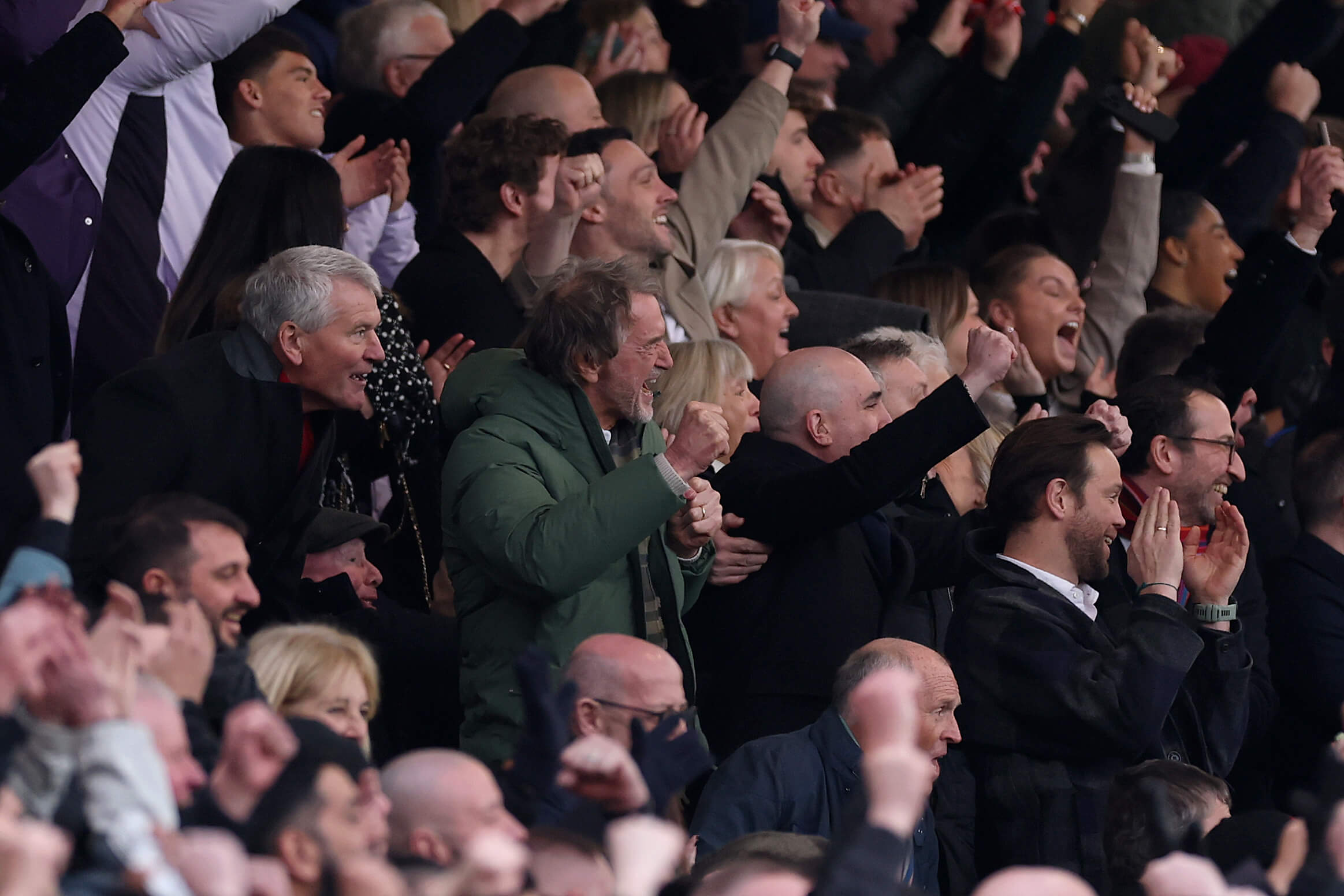
Sir Jim Ratcliffe celebrates United scoring against Manchester City last month (Carl Recine/Getty Images)
Manchester, where Ratcliffe grew up in a working-class district, is proud and diverse, too. Colonised by the Romans, it’s been an immigrant city ever since Flemish weavers arrived in the 14th century. It continues to this day. Many of the footballers in the United squad are immigrants, ones who contribute greatly to the British tax system.
Even if we take it that Ratcliffe didn’t mean those footballers, nor the Manchester population, when you wade in with broad-brush statements, the headlines are written for you.
As Greater Manchester Mayor Andy Burnham has pointed out: “These comments go against everything for which Manchester has traditionally stood: a place where people of all races, faiths and none have pulled together over centuries to build our city and our institutions, including Manchester United FC. Calling for curbs on the levels of immigration is one thing, but portraying those who come here as a hostile invading force is quite another.
“Footballers who have arrived from all over the world to play in Greater Manchester have enhanced the life of our city-region, as have the many people working in Greater Manchester’s NHS and other essential services and industries.”
Would Ratcliffe backtrack? Would he double down? In the event, he did neither, saying he was sorry if his “choice of language has offended some people” but not resiling from raising immigration as an issue in the first place.
There could still be further repercussions. Didn’t Ratcliffe want government support for the development around a potential new Old Trafford stadium? And, with no game until February 23, there’s plenty of time for it to remain a talking point.