

Photo by Tansy Spinks/Millennium Images, Uk
When, in June 2025, a group of nine Sussex families were promised an independent review into their maternity care, they had hope. Finally, they might get the answers they desperately needed as to why their babies had died. Sussex would be one of the trusts investigated as part of an urgent review into maternity and neonatal services in England, but it would also be the subject of a separate, specific inquiry into the deaths of these nine babies. The Health Secretary, Wes Streeting, argued these families – who call themselves Truth for Our Babies (TFOB) – were “owed a thorough account of what happened”.
Eight months on, hope has turned to frustration and anger. University Hospitals Sussex NHS Foundation Trust (UHS) is one of 12 trusts that is undergoing a “rapid review”, as part of that national investigation, led by the Labour peer Valerie Amos. But the Sussex-specific inquiry promised by Streeting has stalled. There are no agreed terms of reference, and no one has been appointed to lead it. Amos’s inquiry is behind schedule, too: its interim findings are expected at the end of February (the intention had been for a full report to be delivered by Christmas). All the while, English hospitals are continuing to fail women and their babies. According to the Care Quality Commission (CQC), nearly half of England’s maternity units require improvement or are rated inadequate.
Now, a joint investigation between the New Statesman and BBC News can reveal the problem in Sussex appears much greater than originally thought. The government has, since its June announcement, agreed to consider the cases of a further six bereaved families in Sussex. But it is clear that harm has not been confined to even this larger number. Data seen exclusively by our investigation suggests the deaths of many more babies at UHS may have been preventable. Interviews with more than a dozen families reveal repeated mistakes, and an apparent failure to learn from them. These families want answers now. Children have died since the review was first announced. There is no more time to waste.
Until her visit to hospital on 20 December 2022, Beth Cooper’s pregnancy had been uncomplicated. But at 34 weeks, she began to feel unwell. And her baby, Felix, wasn’t moving as much as he should.

Subscribe to the New Statesman today for only £1 a week.
Beth was 27, and this was her first pregnancy. But as a neonatal nursery nurse with around ten years’ experience, she knew what to look out for. All pregnant women are advised to be aware of how often their babies are moving and to report if there’s a change. So, when Beth arrived at the Princess Royal Hospital in Haywards Heath – part of UHS, and the hospital where she herself worked – she knew what to tell the maternity team.
Midwives performed a CTG (electronic monitoring of a baby’s heartbeat) on Beth. She was told everything was all right and was sent home, but returned to the hospital the next day, feeling more unwell. She was now vomiting and experiencing severe headaches, and was still concerned Felix wasn’t as active as he should be. Initially, Felix didn’t “pass” the CTG, indicating there might be a problem. Beth says that when a doctor was asked to review her, they didn’t attend, instead telling the midwives to run the CTG again.
The next day, Beth, still worried, went to the hospital a third time. Again, the CTG indicated something might be wrong. She had a blood test, and a scan to check Felix’s growth, but was not examined by a doctor. She said midwives told her that because Felix was 34 weeks they would not deliver him unless there was a good reason to do so. “To me, him not moving enough was a really good reason,” Beth tells me. She says that, having worked with “neonates for ten years, I know that 34-week babies do really, really well”.
She didn’t want to leave the hospital that day, but her family encouraged her to trust the hospital team. She reminded staff she had been in on consecutive days but was told she was “anxious” as a first-time mum. “There’s a line between being anxious and knowing your body and your baby,” she says. “I just wanted to scream, ‘You’re not listening to me.’”
When Beth visited the hospital on Christmas Eve – four days after she had first attended – Felix’s heartbeat could not be found. “I remember saying to them over and over again, ‘You promised me that he was fine. He can’t be dead, because you said he was fine.’”
Beth wanted to give birth as soon as possible, but a consultant advised her to delay. “Why don’t you go home and enjoy your Christmas?” Beth recalls him saying. “It was one of those moments where you just think, ‘Is this a really bad nightmare? Am I asleep?’”
On Christmas Day, Beth had the Caesarean section she’d asked for. She believes Felix would be alive today had someone acted on her concerns. An internal review by the hospital acknowledged that there were several occasions when he did not pass the criteria used to assess foetal well-being, but it was judged that there were no failings in care. In cases where stillbirths occur before labour, families currently have no recourse to an independent investigation; their care will be subject to an internal review from the hospital only.
[Further reading: Britain’s next maternity scandal]
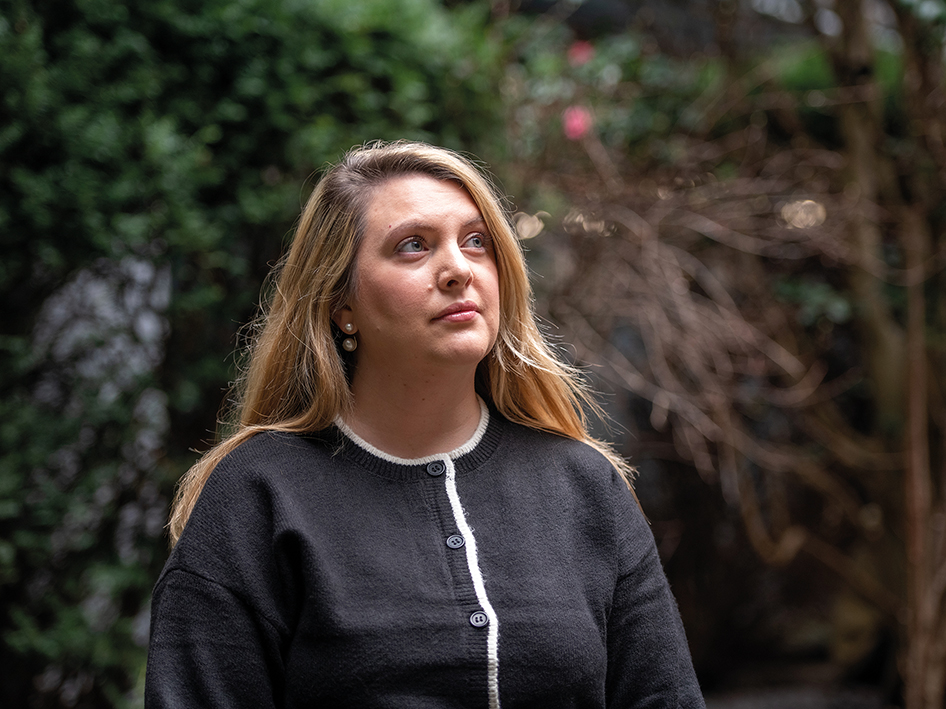
Sophie Hartley’s baby Felix died at the Royal Sussex County Hospital in February 2023. Photo by the BBC
Sophie Hartley heard of Felix’s death three days later, on 28 December. Sophie and Beth had been in the same antenatal group, and Beth had messaged to tell the others what had happened.
The next day, Sophie attended her planned midwife appointment at the same hospital. At 34 weeks pregnant, her hands were swollen, she was experiencing headaches and had high blood pressure. Her baby, also called Felix, had an elevated heart rate. One doctor examined the CTG findings; another asked Sophie about her blood pressure history. Sophie recalls the midwife telling the doctor that her blood pressure was most probably impacted by the awful news she’d heard from Beth, so “don’t worry about it”. There was no follow-up. Sophie’s blood pressure continued to be high throughout the pregnancy.
In February 2023, eight days past her due date, Sophie went to hospital with bleeding and reduced foetal movements. Felix was monitored and, at that point, she could feel him kicking frequently, so Sophie says she left the hospital feeling “reassured”. She was booked for an induction at 12 days past her due date, but says she was not adequately informed about how this could increase the risk of stillbirth or neonatal death.
Three days later, now 11 days overdue, Sophie returned to the Princess Royal. She was now passing a dark, black substance and was worried. She was not seen by a doctor. Felix’s heart rate wasn’t monitored by CTG and no tests were undertaken. She was discharged. “I think that’s the exact point where everything could have changed,” she reflects. “There were obviously points in the lead-up… but that’s the sliding-doors moment.”
Sophie returned home, but hours later, at 2.30am, she called the hospital because she was worried and having regular contractions. She was advised to stay at home. She called for a second time, six hours later, and insisted on going in. At the hospital, one CTG machine was broken; the midwives took one from another mother so Felix’s heartbeat could be checked. “At this point, it should have been an emergency. They’re trying to find the heartbeat. They can’t find the heartbeat. And I could see in [the midwife’s] face – she was worried.”
Sophie says the midwives paged an obstetrician, but there was a problem. “There’s just delays and delays and delays, and all of these delays just added up to Felix being born without a heartbeat.” Sophie gave birth to Felix via emergency Caesarean under general anaesthetic. After the birth, a senior nurse struggled to prepare the baby for resuscitation. There were no neonatal consultants on shift. Felix was transferred to Brighton’s Royal Sussex County Hospital for specialist treatment, but died the next day, 20 February 2023. There, a midwife told Sophie, “It’s not your fault. You should have been looked after.”
The independent investigation that followed found a series of failings. Sophie should have been reviewed by an obstetrician at multiple points during pregnancy. And, crucially, several mistakes were made in the hours before Felix’s birth. If these had been avoided, he might have been saved.
Beth didn’t know what had happened to Sophie for a long time. When she found out, she couldn’t believe it. “That’s two babies. The same name. The women knew each other,” she says. “I just kept thinking: they must realise.” What happened to these two boys named Felix will now be examined as part of the review into UHS.
Amanda and Sally (not their real names) met while visiting their babies’ graves. Their children had died within months of each other in 2022 at separate hospitals run by the Sussex trust, and are now buried next to each other. In 2023, through their local networks, they discovered two more bereaved mothers. The four began searching for others like them.
“I still remember the WhatsApp chain, where I wrote, ‘I’m done. We need to do something,’” Amanda says. “That’s when we started looking in the media to find other people.”
“We had suspected that we weren’t the only ones,” one of the women they found, Katie Fowler, tells me. She and her partner, Robert Miller, decided to speak to the media after the inquest into the death of their daughter, Abigail, in the hope that they would find other families like theirs.
In late pregnancy, Katie had called Brighton’s Royal Sussex Hospital four times, each time reporting she was feeling more unwell. She was in labour, bleeding, and feeling faint and short of breath. It was not until the fourth call that she was told to come to the hospital. During the taxi ride there, Katie went into cardiac arrest due to a uterine rupture. Abigail was born by an emergency C-section in a foyer at the hospital. Both required resuscitation, and Katie was placed in an induced coma. Abigail died two days later, on 23 January 2022. The inquest found that Abigail’s life could have been “significantly prolonged” had UHS responded more quickly to concerns.
“We were told, ‘Oh, it’s really rare. We’re not sure what’s happened,’” Katie says. “I internalised that as, ‘This is my fault. It’s my body that has let my daughter down.’” It was not Katie’s fault. Uterine rupture occurs in around one in 4,000 pregnancies; three of the 15 mothers whose cases will be reviewed suffered one. Eventually, Katie’s guilt turned to anger: “I thought: this is a life that was lost… We can’t move forward if we don’t know the truth.”
Alongside Katie and Robert, other bereaved parents spoke out publicly, and in early 2024 the initial group of nine families whose cases the government agreed to investigate began to take shape. Robyn and Jonny Davis talked about their son Orlando’s death (a coroner later judged there had been “a gross failure to provide basic medical attention”). Chloe Vowels Lovett described the numerous mistakes identified in the stillbirth of her daughter, Esme. The group then began writing to their MPs to ask for an inquiry. As a result, in December 2024, Katie, Robert and another TFOB family, met with Streeting. Further publicity after his June 2025 announcement brought forward more families, expanding the group from nine to 15. In one of the additional cases, the bereavement occurred after the review was announced; the mother came forward having read about the death of Lucia Ford-Ferrari’s daughter, Freya, and seeing similarities with how her own baby died.
While each case has its own unique, awful details, the families have identified themes in the care they received from UHS. Mothers were not listened to when they raised concerns about themselves or their babies. They were dismissed as “anxious”, especially the young, first-time mothers in the group. In all but one of the 15 cases, there was a failure in basic pregnancy protocols or interventions. Eight reported reduced foetal movements but received inadequate monitoring. Four had foetal growth measurements that should have triggered further investigation. A further four experienced incorrect CTG interpretation. Amanda, one of the original members of the group, is adamant: “Our babies died not because the pregnancies were complex or had ‘rare’ issues, but because staff didn’t follow basic protocols that would have identified the issues we had early enough to save our babies’ lives.”
The group have identified cultural problems, too. While the Royal College of Midwives ended its campaign for “normal births” in 2017 (targets at limiting Caesareans were officially removed in 2022), a number of women I interviewed have said they feel UHS remains a strong promoter of “normal” births. In nine of the 15 cases, midwives failed to escalate concerns to obstetricians, preferring to keep mothers on the midwifery pathway. Sussex was officially warned about its “focus on normality” in March 2019 by the then Healthcare Safety Investigation Branch (HSIB), the New Statesman can reveal. Four years later, in its investigation into Felix Hartley’s death, HSIB noted that “a possible desire to keep the mother on a midwifery-led care pathway” may have impacted Sophie’s care.
The trust says it is committed to supporting parental choice throughout pregnancy and birth, including requests for Caesareans.
There are also criticisms of the way the trust has responded to baby deaths. Four of the 15 were discouraged from having a postmortem, or told it wouldn’t give them answers. Five families say their medical notes contain errors. In the case of Orlando Davis, a doctor amended notes weeks after the birth. The trust’s investigation found that they had done so to “add clarity”; while this was acknowledged to be a serious departure from guidelines, no disciplinary action was taken. Publicly available documents point to further cases of notes being written retrospectively, and sometimes “based on assumption rather than first-hand knowledge”.
Several of the TFOB families have reported their children’s death to the Care Quality Commission, which, in 2021, rated Sussex’s four maternity units inadequate. (All are currently rated as requiring improvement.) But, the families argue, the regulator has let them down. “They’ve replied to each of us individually, saying there’s no evidence of systemic issues,” says Robert Miller. “Yet… they’re not collating them.” In Orlando Davis’s case the CQC failed to bring a prosecution within the legal time limit.
A spokesperson for the CQC said that where it had concerns that a trust had “put people in its care at risk of harm”, it would “always consider” using its criminal enforcement powers. “We know there are some families who feel we have not taken sufficient action to act on their concerns, and we regret the upset this as caused.” The regulator acknowledged that its handling of Orlando Davis’s case was “not of the standard it should have been” and apologised to the family.
The TFOB group believe there are more families in Sussex whose babies’ deaths may have been avoidable. “I am convinced, partly because I’ve spoken to other families that have lost children but aren’t yet part of this review,” says Katie Fowler. “And secondly, because I believe the trust does a good job of persuading people that nothing could have been done. I think there will be cases where parents may not realise their child could have been saved.”
There is a raft of data that supports this belief. Responses to freedom of information requests made by Katie show that the deaths of at least 55 babies at Sussex hospitals between 2019 and 2023 might have been avoidable.
Whenever a baby dies after 22 weeks (including from miscarriage and stillbirth), hospitals are required to carry out an internal investigation. Sussex’s reports show that, in at least 55 cases, it was judged that the care provided to mothers might have or was likely to have made a difference to the outcome for their babies. A total of 227 internal investigations were carried in Sussex during this period, meaning around a quarter (at least 24 per cent) of deaths might have been avoidable. When compared to the national average during this period, Sussex had a significantly higher proportion of potentially avoidable deaths. In 2022, for example, 35 per cent of Sussex baby deaths might have been the result of poor care; nationally, the rate was 18 per cent for pregnancies ending in stillbirth and 19 per cent in cases where a baby died shortly after birth.
These figures may be conservative. The TFOB group point out that in at least half of cases in which external investigations or legal action indicated there had been care failings, the internal review had said there were none.
The trust points to recent improvements in these figures, saying that in 2024 there were three baby deaths identified in which changes in the mothers’ care might have, or were likely to have, made a difference.
Two external reports also suggest the problem goes beyond the scope of the government-agreed review. In July 2022, professionals from NHS England investigated a “cluster” of antenatal stillbirths: nine cases, which occurred between July 2021 and February 2022, at UH Sussex’s Worthing Hospital. We understand that only one of these cases relates to a family in the TFOB group. The report stated there were “missed opportunities in all cases”. The mothers had not received information on what to do if they experienced reduced foetal movements, and not all were properly assessed to see if they were at higher risk of stillbirth, as is recommended.
In the following year, 2023, another external review was carried out by HSIB, after an increase in early neonatal death referrals for investigation in 2022. Although heavily redacted in places, the document highlights failures in foetal monitoring and escalating concerns, weaknesses in monitoring babies’ growth and an inability to learn from mistakes. The report points out that the trust has been warned three times of the need to understand that mothers’ risk profile can change.
The level of payments made to families on behalf of UHS by NHS Resolution (the Department of Health’s litigation arm) also raises concerns. In 2024-25, the trust paid £34.4m in maternity-related clinical negligence payments – the highest in England. While the trust is large, there are others that deliver more babies per year. Since 2021, it has paid out £103.8m in such payments. It is important to note that complex maternity cases can take a number of years to complete. But for context, Nottingham University Hospitals NHS Trust, where the care of 2,400 families is the subject of the largest maternity investigation in NHS history, paid out half this amount (£52.5m) in the same four-year period.
In terms of official data on stillbirths and neonatal deaths, UHS is not an outlier. To the contrary, it is performing well. In every year between 2020 and 2023 (the latest year for which we have data), its neonatal death rate has been consistently, and significantly, lower than average. Its stillbirth rate is also in line with the average for a unit of its size and caseload. But poor care is not judged solely on how many babies have died; it’s also defined by how many might have been saved.
The CEO of University Hospitals Sussex, Andy Heeps, told the New Statesman he was “deeply sorry for the pain and distress” these families have experienced in the trust’s care. “I want to say directly that we did not always get this right.” The trust has employed 40 midwives since 2022 but recognises “there will always be more we can do to improve”. Heeps said that he welcomes the Amos Review and hopes that “the separate review of individual cases helps answer these families’ questions and drive further improvements”.
Alonzo Wood died at Royal Sussex County Hospital in Brighton in September 2023. He was just three days old. Alonzo was a twin. During a routine pregnancy scan, a small mass was discovered on his liver and, as a result, the care for his mother, Alice Kyle, was split between Brighton and specialists at King’s College London. The London-based doctors monitored the mass regularly and, though it grew, their concern remained low.
As she approached 36 weeks, Alice became increasingly worried that, despite her pregnancy being high-risk, no plan had been made for where and when she would deliver her twins. Alice says there was poor communication between the hospitals and a lack of urgency. “All I had ever heard was that when you’re pregnant with twins, you must give birth between weeks 36 and 37,” she tells me, “because anything past that time increases the risk of miscarriage or stillbirth.”
In the days before Alonzo’s birth, Alice was seen multiple times at both hospitals. A regular scan was conducted at King’s. And at Brighton, despite reporting itchiness (a common symptom in late pregnancy but one that can indicate something more serious) and receiving an abnormal CTG result, Alice was not initially admitted. On a routine visit to the hospital to pick up a prescription, three days after she first presented with itchiness, midwives monitored the babies again. “They kept saying [the CTG] was abnormal, so they couldn’t let me go, but that everything was fine.” Alice describes the maternity unit as chaotic: she says no one was aware of her medical history, and the unit seemed extremely short-staffed. (Staffing is a problem discussed frequently in the trust’s board meetings between 2021 and mid-2025.) Alice was monitored for 12 hours.
Alice was eventually moved to a ward where, within an hour, an emergency was triggered. She was placed under general anaesthetic for an emergency Caesarean. Alonzo was moved to neonatal intensive care, but doctors could not save him. The mass on his liver had grown quickly and impacted his other organs. Doctors have been unable to explain why this happened. The other twin, a baby girl, survived and is healthy.
Alice believes there were several opportunities to save Alonzo during her pregnancy. “My biggest upset upon reflection of the treatment at Brighton, was that nothing was done at the point of the first CTG scan,” Alice says. “If they had expedited the delivery there and then, I don’t think we’d be here now.”
At the inquest into Alonzo’s death, the coroner ruled there was no evidence this was the case, but the trust’s own investigation found failures in care. The patient-safety incident investigation report said that, had Alonzo and his twin sister been delivered earlier on the day Alice was admitted, it “may have impacted on the outcome”. Reduced staffing levels may also have had an impact.
A spokesperson for King’s said the trust extended its deepest condolences to Alice and her family. “Sadly, following his birth, Alonzo Wood was too unwell to be transferred to King’s for treatment,” they added.
Alice’s is one of eight specific cases identified by the New Statesman and BBC News that are not currently part of the government-agreed review. Yet several are almost identical to those highlighted for investigation. Eileen McCarthy’s son, Walter German, died in January 2021 at the Royal Sussex when midwives failed to escalate their care to the obstetric team. “It just didn’t seem there were any doctors around,” she told us. The death of another baby boy in 2018 could have been prevented if his mother had been offered a Caesarean immediately after signs of foetal distress were picked up. And, within months of the 2022 independent review of stillbirths at Worthing Hospital, another baby girl was stillborn at almost 38 weeks, where there appear to have been similar problems in her mother’s care.
The review promised to Sussex families was initially intended to focus on a small group. The Department of Health and Social Care (DHSC) would not confirm whether it would allow it to grow further, beyond the 15 now included. The government hopes that, combined with the rapid review being conducted as part of the national maternity investigation, the focused review into UHS will provide a clear picture of maternity care in Sussex.
But eight months after it was announced, the Sussex review is at an impasse. The question over who will lead the investigation appears to be the sticking point. The TFOB group are clear on who they want: Donna Ockenden, the former midwife who chaired the independent investigation into maternity care at Shrewsbury and Telford, and who is in the final stages of a major investigation in Nottingham. Instead, in December 2025 the DHSC presented the families with three alternative candidates. The government, which ultimately chooses who will chair the review, asked the families to respond by the middle of January. They are yet to do so, torn between desperately wanting progress and their fear that a chair other than Ockenden may not provide the answers they need.
Their mistrust is understandable, given all they have faced in trying to find out what happened to their babies: politicians, charities and regulators have all let them down. Their grief has been compounded by repeated attempts to extract the truth from both the trust and those charged with holding it to account. A DHSC spokesperson told the New Statesman: “Every family who has lost a baby deserves answers, and we are determined to ensure they get them. We are actively working with families in Sussex to appoint a chair and agree terms of reference for this vital review.”
It is impossible to overstate the impact losing a child has on a family. Some of those we spoke to have gone on to have further children; others were left physically unable to. None were able to return to the hospital where their babies died. The promise of a review that might provide answers briefly gave them hope, but now they are once again disillusioned. Without a thorough appraisal of the mistakes of the past, they say, more avoidable tragedies will be inevitable.
[Further reading: Keir Starmer: “I am going to fight”]
Content from our partners