
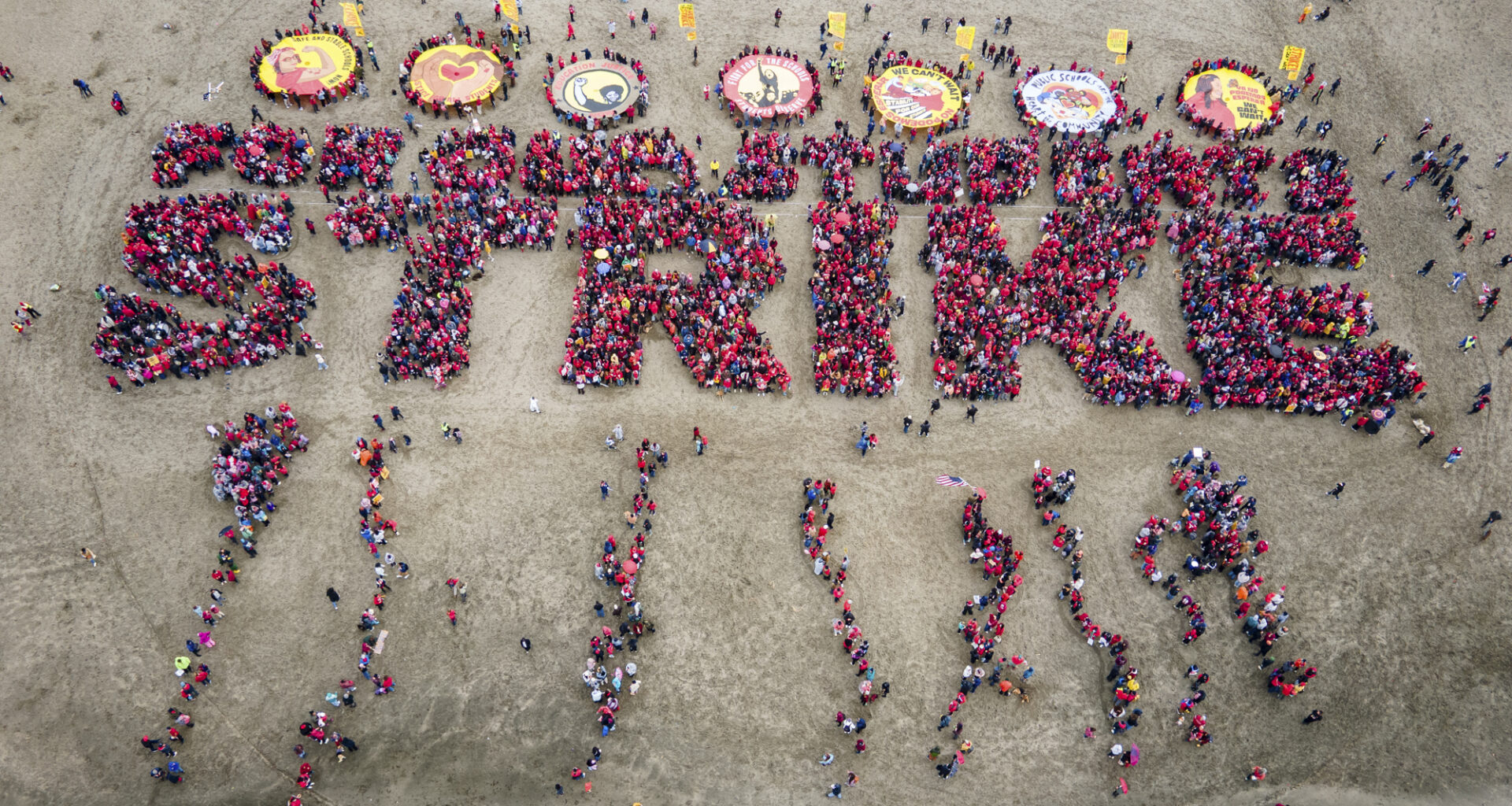
The district had originally proposed a 2% raise for all educators — which is less than the state’s cost-of-living adjustment for the year. It came up to offer a 6% raise over two years for certificated staff last weekend.
Still, the stalemate surrounding special education and health care remains. SFUSD has repeatedly said it cannot meet the union’s asks because of its current budget crisis.
The district is predicting a budget deficit of about $100 million next year, and is currently under state oversight. It has maintained that if it makes an offer beyond its financial means, it could be rejected by fiscal advisers. Su said on Wednesday that the district still has a negative budget certification.
“We’re slowly inching out of that,” Su said on Wednesday. “We are on the right path to fiscal solvency, and so we need to be responsible with the deals … it’s not just this year, it’s just next year. It’s about setting up this school district for many years to come.”
But the amount of funding the district really has at its disposal has been another point of contention with the union. UESF has pointed to a financial reserve of about $110 million that the district recently set aside as a rainy-day fund, as money that could — and, it argues, should — be spent now. California requires districts to maintain a reserve equivalent to 2% of its general fund, which for SFUSD would equal about $28 million.
It’s suggested the same of the district’s significant fund balance, which is made up of money that the district has left over at the end of a budget year — usually because it made more in revenue than it expected. At the end of the 2024-2025 school year, that balance was almost $430 million.
“We see that they have a reserve of almost $400 million. We believe that today’s dollars are for today’s students,” union President Cassondra Curiel said at a rally on Monday.
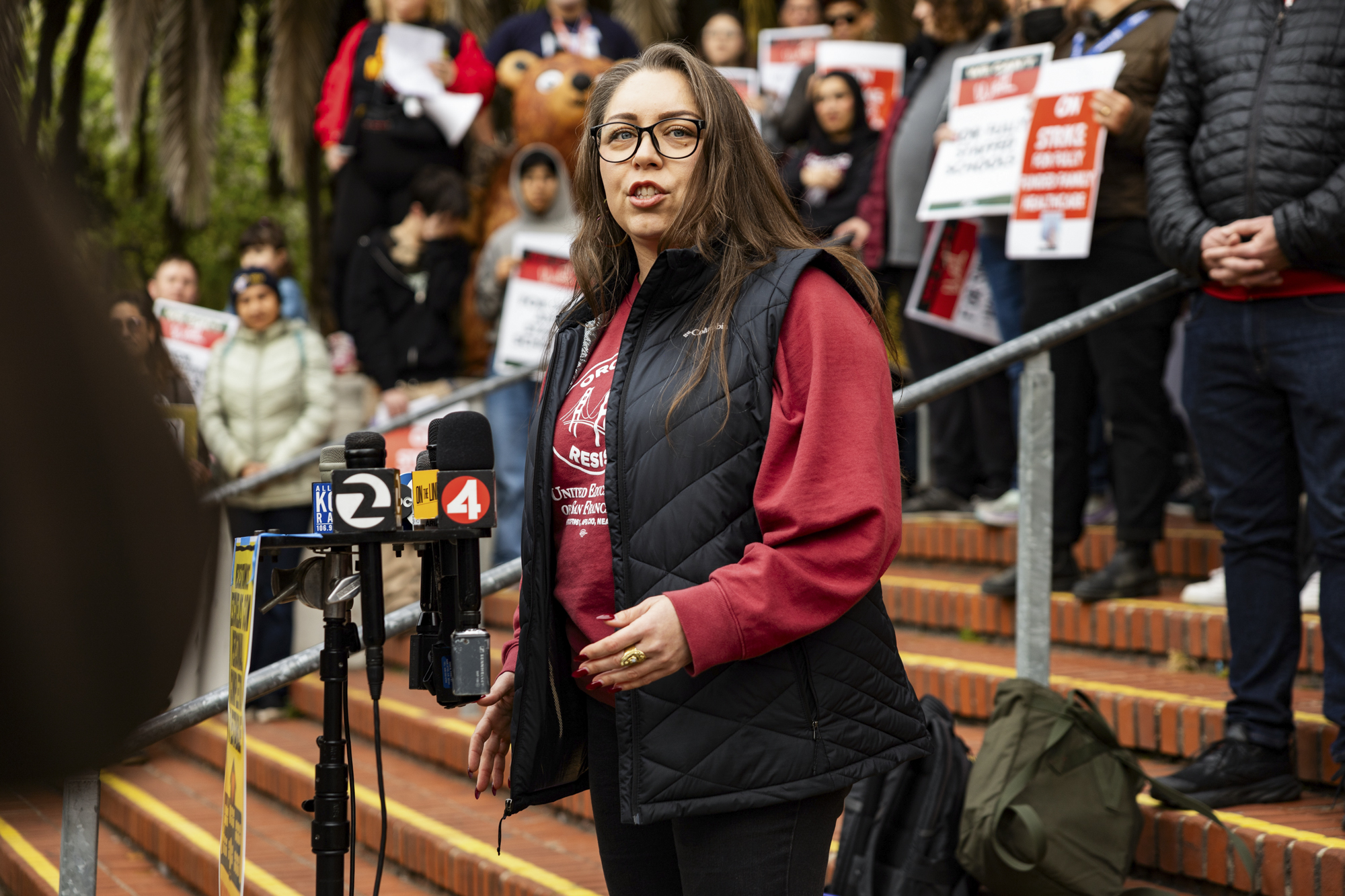 Cassondra Curiel, president of the United Educators of San Francisco, speaks during a press conference at Mission High School on Feb. 9, 2026. (Gina Castro for KQED)
But the district said both of those pools of money serve different purposes, and are not to be used for ongoing expenses like salaries and benefits.
“Using one-time fund balance for permanent raises creates a funding cliff,” it said in a statement on its website. “Once the one-time money runs out, the district would be forced to make even deeper cuts to classrooms and lay off more staff to cover the ongoing cost.”
The district proposed earlier in negotiations contract language that would direct general fund balance money beyond $50 million at the end of the year toward educator bonuses. Su said the union rejected that offer.
Negotiations are planned to continue on throughout the day on Wednesday. As pressure mounts from parents struggling to manage days with their children home from school, and after Mayor Daniel Lurie and State Superintendent of Public Instruction Tony Thurmond joined negotiators in the War Memorial Veterans building on Tuesday evening, Su has said her team is prepared to make a deal.
“We are here. We are ready. We want to get this done,” Su said. “We need UESF to join us so that we can sign this agreement today and get our kids back into the classroom.”