
The son of the late Khaleda Zia, Bangladesh’s first female prime minister, Rahman is a product of dynastic politics many reformers would like to change. Zia herself came to power after her husband, a former president, was assassinated in a military coup.
Both the BNP – the Awami League’s long-time rival – and Jamaat-e-Islami have a long history in Bangladesh, and both were crushed along with other opponents of Hasina under her long rule.
Rahman, who lived in London during the Hasina years, may be tipped as front-runner for prime minister, but Jamaat is expected to mount a serious challenge.
On two previous occasions – in the 1990s and the early 2000s – Jamaat has been a junior partner in a coalition led by the BNP in constitutionally-secular Bangladesh.
But, with the Awami League absent, Jamaat is for the first time a major player on the ballot – though it’s chances of winning are seen by most observers as slim.
Shafiqur Rahman, a former political prisoner, and his party have run a well organised grassroots campaign on a platform of justice and ending corruption. They are also not associated with dynastic politics.
Jamaat gained momentum of its own in the run-up to the vote, and many of its new supporters believe it has modernised.
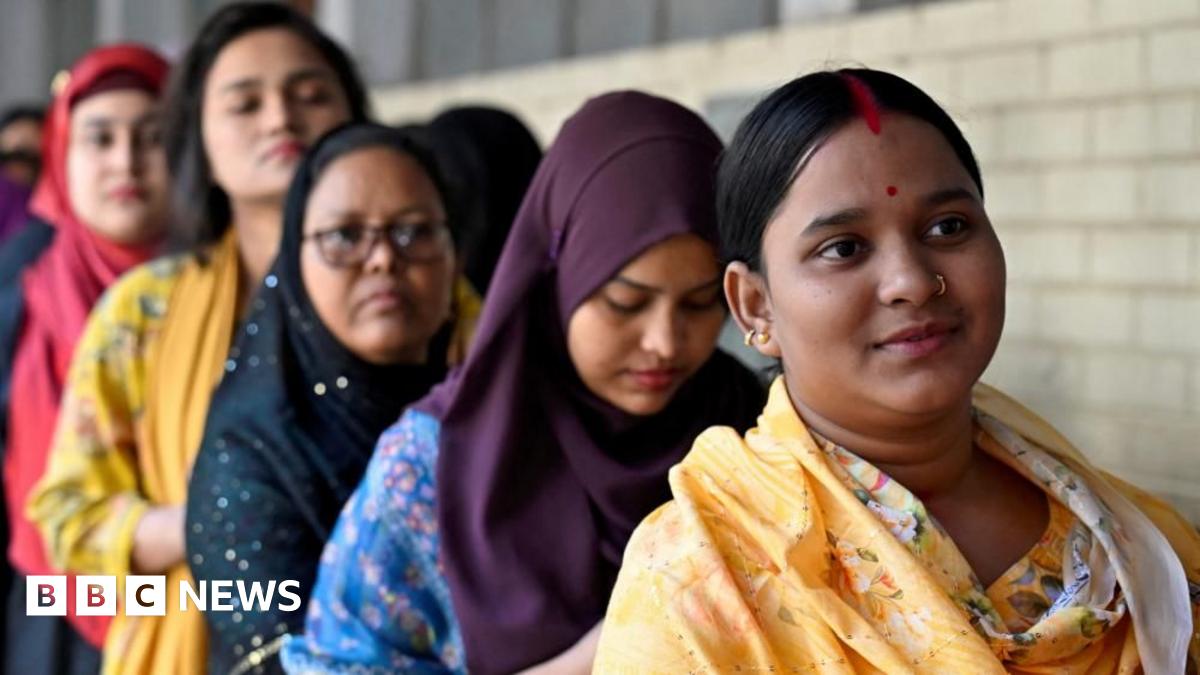
But many female voters feel sidelined, despite the fact women played a leading role in the uprising.
Of the 30 candidates Jamaat is allowing the student-led National Citizen Party (NCP) to field, only two are women. Jamaat is fielding more than 200 candidates, all of them men. The BNP fielded 10 women out of more than 250 candidates.