
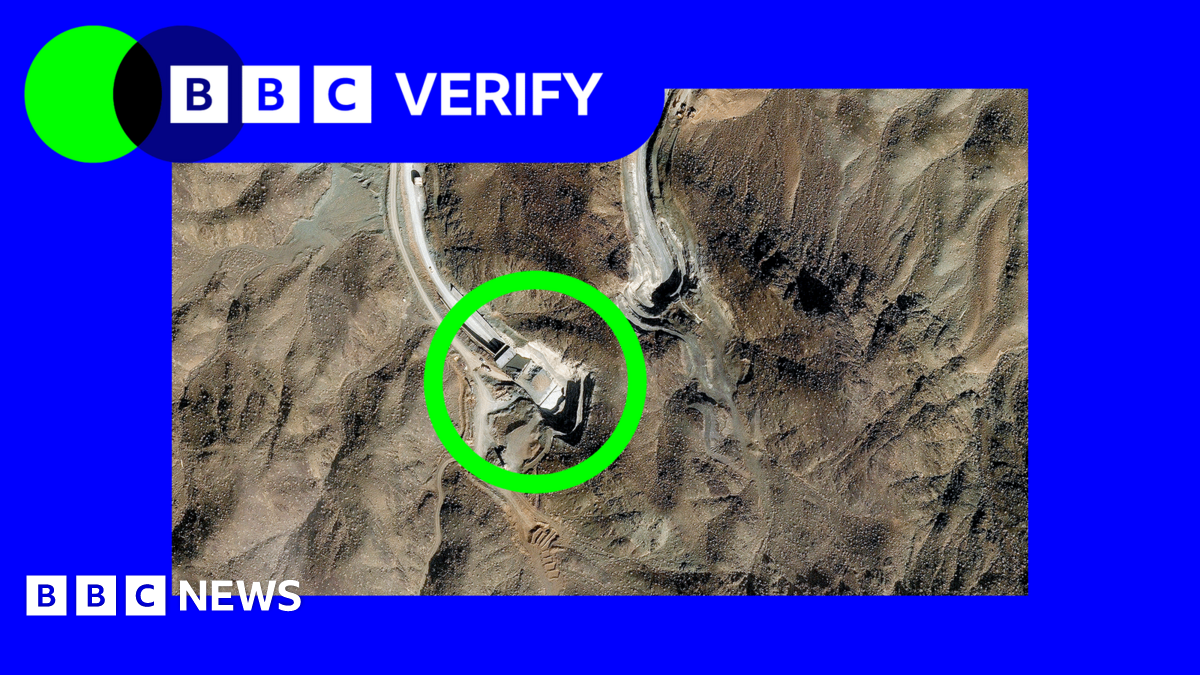
ISIS has assessed the roof was added to block the view of anyone trying to observe what Iran was doing beneath it.
Prof Sina Azodi, director of the Middle East Studies Program at George Washington University in the US, says Iran is “operating under the assumption that the attacks are going to happen and they need to protect the facilities as much as they can”.
“[The] Iranian nuclear programme hasn’t been destroyed,” he added. “Clearly once you have the knowledge and capacity and technology to reconstruct the programme, you can always rebuild everything.”
Rafael Grossi, the head of the global nuclear watchdog, the International Atomic Energy Agency, told the BBC a new nuclear deal between Iran and the US was possible and was urgently needed.
“My sense, talking to all those involved, is that we have a window of opportunity, but windows of opportunity have a tendency to shut themselves quite abruptly and brusquely, so I think the we need to seize the moment,” he said in an interview at the Munich Security Conference.
He also said he believed Iran’s estimated 400kg of highly enriched uranium – which is a short, technical step away from weapons grade – remained in the underground tunnels and chambers where the US dropped bunker-busting bombs last June.
Graphics by Tom Shiel