
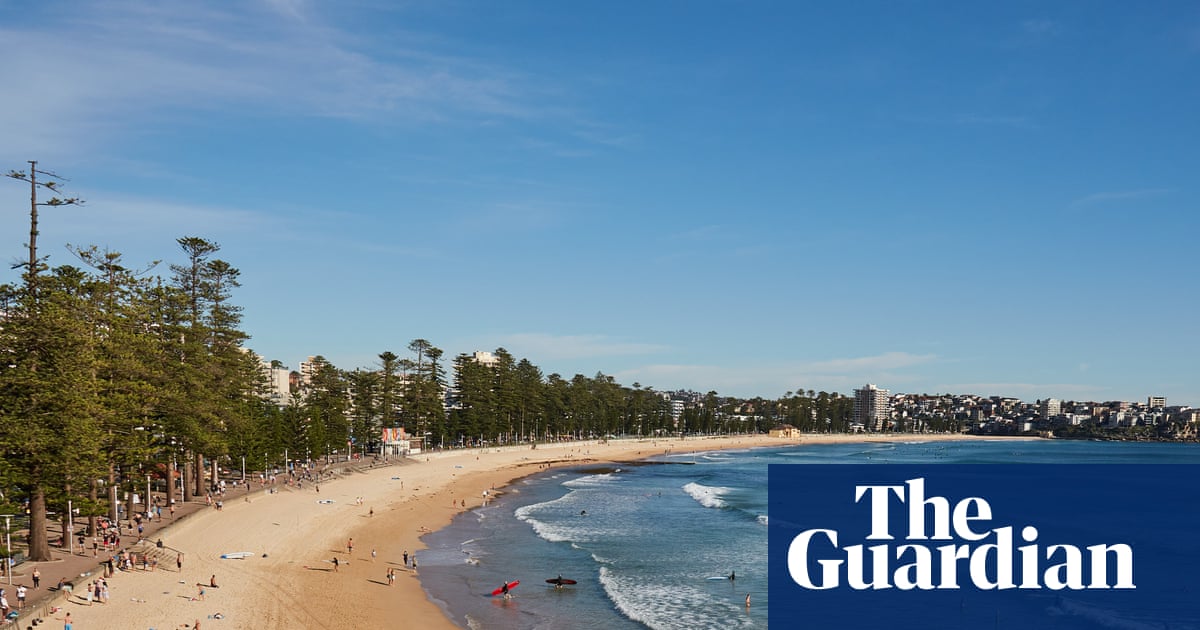
Sydney’s Northern Beaches council has banned bikini-clad and shirtless passengers from riding its free community bus service after receiving feedback from passengers.
The Hop, Skip and Jump is a daily 30-seat shuttle bus that services the coastal suburbs of Manly, Fairlight and Balgowlah and is frequented by beachgoers.
On Friday morning, Seven’s Sunrise program aired a segment showing a sign erected in Manly that read: “Hop, Skip and Jump Bus stop here. Please dress appropriately. Clothing must be worn over swimwear.”
In a statement on Friday, the council cited legislation that allows council bus drivers to refuse entry where a passenger’s clothing is “likely to dirty or damage the vehicle, or cause inconvenience or damage to other passengers or the driver”.
This can include circumstances where “a passenger is wearing wet or sandy clothing that could impact the cleanliness and comfort of the shared transport environment”, a spokesperson said.
When asked whether dry swimwear was permitted, a spokesperson said: “Council drivers cannot tell if swimwear is wet.”
Sunrise’s clip, posted to social media, received a mixed reaction to the new rules.
“Welcome to 1920s Sydney … oops 2020s,” one commenter said.
Another said: “The Council should focus on their core business activities. Try not to be the fashion police.”
But others agreed with the ban.
“It has always been a golden rule that you cover swimwear if you walk more than a block across from the beach,” one said.
Another claimed “the complaints started with the proliferation of Brazilian style really brief g strings”.
Candy Bingham, the deputy mayor of the Northern Beaches council, told the Daily Telegraph that some swimwear is “confronting” to elderly passengers, especially fashionable “thong-style bikinis”.
“The girls get on and all they have on is their bikinis,” she said. “People are worried about the hygiene aspect when they sit on the seats … swimmers, wet from the beach and covered in sand, make a mess and leave the seats damp.”
In 2025, a council in the Blue Mountains banned G-string bikinis at its public pools and said in a since deleted Facebook post: “thongs and G-string swimwear is not acceptable for males or females when visiting our leisure centres.”
The ban sparked controversy in the comments, ranging from “if you don’t like it, don’t look” to “it’s about the rules … don’t like them? Then swim and bare your bum elsewhere.”
Lauren Rosewarne, a cultural expert at the University of Melbourne’s school of social and political sciences, said the rule to “dress appropriately” reflects longstanding societal “fixed views” about public presentation.
“These views aren’t inherently right or wrong, these are just opinions,” she said. “People have the right to complain, [but] that doesn’t mean a council should be obligated to respond.”
More broadly Rosewarne said there was a persistent gender double standard where women’s bodies face far greater scrutiny and are often policed to ensure the “comfort” of others.
“Women are expected to dress in ways that don’t excessively ‘tempt’ men,” she said. “To be aware that their bodies are constantly being appraised and thus that they are expected to don garments that don’t make other people feel uncomfortable.
“The irony here is that if everyone minded their own business, if people weren’t so ready to look at women and judge their garment choices, most ‘discomfort’ would be eliminated.”