
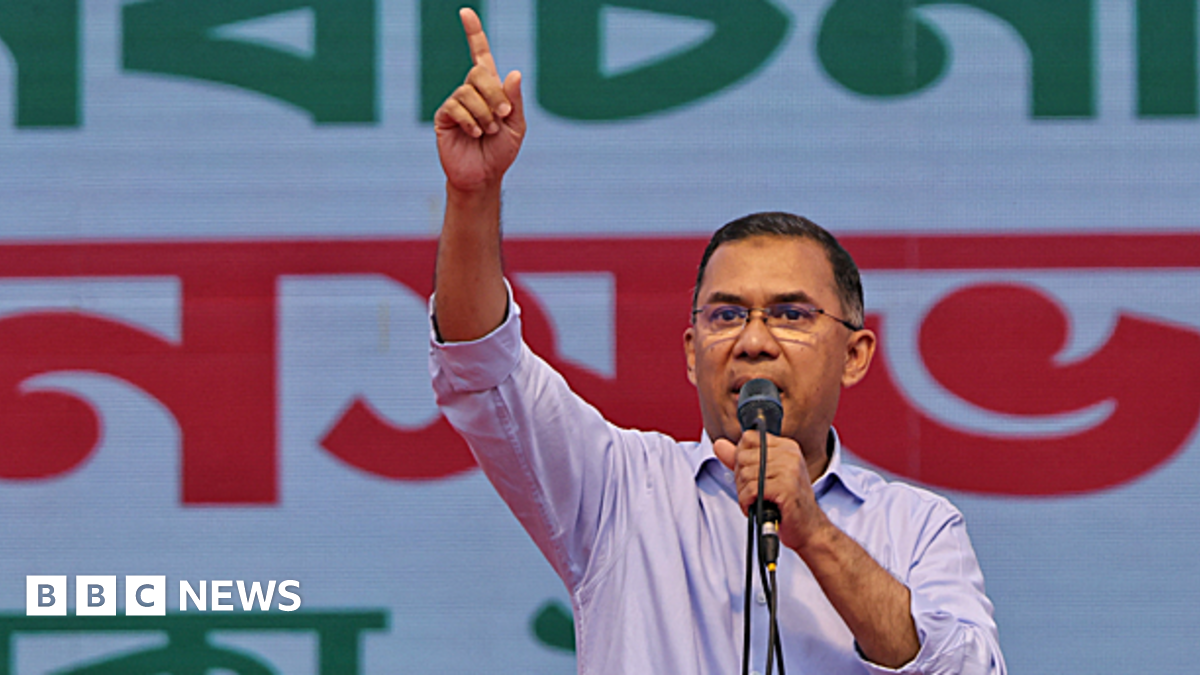
During his campaign, Tarique Rahman promised that democracy would be restored.
Reviving the country’s economy, bringing rising food prices under control and creating jobs for Bangladesh’s huge young population are the big challenges facing the new government.
Repairing strained ties with giant neighbour India is also high up the list of priorities.
Within hours of his win, Rahman had received a call from India’s Prime Minister Narendra Modi who congratulated him on a “remarkable victory”.
“As two close neighbours with deep-rooted historical and cultural ties, I reaffirmed India’s continued commitment to the peace, progress, and prosperity of both our peoples,” Modi wrote on X.
Although the BNP are promising to lead change in the country, the party was criticised for corruption and accused of human rights violations when it was last in government in the early 2000’s.
Thursday’s democratic exercise is a moment of huge potential – and risk – for the country, with one of its two main parties winning such a big victory.
Among the constitutional reforms envisaged are prime ministerial term limits, a directly elected upper house of parliament, stronger presidential powers and increased judicial independence.
Greater representation of women in parliament is also in the charter – and judging by the tiny number of successful female candidates in the election, there is a long way to go.
Tarique Rahman will be under great scrutiny to deliver to a very youthful electorate hungry for change, many of whom took part in the student-led protests that resulted in Hasina’s downfall, paving the way for the 12 February election.