
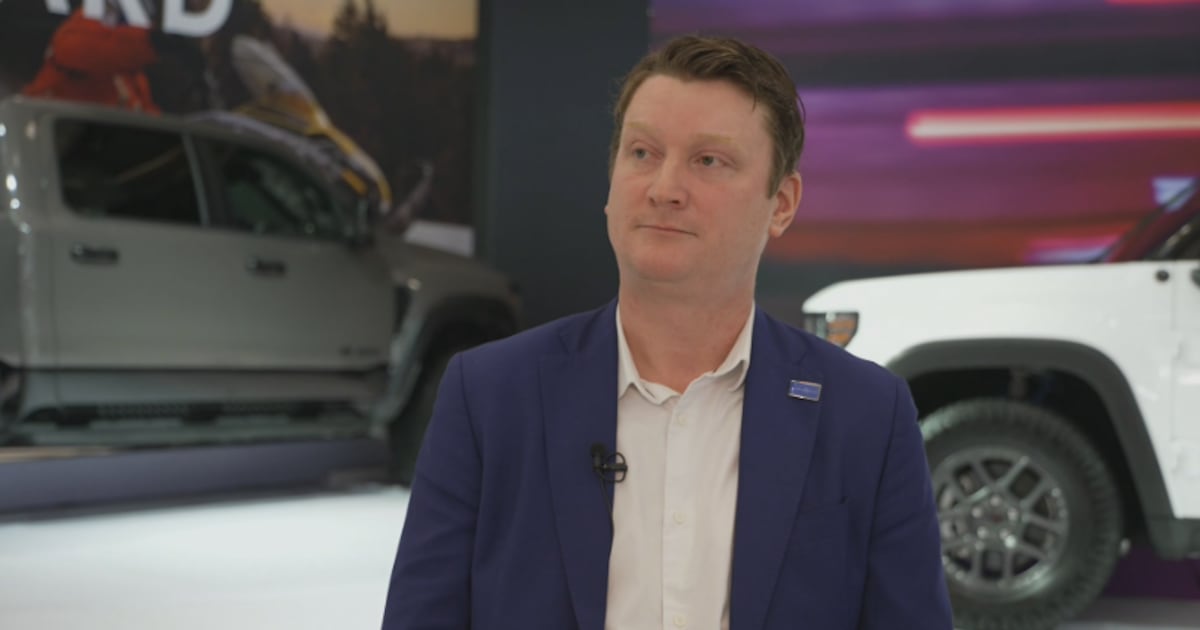
Trevor Longley, president & CEO of Stellantis Canada, joins BNN Bloomberg to discuss the company’s plans for 2026 and the impact of the Canada-China EV deal.
Stellantis Canada says it wants to restart production at its idle Brampton, Ont., plant, even as tariffs and economic pressure weigh on the country’s auto sector.
Canada’s auto industry was hit hard last year after U.S. President Donald Trump imposed a 25 per cent tariff on Canadian-made automobiles, which forced manufacturers to reassess production plans.
Stellantis Canada has been among the companies rolling back output. Its Brampton plant paused operations after the cancellation of its planned Jeep Compass production, which moved to Illinois, leaving 3,000 workers in limbo earlier this year.
Many Canadians depend on that facility, and its future now factors heavily into the company’s next move, Trevor Longley, president and CEO of Stellantis Canada, told BNN Bloomberg during an interview at The Canadian International AutoShow.
“The reality is that we want to build cars in Brampton,” said Longley.
“We’ve been in Canada for 100 years. We’ve been making cars in Canada for 100 years, and we want to continue making cars for the next 100.”
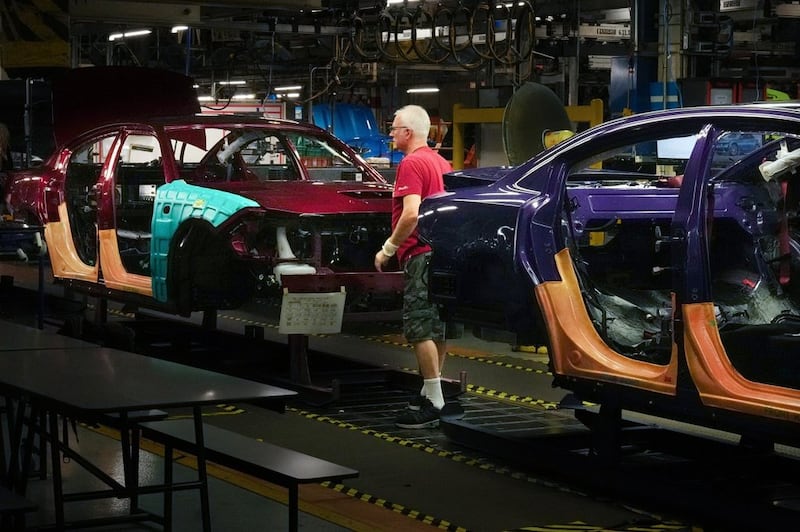 5a767f0c2436a84e88c0bc27fe6cb2afc52c94f68c0c7143faa6db8279dbcb40.jpg Cars pass along the assembly line at the Stellantis plant in Brampton, Ont., on Friday July 21, 2023. THE CANADIAN PRESS/Chris Young
His comments come as Industry Minister Mélanie Joly announced the federal government is initiating a dispute resolution process to recover hundreds of millions of dollars in subsidies previously tied to production and job guarantees in Canada.
Longley said the company is having “productive dialogue with the federal government.”
He added that Stellantis Canada extended benefits to the 3,000 laid-off employees.
“We’re working on that next solution to get as many people back to work,” said Longley.
Need volume to lower costs
A key challenge for the company is scale, explained Longley.
In the automotive sector, roughly 200,000 units per year is considered a benchmark for a high-volume assembly plant. Stellantis Canada does not currently meet that threshold in its plants, and Longley said the tariff scenario complicates the situation further.
He said increasing overall vehicle production volume is critical to lowering costs and the broader automotive sector also needs to reassess market access to identify more destinations for Canadian-built vehicles.
“Those are things that maybe hadn’t been thought of in the past, but those are things that are coming into all of our considerations,” said Longley.
Windsor plant made more cars than previous year
While Brampton remains idle, Stellantis Canada’s Windsor, Ont., plant has ramped up production of its Dodge Charger and continued production of its Chrysler minivan lineup.
“We’re actually one of the only OEMs (original equipment manufacturers) that made more cars in Canada than the previous year, and we’re going to do that again this year,” said Longley.
He said the company also hired 1,700 new Canadians to build cars and announced Thursday that it added a third shift at the facility.
He also said Stellantis Canada hired more than 600 engineers at its Automotive Research and Development Centre in Windsor.
‘Makes a lot of sense to make cars in Canada’
Longley said any policy that protects Canadian auto production is a step in the right direction, addressing Prime Minister Mark Carney’s new national automotive strategy aimed at protecting domestic jobs and reducing reliance on the U.S.
While it has historically been more cost effective to import vehicles than to manufacture them domestically, Longley said Canada has the infrastructure and talent to compete.
“This is a first world country, a great economic country,” said Longley.
“It makes a lot of sense to make cars in Canada.”
He added that the industry must also be pragmatic about Chinese electric vehicles entering the Canadian market by assessing whether domestic producers operate on an equal competitive footing in terms of market access.
“If we’re on the same competitive footprints, competition is a good thing,” said Longley.