
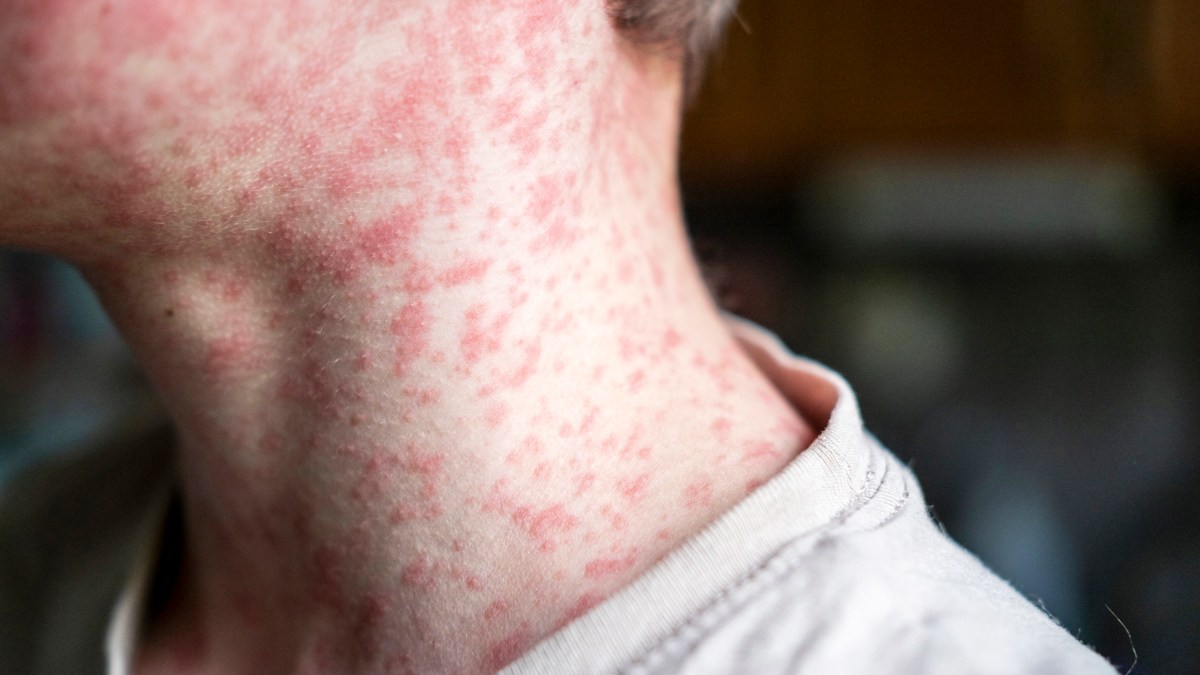
Seven schools and a nursery have reported more than 60 suspected cases of measles in an area of north London, and labs have confirmed 34 cases since January 12. Some children have been treated in hospital.
GPs have told parents that the outbreak in Enfield is spreading because the virus is exploiting low levels of MMR vaccinations in the capital. For every one infected person, measles can spread to up to 18 unvaccinated people.
If measles becomes entrenched it could be a significant public health risk for the whole of Greater London, where vaccination rates are among the lowest in England.
Health officials are racing to stop the outbreak from becoming established.
The UK Health Security Agency (UKHSA) has said modelling of a large measles outbreak in the city suggested between 40,000 and 160,000 people could be infected. This would lead to large numbers of children needing hospital treatment, with some likely to die. Last July, a child died from measles in Liverpool after a small outbreak there.
The World Health Organisation announced last month that the UK had lost its measles elimination status after more than 4,600 infections since 2024, and uptake of the measles vaccine dropping below the 95 per cent level needed for herd immunity.
Dudu Sher-Arami, Enfield’s director of public health, said the outbreak posed a serious threat to the wider capital and there was the potential to cause a “much greater and bigger pan-London outbreak” because residents travel across the city for work and school.
The surge in annual cases is the highest for more than two decades, the UKHSA has said.
She highlighted the capital’s vulnerability to measles, noting that the city has “one of the lowest, if not the lowest, vaccination uptake rates” in the country. In Enfield, more than a fifth of children are not vaccinated against measles, mumps or rubella by the age of five.
Sher-Arami said that average vaccination figures masked significant pockets of low uptake which created prime areas for measles to spread. With an incubation period of up to 21 days, she fears the number of infections could rise dramatically.
“It is possible for it to grow,” she said, adding: “We know that measles has got some very nasty complications. It can cause deafness. It can cause brain damage and one in five children can need hospital treatment.”
Temporary vaccination clinics are being held in schools and throughout Enfield. Every parent is receiving a letter from Sher-Arami.
• How to defeat measles: do listen, don’t judge and learn polio lesson
Although many people recover from measles, it can lead to long-term disability and cause a fatal neurodegenerative disease of the central nervous system years after infection.
Vaccination has been proven to be safe and effective, giving 97 per cent protection after two doses. Claims that the injection was linked to autism have been proven false but persist on social media and among some ethnic communities.
Since the start of the year there have been 96 confirmed cases of measles in England, three quarters affecting children under ten. Enfield has had the highest numbers, followed by Birmingham. The UKHSA said the figures were likely to be an underestimate.
Dr Vanessa Saliba, consultant epidemiologist at UKHSA, said: “Measles is a nasty illness for any child, but for some it can lead to long-term complications and tragically death, but is so easily preventable with two doses of the MMRV [measles, mumps, rubella and chickenpox] vaccine.”
• NHS rolls out chickenpox vaccine for the first time
The uptake of vaccination against childhood diseases has slumped to a ten-year low in England. This includes jabs against measles and whooping cough as well as polio and meningitis. In 2024 there were almost 15,000 cases of whooping cough and 11 babies died.
A government campaign promoting childhood vaccination is to start this week, including adverts on social media, YouTube and radio to counter vaccine scepticism. Ministers are also pressing ahead with plans to give health visitors greater ability to vaccinate children after babies are born. One pilot started in Enfield last month.
One reason for the low vaccine uptake in England has been blamed on vaccine hesitancy, where people who are not anti-vaccination but have doubts after the pandemic.

A child given the MMR (mumps, measles, rubella) vaccination
ED MAYNARD/GETTY IMAGES
Zoyah Hussain, a GP from the Holycroft Surgery, in Keighley, West Yorkshire, has overseen a rapid improvement in childhood vaccination rates — taking uptake from about 40 per cent to more than 90 per cent in a partnership of 11 practices serving 85,000 patients in one of the country’s most deprived areas.
“We found that actually going into mosques, community centres, shopping centres, it really drove up uptake compared to other things,” Hussain said. “It’s about making the contact and offering flexibility of appointments.”
• I fell for the antivax lies, then measles put my son in hospital
Her team started “baby wellbeing events” in a shopping centre, deliberately avoiding the word vaccine to reduce anxiety.
The clinics during school holidays offer walk-in appointments over three-hour slots. Parents can have their child weighed for free — encouraging participation — while Hussain discusses concerns. Two nurses stand nearby with a fridge full of vaccines.
“The walk-in is quite key because then you don’t need a set appointment, you can just turn up,” she said. “There obviously is the anti-vax core, but that’s quite a small number of people. Most just want to talk to someone. If you dedicate time to sit down and explain to people in a non-threatening, non-confrontational way and just answer their questions, actually most people will go on to get a vaccine or get their child vaccinated.”
In Enfield the local council and NHS are working to hold clinics in schools and community centres as well as encouraging nurses to stand at school gates talking to parents. The NHS also has nurses who speak Turkish, Somali and Bengali calling families to encourage them to vaccinate their child.