
What to know
Bill C-19 has officially passed, introducing the Canada Groceries and Essentials Benefit to help low-income Canadians cover food and daily expenses.
Starting this spring, recipients will get a one-time top-up equal to 50 per cent of their GST Credit, plus a 25 per-cent increase to the benefit for five years starting in July 2026.
A single person could receive up to $950 this year, while a family of four could receive up to $1,890, with continued annual payments over the next four years.
While expert Sylvain Charlebois says the benefit will help offset short-term inflation, he stresses Canada’s food affordability crisis is structural and requires deeper reforms.
The federal government just passed a law that plans to help millions of Canadians afford food and other daily expenses, but one expert says this is just a temporary solution to a much deeper problem.
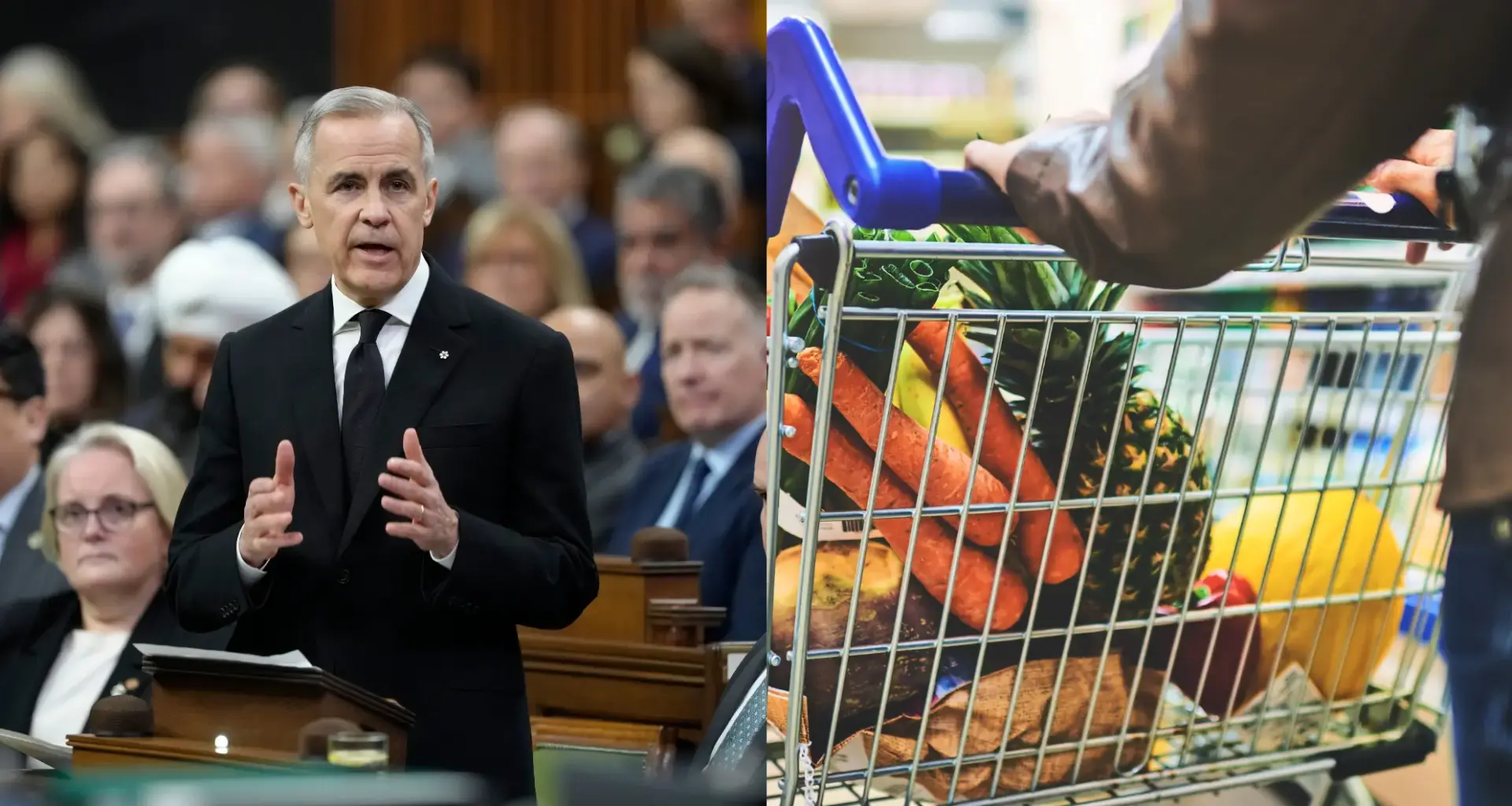
On Thursday, Prime Minister Mark Carney’s government announced its Bill C-19, the Canada Groceries and Essentials Benefit Act has passed to become legislation. The new law will offer monetary support for low-income Canadian families in an effort to help them afford daily essentials.
Starting this spring, Bill C-19 will provide:
A one-time extra payment equal to 50 per cent of their regular GST Credit year, totalling $3.1 billion in support to over 12 million Canadians;
Increase the Canada Groceries and Essentials Benefit by 25 per cent during five years as of July 2026, providing more $8.6 billion in benefits to nearly 500,000 eligible Canadians.
Eligibility for the benefit will be based on income and family size. While a single individual could receive up to $950 this year and an annual amount of $700 for the next four years, a family of four would receive up to $1,890 this year and $1,400 annually for four years.
According to Minister of Finance and National Revenue François-Philippe Champagne, the new benefit aims to offer relief, as many face affordability pressures related to the rising cost of living.
“With many people feeling the strain of rising everyday expenses, our government is taking a responsible and pragmatic approach: tackling long-term structural challenges while acting now through Bill C-19 to support those facing cost-of-living pressures through the new Canada Groceries and Essentials Benefit,” he said in a statement.
“We are building a strong economy where Canadians can feel the benefits of our country’s economic growth, at the checkout counter and in their daily lives.”
We created the new Canada Groceries and Essentials Benefit to help Canadians cover the cost of everyday expenses. Starting this year, more than 12 million people will benefit.
— Mark Carney (@MarkJCarney) February 13, 2026
Food prices rising in Canada
Last year, Canada’s Food Price Report (CFPR) 2026 revealed that the country’s grocery prices increased 27 per cent in only five years.
Last December, Canada recorded the highest rate of food inflation among all G7 countries, recording a 6.2 per cent year-over-year increase according to StatCan data. That is nearly double the U.S. rate, and triple the rate in Germany and France.
In 2026, prices are expected to hike even more, with the CFPR predicting the average family of four will spend about $17,571.79 on food by the end of the year, an increase of almost $1,000 from 2025.
Read More
According to the Bank of Canada, the hike in food inflation observed especially through 2025 has to do with rising cost pressures, mostly linked to rising importation costs, which have gone up the food supply chain causing prices to rise.
Will the new benefit help?
Dalhousie University Project Lead, Professor, and Director of the Agri-Food Analytics Lab Dr. Sylvain Charlebois tells Now Toronto the Canada Groceries and Essentials Benefit Act could be effective in offering temporary relief to lower-income households.
“The enhanced program will likely offset the expected inflation for this year, which is certainly good news for households that aren’t necessarily earning as much as the average household,” he said.
However, Charlebois explains that it is important to understand the benefit is a temporary solution and doesn’t do anything to fix the inflation problem.
The expert adds that it is essential the different levels of government take steps to address the roots of inflation in order to deliver long-term solutions that will control the rising prices.
“We’re going to have to figure out a way to control inflation a little bit more, since our problem is very much structural,” he said.
“[The government] can’t just send out checks. It needs to be fixed by addressing the issue with the industrial carbon tax, the interprovincial trade barriers, poor logistics, those kinds of issues that [have] been lingering for many, many years.”
Will inflation be under control anytime soon?
Charlebois says he has seen prominent actions from the federal government to address structural issues, including taking steps to eliminate trade barriers, but says he’d like to see more collaboration from the provinces.
Read More
“The last budget actually had provisions of $118 billion to reinvest in ports and railways. That’s really good, but it’s just a start. We also need to scale up companies a little bit more so they can actually reduce costs to produce food, especially in manufacturing,” he said.
“Overall, we’re seeing a lot of players recognizing the structural nature of our food inflation problem, but we’re not necessarily there. There’s still a lot of work to be done.”
Despite seeing some progress, Charlebois says he believes overall food prices will not be significantly dropping any time soon. However, he says certain products might see some relief.
“We are expecting the price of chocolate, for example, to drop within months, and other items, but generally speaking, we’re not expecting any major price drops at this point,” he said.
“I think that the long-term goal would be for us to see inflation being anywhere up to 1.5 to 2.5 per cent, [but] right now we have the highest food inflation rate within the G7 countries, and that’s totally not a good thing.”