
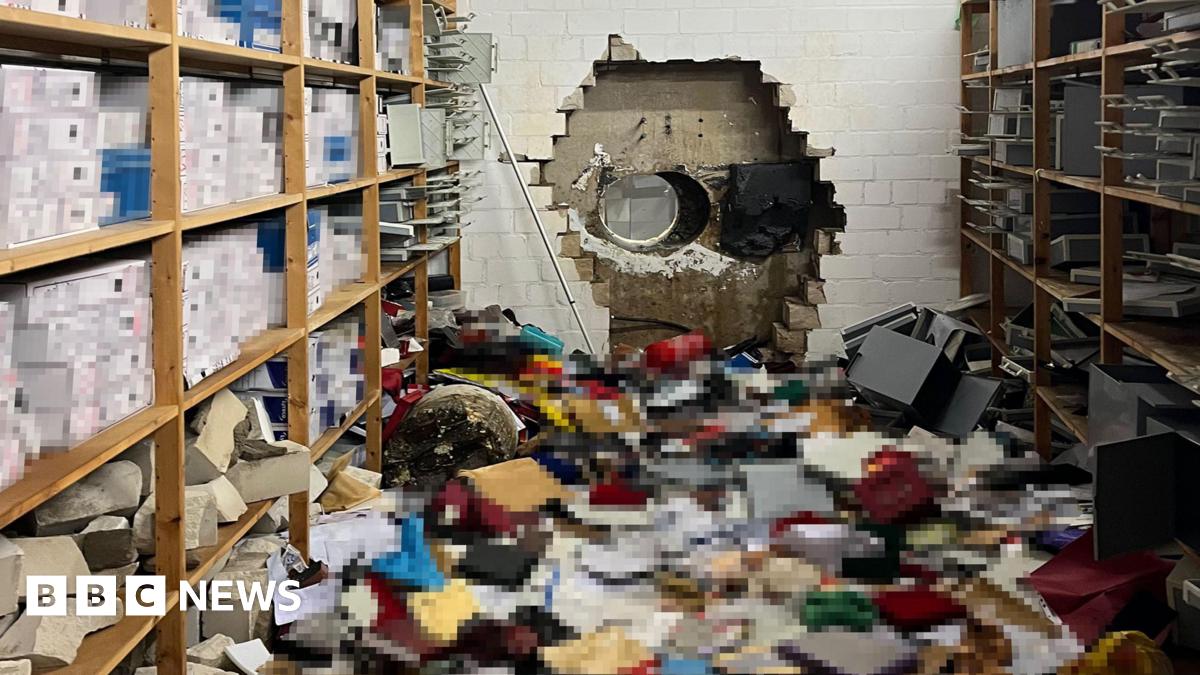
The bank has said the contents of security boxes are generally insured for €10,300 each.
Wagner is one of the first people to file a lawsuit against the bank, suing for damages for what his lawyer, Daniel Kuhlmann, has called lax security. Another had deposited €400,000 in cash from the sale of a flat which had been meant for their retirement.
The bank has said it was itself a victim of the crime and that its premises were “secured in accordance with recognised state-of-the-art technology”.
While some clients had official receipts for the contents of their safe deposit boxes, others do not.
“Even the Sparkasse doesn’t know what is in [the boxes] because each person can put whatever they want into them,” Herbert Reul said.
He stressed that the psychological damage shouldn’t be underestimated.
“We need to help the victims,” he said. “For many, this is more than just the loss of property, this can also impact their trust in their own sense of security and… their trust in our order,” he said.
Police Chief Tim Frommeyer said they were dealing with “one of the biggest criminal cases in the history of the state of North Rhine-Westphalia”.
“My department and all of its employees are aware of the magnitude of this case. The financial damage, uncertainty, and frustration run deep!”
Shortly after the theft was discovered, Germany’s far-right Alternative for Germany (AfD) party held a rally outside the bank, prompting some to accuse the party of trying to stir up trouble.
German magazine Der Spiegel said the heist had become a political issue and a symbol of something greater than the crime itself: “The feeling that promises of security are hollow, that institutions are failing, that ultimately no-one is being held accountable.”