
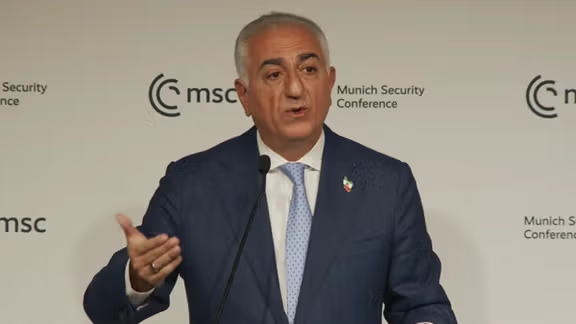
Addressing journalists on the sidelines of the Munich Security Conference on Saturday, Pahlavi argued that failure to confront the authorities decisively would embolden authoritarian actors beyond Iran.
Diplomatic pressure alone, he added, was insufficient. “It is time to end the Islamic Republic,” he said.
His remarks came at a time when Iran, nuclear negotiations, regional tensions and domestic crackdowns have been among the key issues discussed at the Munich Security Conference.
Protests persist despite crackdown
Resistance inside Iran, Pahlavi said, continues despite arrests and executions of the people.
“When they came to the streets, they were only met with this brutal genocidal level, industrial level massacre,” he said, adding that many were forced to retreat but “people are still out there chanting.”
He warned that delay could cost lives. “Every day that goes by, more people could die,” he said, arguing that negotiations would not yield meaningful results.
The 2026 Munich Security Conference has become one of the most outspoken platforms for presenting international perspectives on the future of the Islamic Republic, with Prince Reza Pahlavi, US Senator Lindsey Graham, European Parliament President Roberta Metsola, and Ukrainian President Volodymyr Zelensky each addressing the issue from different angles – including Iran’s protests, the role of the Revolutionary Guards, international pressure and possible future scenarios.
Sanctions and revenue pressure
Pahlavi urged stronger enforcement of sanctions to weaken the government’s ability to sustain its security forces.
“One way to weaken the regime even further is to impose more restrictions so that their source of revenue is cut off so they can no longer sustain their own elements,” he said.
“Any source of revenue to the regime will contribute to its ability to sustain itself a little bit longer, but at the end it will fall,” he added, describing financial pressure as a way to accelerate collapse.
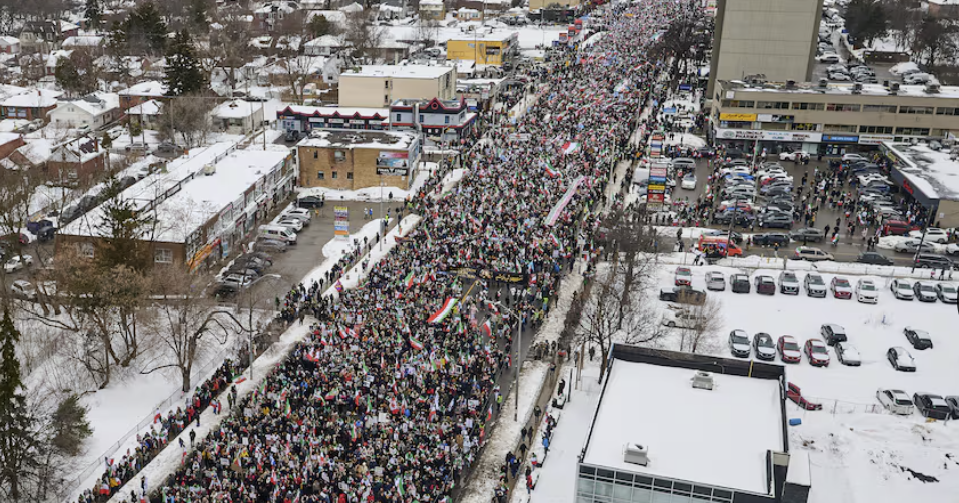
Earlier, Pahlavi designated February 14 as a global day of action and called on Iranians abroad to rally in Munich, Los Angeles and Toronto, as well as in other cities worldwide, to demonstrate their support for the “Lion and Sun Revolution” and their compatriots inside the country.
Regional instability and Europe’s stakes
Instability across the Middle East is rooted in radical Islamist movements, including forces linked to Tehran, Pahlavi noted.
“This regime has only one purpose which is to export this ideology. It is a threat to its own people.”
He said political change would benefit neighboring countries and Europe alike.
“We have now a possibility of even more migration to Europe as a result of any continuation of the status quo.”
“A free Iran that would be able to supply Europe with its energy needs would certainly be an alternative to the only source that you have right now,” he added, referring to Europe’s reliance on Russia.
He described a post-Islamic Republic transition as a “win-win” outcome that would open trade and investment while strengthening stability.
Ready to lead transition
The exiled prince said calls for his leadership inside Iran carry both weight and responsibility.
“Millions of Iranians chanted my name and called for my return. That humbles me and gives me a lot of responsibility at the same time to answer their call and to be the leader of this transition as they have asked for,” he said.
He emphasized that participation in the movement is broad-based.
“Anybody who agrees with those four core principles, irrespective of their political affiliation or viewpoints, can be part of this national struggle for freedom,” he said.
First 100 days and institutional continuity
Stabilizing the country would be the priority immediately after a collapse, Pahlavi added.
The first phase would be to “stabilize the country, stabilize the economy” and ensure security, he said, arguing that encouraging “maximum defections” would prevent chaos similar to Iraq after Saddam Hussein.
Those “criminally responsible” with “the blood of people on their hands” would face courts, he added.
He also outlined a phased constitutional process culminating in elections.
“At the end of this process, once the constitution is approved and the nation votes in a referendum to adopt it, we will have the election of the first new parliament and the first new government of that future democracy.”
Monarchy, republic and inclusion
Asked about the future political system, Pahlavi said voters – not factions – should decide.
“Democracy is not about exclusion, it’s about inclusion, unless you are not in conformity with democratic principles,” he noted.
“My position is neutral towards the outcome,” he said, arguing that Iranians should decide “by the ballot box.”
He rejected criticism that he seeks power for himself.
“I’m not running for office. I’m not running for a job. I’m not seeking a power or a title,” he said.
“The day that happens, I consider that the end of my political mission in life.”