
They used carbon dating techniques to estimate the age of the 10cm cube-shaped bone.
The result led them to believe it is from the Second Punic War.
They also compared the bone of modern elephants and steppe mammoths to determine which animal it came from.
The team found artillery, coins and ceramics during the excavations in 2020, providing more clues that the place was the site of a battle.
“As non-native species and the largest living terrestrial animals, these imported beasts would have required transportation by ship,” the academics said.
They say that it is very unlikely that dead animals were transported, and the bones are unattractive suggesting they were not decorative or used in craft.
But the scientists say it will be very challenging to work out which species of elephant the creature was.
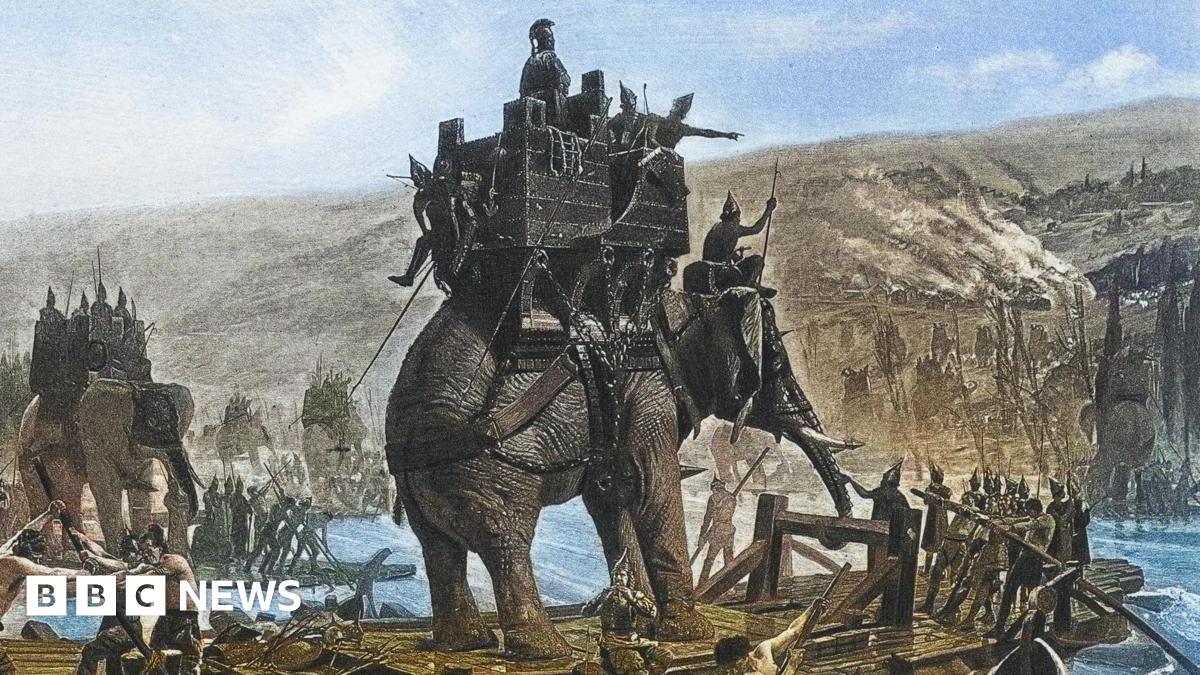
“While [the bone] would not represent one of the mythical specimens Hannibal took across the Alps, it could potentially embody the first known relic − so sought after by European scholars of the Modern Age − of the animals used in the Punic Roman wars for the control of the Mediterranean,” the scientists conclude in their paper.