
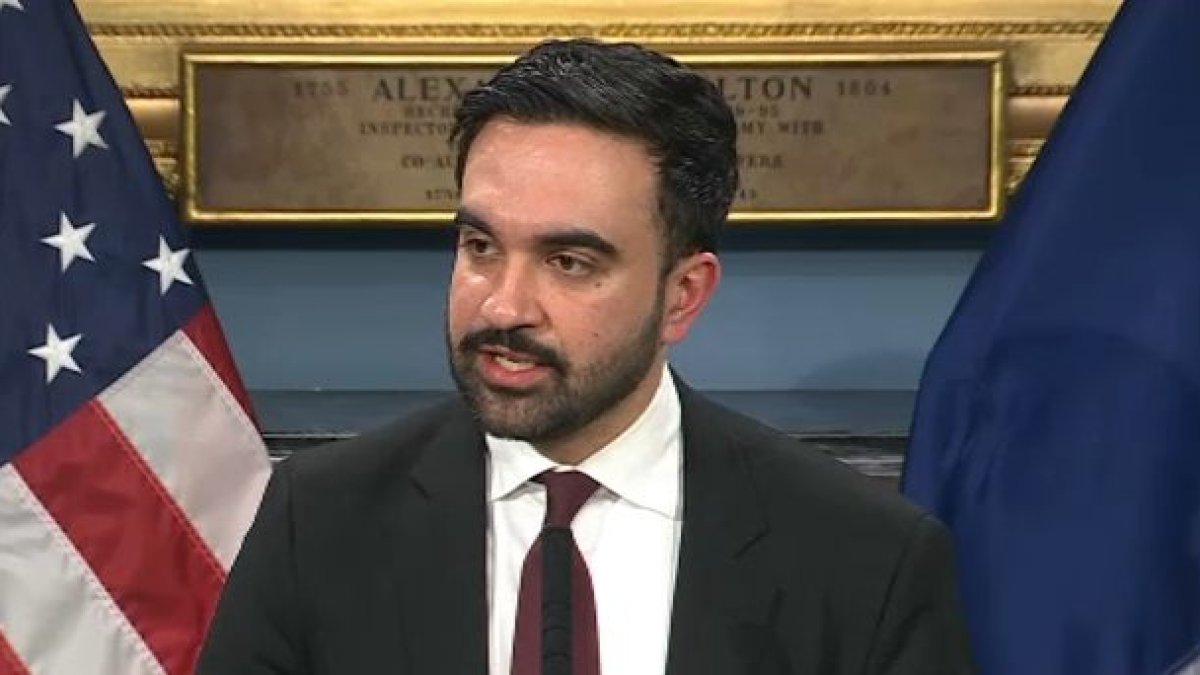
Mayor Zohran Mamdani laid out two potential paths Tuesday to close what he says is a $5.4 billion dollar budget gap in New York City.
In one, Albany would raise taxes on the richest New Yorkers. In the other, the City would raise property taxes for the first time since the late 2000s. The City could generate $3.7 billion by raising the property tax by 9.5%, Mamdani said.
Gov. Kathy Hochul has repeatedly said she is not on board the mayor’s first, and more preferred, option. If Albany does not agree to taxing the wealthiest New Yorkers, Mamdani says the city would need to raise property taxes in New York City to fill the budget gap.
“If we do not go down the first path, the city will be forced down a second, more harmful path. Faced with no other choice…we would have to raise property taxes. We would also have to raid our reserves,” Mamdani said at Tuesday’s briefing.
“The options of the second path are the options of last resort,” the mayor continued.
Property taxes stand as the city’s largest source of revenue, and as the only tax within the city’s power to raise.
Today, I’m releasing the City’s preliminary budget. After years of fiscal mismanagement, we’re staring at a $5.4 billion budget gap — and two paths.
One: Albany can raise taxes on the ultra-wealthy and the most profitable corporations and address the fiscal imbalance between…
— Mayor Zohran Kwame Mamdani (@NYCMayor) February 17, 2026
The ultimatum from City Hall comes just one day after Hochul announced she would bail the City out with an additional $1.5 billion.
“I’m not supportive of property tax increase, I don’t know that that’s necessary,” Hochul said at an unrelated event after word of the property tax idea leaked.
The governor has suggested that Mamdani should look at where adjustments can be made in current spending, weed out any abuses, and avoid “taxing for the sake of taxing.” On Monday, Hochul pledged another $1.5 billion to help dig out the city’s budget hole, in addition to helping him secure new funding for child care programs.
The last time New York City increased property taxes was under former Mayor Michael Bloomberg’s term.
Before his public presentation, the mayor briefed elected officials and fiscal watchdogs. Some of whom expressed concerns about the property tax idea.
“It’s false to think they are the only two choices,” said Andrew Rein of the Citizens Budget Commission. “The best option… dig into the agencies, identify spending that is helping New Yorkers and keep it, identify spending that is not helping New Yorkers and shrink it.”
“The foreclosure crisis always peaked in Southeast Queens, and without a doubt, you’re pushing people out of their homes,” said Queens Borough President Donovan Richards, who formerly represented Southeast Queens in the City Council.
The mayor held a series of meetings Tuesday morning to discuss the Fiscal Year 2027 preliminary budget, including a meeting with Public Advocate Jumaane Williams, Comptroller Mark Levine and City Council Speaker Julie Menin.
“Someone is going to feel the pain unfortunately of having to pay,” Williams told reporters inside City Hall after the meeting. “The question is who do you want to feel that? The most wealthy, which is a small amount and they actually have more expendable income… or the working class and the rest of everybody else.”
“The governor has the opportunity to say I am going to think about all New Yorkers, and not just the wealthiest,” Williams continued.
New York City Council Speaker Julie Menin and Council Member Linda Lee, chair of the Committee on Finance, issued a statement on the mayor’s preliminary budget, saying in part, “dipping into rainy day reserves and proposing significant property tax increases should not be on the table whatsoever.”
When asked by reporters at Tuesday’s briefing what happens if the City Council stands opposed to a property tax increase, Mamdani said he agrees with Speaker Menin.
“I agree that this is not something that should be on the table,” Mamdani said. “However the City has very limited tools by which it can reach the legal requirement of a balanced budget in both this fiscal year and the next fiscal year.”