
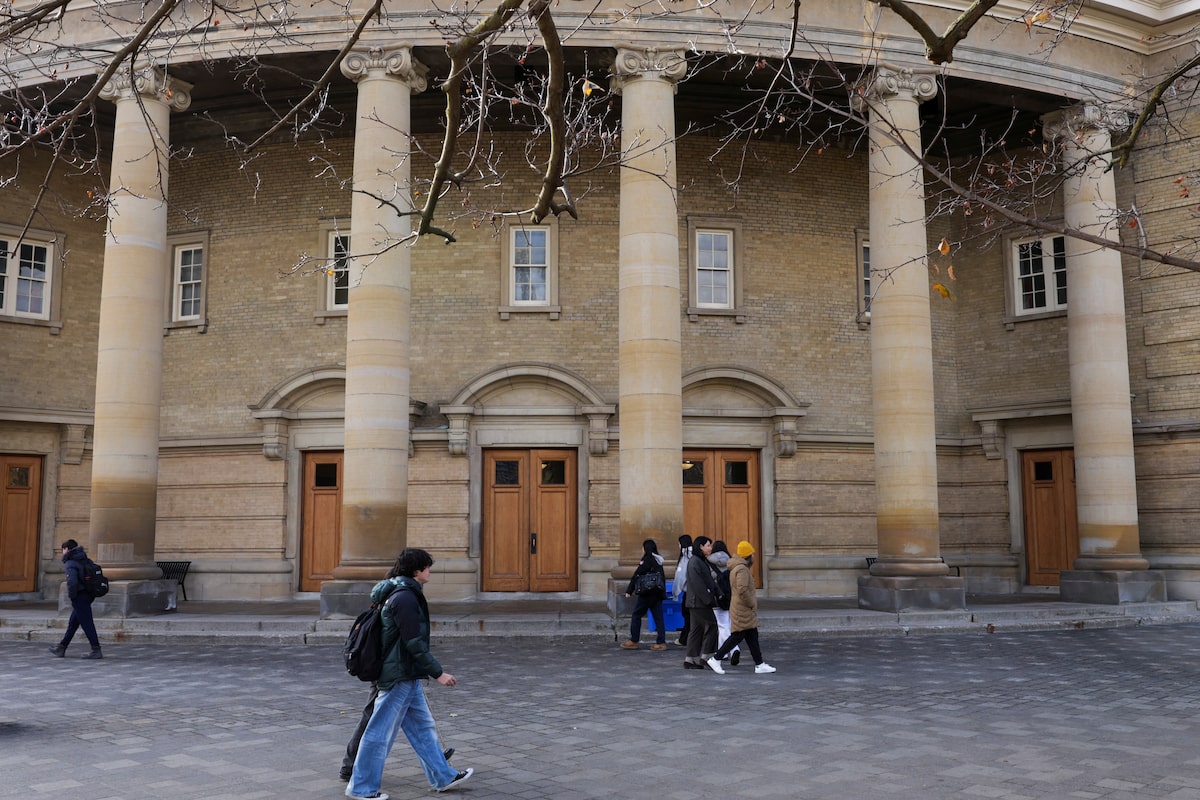
Canada admitted 61 per cent (177,595) fewer new international students compared with the year before, figures from the IRCC show.Wa Lone/Reuters
The Immigration Department is conducting a social-media campaign to attract more graduate students from abroad, including broadcasting that their family could apply to come with them.
The initiative aims to bring in more top researchers as figures published Monday show a steep drop in the number of international students who have come to Canada over the past year.
Experts say that the federal government’s crackdown on the number of international students, which started under former prime minister Justin Trudeau and coincided with plunging public support for more immigration, has made Canada a less attractive higher-education destination for foreign nationals overall.
The clampdown was not focused on international students attending top universities or graduate programs. Former immigration minister Marc Miller said the goal was to target colleges and private universities that charged high fees for low-value degrees to students who hoped to stay in Canada. But the changes appear to have had a wider deterrent effect.
The federal government introduced a cap on international student numbers in January, 2024, which has led to the number of international students in Canada dropping by a third, figures from Immigration, Refugees and Citizenship Canada show.
The figures released Monday showed that in 2025, Canada admitted 61 per cent (177,595) fewer new international students compared with the year before. IRCC was unable to provide a breakdown.
IRCC has now taken to social media to try to persuade graduate students to choose Canadian universities to pursue their studies and research.
A recent post by IRCC on X says: “We’re looking to attract the world’s brightest and best students!”
“Canada is home to world-class institutions and offers clear pathways for international students to pursue master’s and doctoral degrees. Top reasons to get your graduate degree in Canada:
• Simpler processing for most graduate degree students
• Faster timeline – 2 weeks for doctoral student applications
• Family members can apply to come with you
• Work in Canada after you graduate.”
Higher education experts say that Ottawa’s crackdown on international students, and message that acquiring a study permit is not an automatic route to permanent residence, has hit not just undergraduates but international graduate student numbers as well.
Opinion: Why Canadian students will pay the price for international student cuts
Steve Orsini, president and CEO of the Council of Ontario Universities, which includes the University of Toronto, said the federal government in 2024 took a “blunt approach” to cutting international student numbers, which affected undergraduate and graduate student numbers alike.
“It was across the board, and they discouraged students that were going into low-demand programs where there wasn’t market need but they also impacted high-demand programs that the industry was desperately in need of,” he said.
“The federal government, in their last budget, started to differentiate by focusing on recruiting top talent, and then also fast tracking and streamlining approvals for advanced degrees.”
Immigration cuts leave an Ontario college, and its city, feeling the strain
Data from the council show that at Ontario universities there was a 5-per-cent drop in graduate students between the 2023-2024 academic year and the 2024-2025 academic year, although the drop in undergraduate students was far steeper.
Navitas, a private company that partners with universities globally to recruit international students, said that Canada’s reputation as a study destination, including for master’s and doctoral students, has been affected by IRCC’s policy changes over the past two years.
Dan Hurley, head of public affairs for Navitas in Canada, said its student-recruitment agents working on the ground have found that interest in studying in Canada has dropped.
“Canada lags behind key competitors such as Australia and the U.K., and more international students are demonstrating interest in emerging study destinations such as Germany, The Netherlands, UAE and Singapore,” he added in an e-mail.
In November’s immigration levels plan, when Ottawa sets its immigration targets for the next three years, the government cut the number of international students it plans to admit by half.
But it also announced $1.7-billion to attract leading international researchers to come here. In January, the IRCC also began processing applications from eligible PhD students and their families within 14 days.
Immigration Minister defends proposed changes to asylum rules through border bill
Prime Minister Mark Carney has said the IRCC’s mandate is to return overall immigration to sustainable levels while attracting top global talent to Canada.
IRCC spokesperson Isabelle Dubois reiterated those aims in a statement and also said the recruitment of graduate‑level students is “an important focus of our social media strategy.“
“As study permit volumes decrease, IRCC has shifted its focus on attracting higher quality students to Canada,” Ms. Dubois added in the statement.
“We know that graduate students make significant contributions to Canada’s research ecosystem and innovation, including in critical sectors like health care. Research also shows they integrate well into the labour market and are more likely to work in their field of study.”
In the budget, the government exempted master’s and doctoral-level degree students enrolling in universities from the requirement to get a letter from a province or territory to obtain a permit to study in Canada.
Michelle Coates-Mather, vice-president of public affairs at Universities Canada, said it is hopeful that “steps like faster processing for doctoral students and clearer pathways for graduate programs will help renew confidence in Canada as a study destination of choice for top global talent.”